Carcinoma is the most common type of cancer. It begins in the epithelial tissue of the skin, or in the tissue that lines the internal organs, such as the liver or kidneys.
Cancer Treatment Centers of America
Carcinoma is the most common type of cancer. It begins in the epithelial tissue of the skin, or in the tissue that lines the internal organs, such as the liver or kidneys.
Cancer Treatment Centers of America
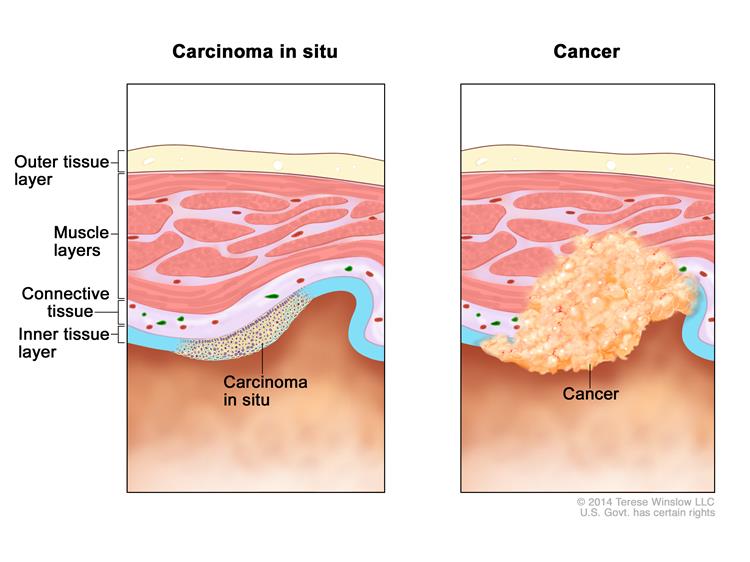
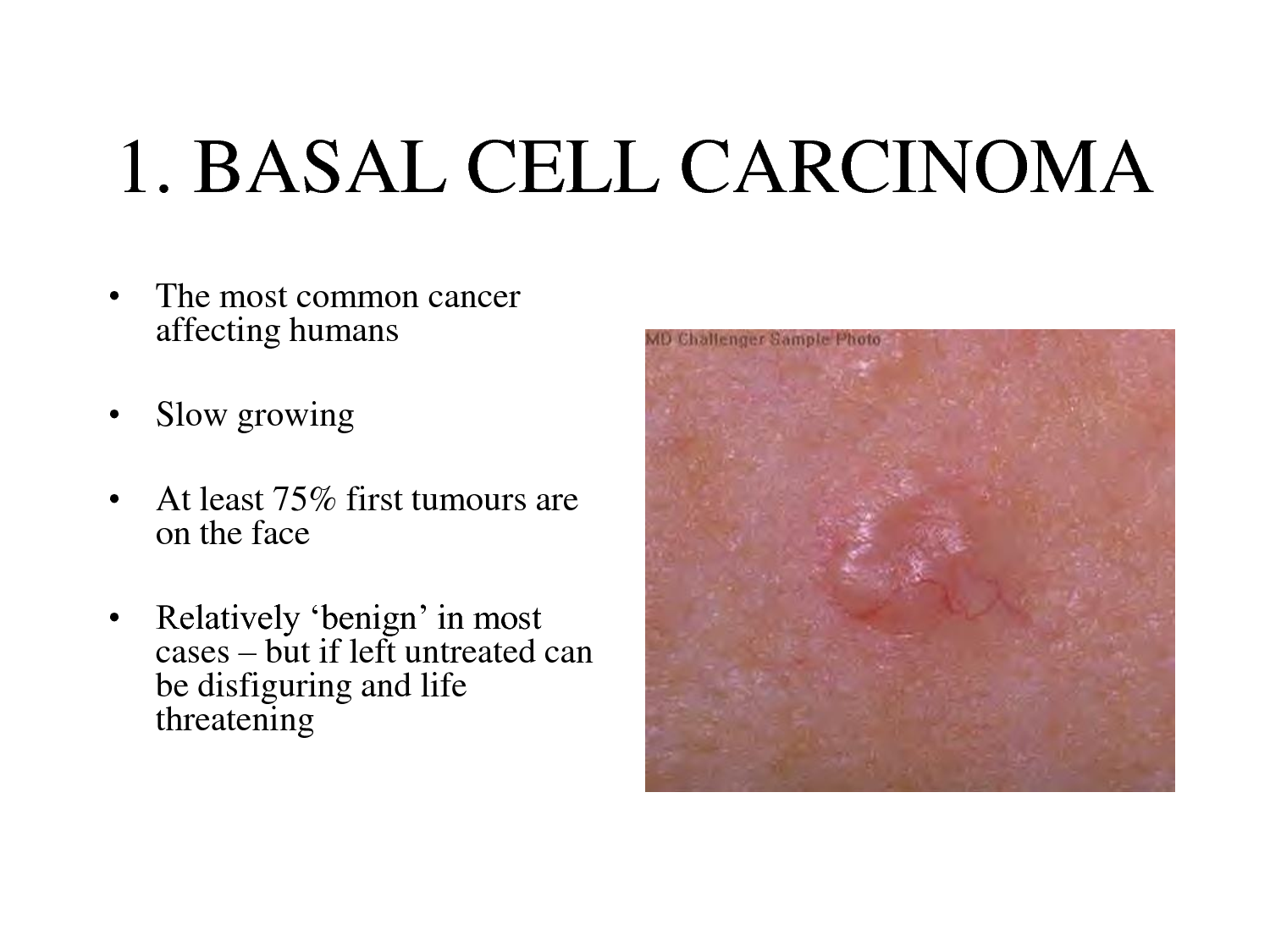
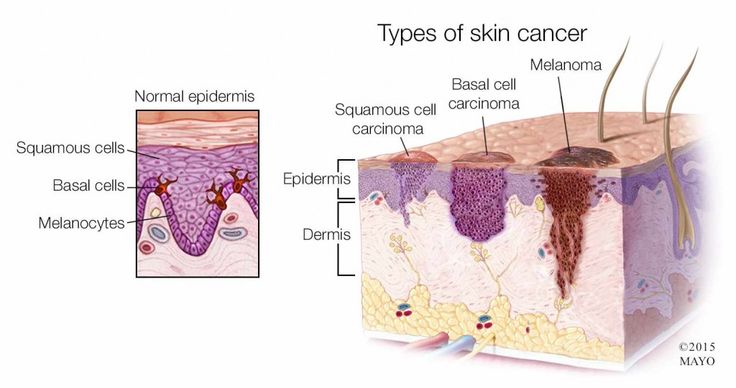
Differences between tumors are as follows:
Benign Tumors ones are the following:
Encapsulating (the big answer to resolution of a tumor like this is this a tumor that is surgical to remove or can radiation or chemo decrease the size of it to nothing).
Non metastasizing-meaning it hasn’t spread anywhere.
Well – Differentiated-meaning easy to detect.
Slow – growing (just what is says)
Malignant Tumors ones are the following:
Invasive,Metastasizing,FrequentlyUndifferentiated,OftenRapidGrowing.
Know that carcinogenesis is the process of inducing a malignant tumor in an animal or human. Much of the research in carcinogenesis resolves around deoxyribonucleic acid (DNA), the influence of carcinogens on DNA, and the genes that are involved in differentiation (of this growth vs normal tissue of the body) and control of cancerous cell growth.
There is viral and chemical carcinogenesis. Both RNA and DNA viruses have been identified as causing natural and experimental tumors. Research has shown herpes viruses are DNA viruses. For almost every herpes group there is some experimental or epidemiological evidence linking it to human malignancy. Example Epstein-Barr viruse has been associated with Burkitt’s Lymphoma in West African children and nasopharyngeal cancer among Asian populations. Herpes simplex virus-1 has been linked to oral cancer and herpes simplex virus-2 to cervical cancer. All herpes viruses share a characteristic ability to remain latent within the body over long periods. Although they may be found throughout the body, CMV (cytomegaloviruse) infections are frequently associated with the salivary glands in humans and other mammals. Other CMV viruses are found in several mammal species, but species isolated from animals differ from HCMV in terms of genomic structure, and have not been reported to cause human disease.
The RNA viruses, also called oncoviruses or retroviruses induce leukemia, lymphoma, and mammary tumors in animals. To complete their natural cycle, these viruses must manufacture a viral DNA that is then integrated into the host cell DNA. To do this they produce an enzyme and the enzyme is able to use RNA as a template to produce DNA. Since these viruses can remain latent in a cell for long periods of time, it is only by identifying the enzyme or the viral DNA that scientists are able to detect cells infected with these viruses. This enzyme has been identified in some human leukemia and lymphoma cells.
In addition, approximately 20 oncogenes have been identified with these RNA viruses and some of these oncogenes have also been detected in human bladder cancer cells, Burkitt’s lymphoma, and promyelocytic leukemia.
There is also radiation carginogenesis. There is external radiation; take Leukemia which was the first cancer related to radiation exposure that was seen in the atomic bomb survivors. Within 6-8 years after the bomb, the incidence rates of leukemia increased to levels well above those seen in the Japanese population who were not exposed. The peak was highest from 1950 to 1952, at which time the incidence was 116:100,000, as compared with 3-4:100,000 to the unexposed population.
Internal Emitters – One of the most famous classics is that of the luminescent instrument – dial painters. The paint was used to create luminescent faces on watches and clocks containing radium. While painting, the workers licked the brushes and thus ingested the radium. Radium, when ingested is deposited in bone and tends to remain there.) Among this group, bone cancer or osteogenic sarcoma, a rare tumor, became prevalent. With this type of knowledge it led to limitations on surface testing of atomic weapons. Atomic weapons contain radioactive compounds that can become deposited in the bone.
Ultraviolet radiation or the Sunlight – One of the most obiquitous forms of radiation that every person is exposed to is the sunlight. Ultraviolet rays do not penetrate deeply. Most statistics on cancer do not include skin cancer due to it being treatable (the easiest cancer to treat on average). Another more dangerous type of cancer is melanoma that has been linked to sunlight exposure.
Tumor classification shows because the study of tissues originates with the study of their development in the embryo, the class of the tumor is often based on the tissues from which the tumor is derived.
Grading the cancer, besides classifying the tumor according to the tissue origin the pathologist will classify it looking at other characteris- tics. This aspect is Grading the cancer from level 1 or 2 or 3 or 4. If cells of classification in the tumor look like the mature cells of the tissue than the tumor is well differentiated=Grade 1. This type of tumor generally has a better prognosis compared to a tumor that is poorly differentiated or does not resemble the tissue from which it originated. Sometimes a poorly differentiated tumor is called anaplastic. An anaplastic tumor would have the highest grade of 4. Remember even though tow tumors might be similarly classified and have identical grades, in two different individuals the tumors might act differently. Because each patient is unique, has a different history, different immune responses, and different reserves, similar tumors might act very differently.
DIAGNOSIS
A definitive diagnosis of cancer can only be made after an examination of tissue obtained from a surgical procedure or biopsy. Biopsies can be excisional, meaning the whole lesion is removed, or incisional in which only part of the presumptive tumor is removed. Specimens can also be obtained from a needle biopsy. In this a core of tissue is drawn up in a needle. Cytological examination of exfoliated cells, as done in a pap smear, can lead to a presumptive diagnosis of cancer but often a surgical biopsy will be performed to confirm the diagnosis. Often the patient undergoes many other diagnostic tooling procedures besides the biopsy in the attempt to determine the nature and extent of the illness=from blood tests, diagnostic x-ray studies, and endoscopic procedures. These tests with the biopsy done are used to evaluate the extent of the disease in the patient. This process of determining the extent of tumor in an individual is called staging.
Treatment
Cancer treatment can be surgery, chemo or radiation or even all 3.
“Eating fruit provides health benefits — people who eat more fruits and vegetables as part of an overall healthy diet are likely to have a reduced risk of some chronic diseases. Fruits provide nutrients vital for health and maintenance of your body.ruit help’s you in both diet and health when eatenRIGHT.”.
USDA ChooseMyPlate.gov

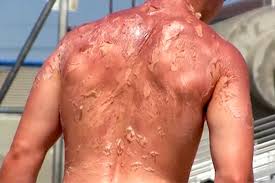
“Nobody’s perfect, and a sunburn can happen. But it’s important to take it seriously and stop it from happening again. Your risk for melanoma doubles if you’ve had more than five sunburns.”
Skincancer.org




‘Due to their incredible sense of smell, dogs have shown anywhere from 70 to 99% accuracy (depending on the study) when tasked with detecting lung cancer in a nearby patient, more dogs will approach someone who’s crying or in distress than someone who is not. This shows that dogs are empathetic and are eager to help comfort humans in pain.”
Goldsmiths College
“According to the Mayo Clinic, the top health problems in America vary slightly between men and women. Men are more likely to commit suicide, and it is the eighth most common health problem for men. Men and women both need to be concerned, however, about the health problems that are common to both of them.”
Livestrong.com