QUOTE FOR FRIDAY:

“PTSD can happen to anyone. It is not a sign of weakness. A number of factors can increase the chance that someone will have PTSD, many of which are not under that person’s control.”

U.S. Department of Veterans Affairs


QUOTE FOR TUESDAY:

“Most people who have Crohn’s also have symptoms of ulcerative colitis but rectal bleeding, or blood in the stools, is much more common in people who have UC than those with Crohn’s.  Because Crohn’s disease affects more of the body, it can cause some problems that doctors don’t usually see in people who have ulcerative colitis.”

WEB MD


QUOTE FOR THE WEEKEND:

“Treatments for coronary heart disease include heart-healthy lifestyle changes, medicines, medical procedures and surgery, and cardiac rehabilitation.”

National Heart, Lung and Blood Institute
Part III Treatments of Coronary Artery Disease (CAD)!

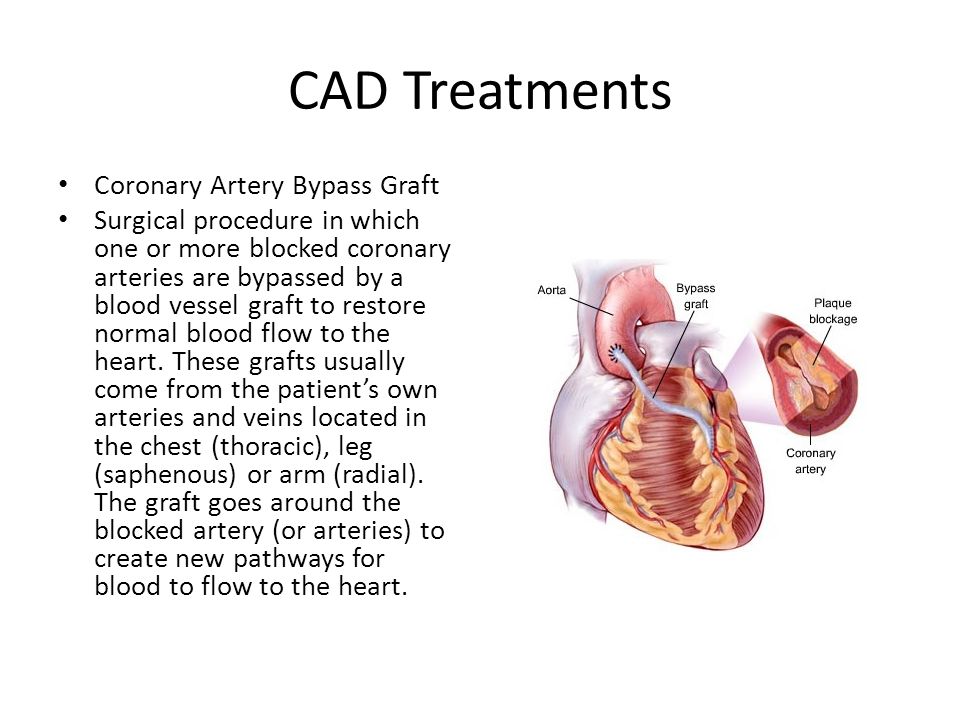
Surgical procedure in which one or more blocked coronary arteries are bypassed by a blood vessel graft to restore normal blood flow to the heart. These graft usually come from the patient’s own arteries and veins located in the chest (thoracic), leg (saphenous) or arm (radial). The graft goes around the blocked artery (or arteries) to create new pathways for blood to flow to the heart.
1.) Lifestyle changes

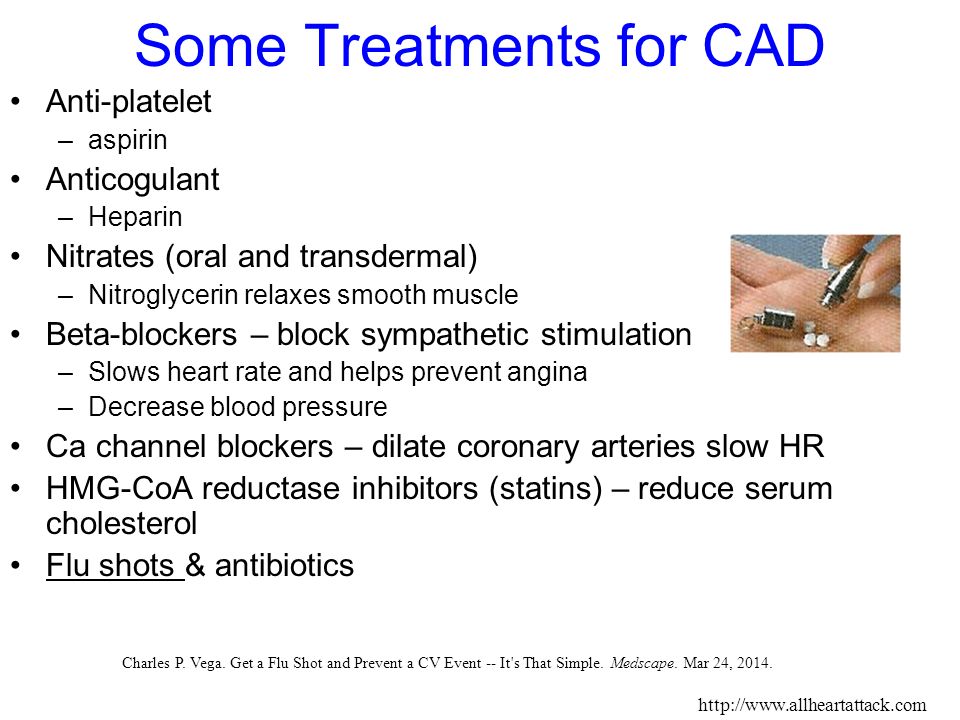
Making a commitment to the following healthy lifestyle changes can go a long way toward promoting healthier arteries:

  • Quit smoking.
  • Eat healthy foods.
  • Exercise regularly.
  • Lose excess weight.
  • Reduce stress.

2.) Drugs

Various drugs can be used to treat coronary artery disease, including:

  • Cholesterol-modifying medications. By decreasing the amount of cholesterol in the blood, especially low-density lipoprotein (LDL, or the “bad”) cholesterol, these drugs decrease the primary material that deposits on the coronary arteries. Your doctor can choose from a range of medications, including statins, niacin, fibrates and bile acid sequestrants.
  • Your doctor may recommend taking a daily aspirin or other blood thinner. This can reduce the tendency of your blood to clot, which may help prevent obstruction of your coronary arteries.

If you’ve had a heart attack, aspirin can help prevent future attacks. There are some cases where aspirin isn’t appropriate, such as if you have a bleeding disorder or you’re already taking another blood thinner, so ask your doctor before starting to take aspirin.

  • Beta blockers. These drugs slow your heart rate and decrease your blood pressure, which decreases your heart’s demand for oxygen. If you’ve had a heart attack, beta blockers reduce the risk of future attacks.
  • Nitroglycerin. Nitroglycerin tablets, sprays and patches can control chest pain by temporarily dilating your coronary arteries and reducing your heart’s demand for blood.
  • Angiotensin-converting enzyme (ACE) inhibitors and angiotensin II receptor blockers (ARBs). These similar drugs decrease blood pressure and may help prevent progression of coronary artery disease.

3.) Procedures to restore and improve blood flow

Coronary artery stent

Sometimes more aggressive treatment is needed. Here are some options:

  • Angioplasty and stent placement (percutaneous coronary revascularization). Your doctor inserts a long, thin tube (catheter) into the narrowed part of your artery. A wire with a deflated balloon is passed through the catheter to the narrowed area. The balloon is then inflated, compressing the deposits against your artery walls.

A stent is often left in the artery to help keep the artery open. Some stents slowly release medication to help keep the artery open.

  • Coronary artery bypass surgery. A surgeon creates a graft to bypass blocked coronary arteries using a vessel from another part of your body. This allows blood to flow around the blocked or narrowed coronary artery as described at the top of this article. Because this requires open-heart surgery, it’s most often reserved for cases of multiple narrowed coronary arteries.

Alternative medicine

Omega-3 fatty acids are a type of unsaturated fatty acid that’s thought to reduce inflammation throughout the body, a contributing factor to coronary artery disease. However, recent studies have not shown them to be beneficial. More research is needed.
  • Fish and fish oil. Fish and fish oil are the most effective sources of omega-3 fatty acids. Fatty fish — such as salmon, herring and light canned tuna — contain the most omega-3 fatty acids and, therefore, the most benefit. Fish oil supplements may offer benefit, but the evidence is strongest for eating fish.
  • Flax and flaxseed oil. Flax and flaxseed oil also contain beneficial omega-3 fatty acids, though studies have not found these sources to be as effective as fish. The shell on raw flaxseeds also contains soluble fiber, which can help lower blood cholesterol.
  • Other dietary sources of omega-3 fatty acids. Other dietary sources of omega-3 fatty acids include canola oil, soybeans and soybean oil. These foods contain smaller amounts of omega-3 fatty acids than do fish and fish oil, and evidence for their benefit to heart health isn’t as strong.


QUOTE FOR FRIDAY:

 
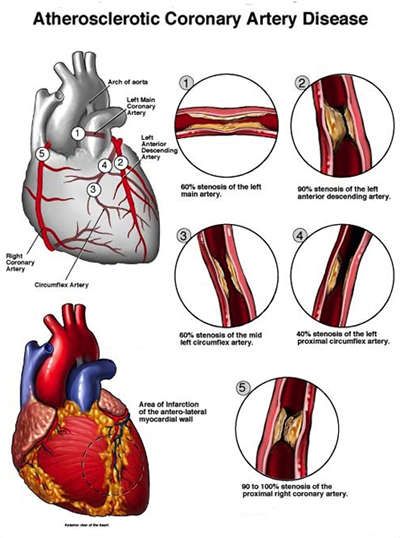
“Plaque might begin to build up where the arteries are damaged. The buildup of plaque in the coronary arteries may start in childhood. Over time, plaque can harden or rupture (break open). Hardened plaque narrows the coronary arteries and reduces the flow of oxygen-rich blood to the heart. This can cause angina (chest pain or discomfort).”
 
National Heart, Lung and Blood Institute

Part II What the causes of Coronary Artery Disease are!


Part II Causes of CAD:

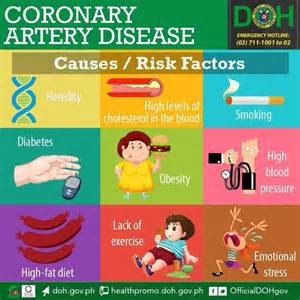
Coronary artery disease is thought to begin with damage or injury to the inner layer of a coronary artery, sometimes as early as childhood. The damage may be caused by various factors, including the following which are problems we can prevent or better control through better diet, some form of exercise balanced with rest.  Including keeping our stress controlled in a productive way (like work out program to doing hobbies).

Causes that are modifiable (that we can change or help control):

  • Smoking-Stop it
  • High blood pressure-Lose weight, decrease junk food and sodium in your diet, exercise.  If on B/P meds be compliant in taking them.
  • High cholesterol-Eat better food, lose weight, or if on anti-cholesterol meds be compliant in taking them.
  • Diabetes or insulin resistance-Lose weight, eat foods=no sugar, and be compliant with your diabetic meds.
  • Sedentary lifestyle-Get in an exercise program; stay active.

Causes that are nonmodifiable (that you can’t change):

-Race:  Race refers to common characteristics passed down through the genes. Non-Hispanic whites (63%) have roots in Europe, the Middle East, or North Africa. Blacks (13%) have origins in any of the black racial groups of Africa or Afro-Caribbean countries. Asians (5%) may have ancestors anywhere from India to Japan. This geographic diversity within racial groups means that there are actually greater genetic differences within than between certain groups.

Know this: Rates of high blood pressure, diabetes, and heart disease vary among people of different backgrounds.

Adults living in the United States are more likely to die from heart disease than any other cause, regardless of their racial or ethnic heritage. But certain minority groups face a greater risk than others. These differences appear to stem from an increased prevalence of high blood pressure, diabetes, and obesity seen in some populations compared with white Americans.

Still, teasing out the reasons isn’t easy. Genetic differences do exist. But diversity within different racial and ethnic groups means that genetic traits common to some groups can’t be generalized to an entire race.

Many intertwined factors likely contribute to the higher heart disease rates seen among some groups. Their lower average incomes affect where they live, which in turn affects their access to healthy food, safe places to exercise, and quality health care. In other words, “your ZIP code is more important than your genetic code,” says Dr. Eldrin Lewis, a cardiologist at Harvard-affiliated Brigham and Women’s Hospital.

But even after adjustment for factors related to socioeconomic differences, disparities in rates of heart disease and its risk factors persist, Dr. Lewis says. In the United States, nearly half of all black adults have some form of cardiovascular disease, compared with about one-third of all white adults. A genetic difference that predisposes blacks to high blood pressure might play a role.

For further details on race groups and their risk at coronary heart disease see https://www.health.harvard.edu/heart-health/race-and-ethnicity

Heredity:  A family history of heart disease is associated with a higher risk of coronary artery disease, especially if a close relative developed heart disease at an early age. Your risk is highest if your father or a brother was diagnosed with heart disease before age 55 or if your mother or a sister developed it before age 65.

-Age:Just like a car the older you get the highier the risk of problems with the vehicle and the same with the body. 

-Gender: Men are generally at greater risk of coronary artery disease. However, the risk for women increases after menopause.

Learn more tomorrow on treatment of CAD in Part III!

QUOTE FOR THURSDAY:

“Coronary artery disease develops when the major blood vessels that supply your heart with blood, oxygen and nutrients (coronary arteries) become damaged or diseased=narrowing or blockages of the arteries=decreased blood flow to heart tissue.
American Heart Association

QUOTE FOR WEDNESDAY:

“The most common symptom of breast cancer is a new lump or mass, but other symptoms are also possible. It’s important to have any breast change checked by a health care provider.”

American Cancer Society

QUOTE FOR TUESDAY:

“Some human cells, including cancer cells, divide with a 24-hour rhythm. One of the main human circadian rhythm genes, cryptochrome, has been associated with diabetes and depression. Both of these discoveries grew from work with plants.”

Dr. Steven Kay (Biologist at the University of California)