Archive | January 2025

QUOTE FOR THURSDAY:

“Congenital heart disease is a heart problem that a person is born with. It means that the heart’s structure — for example, its walls or valves — did not develop properly before birth. More than a million American adults live with congenital heart disease. Many were diagnosed as infants and had surgery or other treatment as a child. Others don’t know they have congenital heart disease until they develop symptoms as adults, like shortness of breath or an abnormal heartbeat.

No matter the cause or the age of diagnosis, people with congenital heart disease need continued care and treatment throughout their lives. It can be difficult for adults to find heart specialists familiar with their particular anatomy and problems–NewYork-Presbyterian has one of the few programs in the country with the depth and breadth of expertise to address the complexity of congenital heart disease in adults.

Our highly trained heart specialists understand congenital heart disease’s unique physiological, anatomical, and clinical features at all ages. Your care team includes physicians, surgeons, and genetic experts specializing in adult congenital heart disease. They’re experts in echocardiography, interventional cardiac catheterization, interventional electrophysiology, complex congenital heart surgery, and heart transplantation.

With this team approach, we address the complex needs of people with adult congenital heart disease at three centers where you can receive treatment in a hospital setting designed for adults without having to stay in a children’s hospital:

  • Schneeweiss Adult Congenital Heart Center at New York-Presbyterian/Columbia University Irving Medical Center is one of the nation’s oldest, largest, and most experienced adult congenital heart disease programs.
  • Cornell Center for Adult Congenital Heart Disease at New York-Presbyterian Weill Cornell Medical Center
  • Ronald O. Perelman Heart Institute, NYP/Weill Cornell”

New York Presbyterian Hospital

(Congenital Heart Disease | NewYork-Presbyterian)

What to know in Prevention for Congenital Defects.

Though not all birth defects can be avoided, prenatal care and awareness of past or current conditions can help with prevention.

  • Prenatal care. Taking a daily prenatal vitamin that includes at least 400 micrograms of folic acid can help prevent a variety of birth defects. You should be taking prenatal vitamins if you’re of reproductive age, when you’re actively trying to conceive and/or as soon as you find out you are pregnant. In addition to taking your prenatal vitamin, avoiding alcohol, tobacco and illegal drugs can significantly help prevent birth defects and pregnancy complications.
  • Awareness of past or current conditions. If you previously had a pregnancy with a birth defect, it’s important to find out the most likely causes because it can help your physician plan preventive measures for your next pregnancy. For example, spina bifida is caused by a deficiency in folate, so if your previous pregnancy had spina bifida, you can take a high dose of folate to help prevent future spina bifida diagnoses.

Are all birth defects discovered before a baby is born?

It’s not always possible to detect all birth defects in utero. However, high-resolution ultrasounds done by certified prenatal ultrasound groups make it possible to diagnose defects that will cause a significant impact before birth.

Baschat says: “At the Center for Fetal Therapy, we recommend that pregnant women have the first-trimester nuchal translucency scan between 11 and 14 weeks and the anatomy scan between 18 and 20 weeks. These two ultrasounds provide us with the best opportunity for detecting birth defects.”

In recent years, some pregnant women have turned down the first-trimester ultrasound because a maternal screening blood test now exists for Down syndrome. The ultrasound is still strongly recommended, though, because there are many other serious birth defects that can be detected this early in pregnancy.

Is it possible to treat birth defects while a baby is in utero?

Absolutely. While there are many different types of birth defects, it’s extremely important to try to correct those that damage vital organs before the baby is born. The Center for Fetal Therapy specializes in treating several of these defects in utero, including:

  • Congenital diaphragmatic hernia. This condition, in which a hole in the diaphragm allows abdominal content to enter the chest and restrict lung development, can be significantly helped in utero through fetoscopic endotracheal occlusion, a surgery that improves lung function and significantly increases survival rates.
  • Lower urinary tract obstruction. This occurs when the flow of urine is blocked from exiting the fetus’ body, leading to permanent kidney damage. Relieving this obstruction before birth protects the kidneys.

Fetal treatments also exist for conditions that make the baby unhealthy, even if they are not considered to be birth defects. For example, if a fetus has an irregular heartbeat, you can give the mother medication that will cross the placenta and treat the fetus.

How successful are in utero treatments for fetal conditions?

By treating fetal conditions in utero rather than waiting until after birth, fetuses are given significantly better chances of survival and a reduced need for major surgery after birth. For example, with a condition like twin-to-twin transfusion syndrome, in which identical twins develop a blood volume imbalance, both babies could die without any intervention. By performing laser surgery in utero, there is approximately a 95 percent chance that at least one baby will survive.

Explains Baschat, “Success rates vary depending on the condition, available treatments and the individual patient, but overall, where fetal interventions are available, we see a much higher rate of survival for affected fetuses.”

If a baby has fetal surgery, will he/she need different care after birth?

This will depend on the individual condition and type of surgery performed. For all fetal surgeries, your baby needs to be delivered at a hospital where pediatric subspecialties are in-house so the baby’s care can be managed after birth. Baschat says: “Many of the treatments we perform require patients to deliver at the highest-level multispecialty hospital, like The Johns Hopkins Hospital. This way, all prenatal and postnatal care is available to you in one location.”

If you have one child affected by a birth defect, will all of your future children have that same condition?

All future children will not definitively be affected by the same birth defect, but it will depend on what the cause was. If the birth defect was caused by a genetic mutation, there may be a higher likelihood of recurrence, but if you seek care from a specialized center, maternal-fetal medicine specialists and genetic counselors can work with you to assess future risk.

The risk of some conditions can be determined before you become pregnant through genetic testing. If that doesn’t exist for the condition in question, maternal-fetal medicine specialists and genetic counselors can genetically test your fetus during pregnancy to see if she or he exhibits the mutation that affected your previous child.

Are there communities in which you can speak with other families who have had children affected by birth defects?

There are many forums online, whether on the web or social media platforms, in which parents come together. “At our center, we reach out to previous patients to see if they are interested in communicating with new patients affected by the same condition,” Baschat explains. “They can empathize about the specific birth defect, but they can also provide guidance and advice about the experience of working with our center throughout the pregnancy and after the baby is born.”

In the future, what advances will take place in treating disease before birth?

Through prenatal diagnosis and understanding fetal disease better, physicians are learning more about what harms the fetus and what may be of benefit before birth. Additionally, new uses for minimally invasive surgical equipment are regularly being discovered.

There are also stem cell therapies, genomic medicine and a whole host of related treatments that are currently used for children and adults. One day, these may also apply to the fetus. “While it’s hard to predict the future, we’re currently doing things we couldn’t have foreseen 10 years ago, so we’re very hopeful for continued advancements in fetal care,” says Baschat.

QUOTE FOR WEDNESDAY:

“Vitiligo is a skin condition that has impacted millions of people worldwide. It affects people of all ages and genders. Vitiligo is a chronic skin condition that causes loss of natural pigment of the skin and results in the appearance of light-colored or white spots on arms, legs, and other parts of the body. Although it is not a life-threatening condition, vitiligo can significantly impact a person’s self-esteem, clothing choices, and quality of life.”

PERFECTFAQS (PerfectFaqs.com | Perfectly Curated, Fact-checked Blogs For You)

What is vitiligo?

Vitiligo (vit-uh-lie-go) causes the skin to lose its natural color. Patches of lighter skin appear. Some people develop a few patches. Others lose much more skin color.

Vitiligo can also affect other parts of your body. A section of hair can turn white. Some people lose color inside their mouths. Even an eye can lose some of its color.

What causes this color loss is still a mystery. We do know that vitiligo is not contagious. It is not life-threatening.

But vitiligo can be life-altering. Some people develop low self-esteem. They may no longer want to hang out with friends. They can develop serious depression. Most people have vitiligo for life, so it’s important to develop coping strategies.

A coping strategy that helps many people is to learn about vitiligo. Another helpful strategy is to connect with others who have vitiligo.

Up to 2% of the population and an estimated 2 to 5 million Americans have the condition. It doesn’t matter if you’re a man or a woman.

In most cases, it develops early in life, between ages 10 and 30. It will almost always show up before age 40.

Vitiligo may run in families. You’re more likely to get it when someone else in your family has it, too, or when people in your family get gray hair prematurely.Autoimmune diseases, such as autoimmune thyroid disease (Hashimoto’s thyroiditis) or type 1 diabetes, can also raise your odds.

Symptoms

You’ll often lose pigment quickly on several areas of your skin. After the white patches appear, they may stay the same for a while, but later on, they might get bigger. You may have cycles of pigment loss and stability.

Vitiligo commonly affects body folds (such as armpits), places that have been injured in the past, and areas exposed to sun, around moles, or around body openings. It can also affect eyelids and hair.

It’s rare for pigment to return once the white patches have developed.

Diagnosis and Treatment

Your doctor can usually make a diagnosis of vitiligo by looking at your skin during a physical exam.

There’s no known way to prevent or cure the condition. But you can improve the appearance of affected skin with cosmetics and corticosteroid creams. Your doctor can also try re-pigmenting the white skin using UV light therapy or lightening the skin in unaffected areas, or a skin graft.

QUOTE FOR TUESDAY:

“National Blood Donor Month is a time to recognize the selfless contributions of the roughly 7 million people across the country who give blood each year. Their simple yet profound decision has saved countless lives. We encourage all eligible individuals to join the ranks of America’s blood donors and make a lifesaving impact in someone’s time of need,” said Kate Fry, CEO of America’s Blood Centers.

This National Blood Donor Month, the blood community says thank you to the millions of blood donors throughout the United States. Your gift provides essential medicine for patients in need,” said Debra BenAvram, chief executive officer of AABB. “Blood is an essential part of health care and is needed every day. We encourage eligible Americans to start the new year off by making an appointment to donate blood today.”

“We are grateful to those who generously roll up a sleeve for patients in need,” said Chris Hrouda, president of American Red Cross Biomedical Services. “Even as we see the donor base decline, the American Red Cross recognizes and celebrates our dedicated blood and platelet donors who are giving more often today than past decades. This National Blood Donor Month, please join us in our mission that truly helps save lives.”

President Richard Nixon proclaimed January 1970 as the first National Blood Donor Month on December 31, 1969, as requested by Senate Joint Resolution 154, to pay tribute to voluntary blood donors and encourage new donors to join. This month continues to be celebrated each year to thank America’s blood donors and encourage more people to donate blood.

Blood transfusion remains one of the most common hospital procedures, with patients requiring a blood transfusion every two seconds. More than 42,000 units of red blood cells, platelets, and plasma are used by patients every day.”

American Red Cross (Blood Community Unites to Recognize Donors Ahead of National Blood Donor Month in January)

QUOTE FOR MONDAY:

“The golden (Rh null) blood is the rarest blood group, lacking Rh antigens in the red blood cells (RBCs). Learn more about the golden blood type, other rare blood types, and blood charts.

Proteins known as Rhesus (Rh) factors or antigens are completely absent in the red cells of people with the golden blood type or Rh null blood group. This is the rarest blood group in the world, with less than 50 individuals having this blood group. Golden blood type was first discovered in an Australian Aboriginal woman in 1961.

Our red blood cells have sugars and proteins called antigens on their surface membranes. Depending on the mix of antigens present, blood is categorized into different blood types, and we have A, B, O, or AB blood types. The ABO system has a further distinction as Rh-positive or Rh-negative depending on the presence or absence of the “Rh-D” factor in the cells.

A person with the golden blood type, or the Rh null blood type lacks all the Rh antigens whereas a person with the Rh-negative blood group lacks only Rh-D antigen.

The worry with the golden blood type is that donations of the Rh null blood type are incredibly scarce and difficult to obtain. An Rh null person has to rely on the cooperation of a small network of regular Rh null donors around the world if they need blood. Across the globe, there are only nine active donors for this blood group. This makes it the world’s most precious blood type, hence the name “golden” blood.

Golden blood type can be donated. Because of the absence of antigens on RBCs, a person with Rh null blood is considered to be a universal donor, and this blood can be donated to anyone with rare blood types within the Rh systems.”

Medicine Net (Golden Blood Type: Understanding the Rarest Blood Group)

QUOTE FOR THE WEEKEND:

“Undiagnosed thyroid issues can increase the risk for other serious conditions, such as cardiovascular disease, obesity, osteoporosis, and infertility. However, most thyroid diseases are lifelong conditions that can be managed with medical attention once diagnosed. Learn about the different types of tests used to determine if you have a thyroid condition.

Treatment for thyroid disease varies depending on the specific condition. Learn about common treatment options for hyperthyroidism, Graves’ disease, thyroid eye disease, hypothyroidism, Hashimoto’s disease, goiters, nodules, and thyroid cancer.”

American Association of Clinical Endocrinology / AACE

(Patient Journey Thyroid | American Association of Clinical Endocrinology)

QUOTE FOR FRIDAY:

“Hyperthyroidism means that your thyroid gland is making too much thyroid hormone. You may also hear the term thyrotoxicosis. This also means there is too much thyroid hormone in your body.  Everyone is different and you may not have all the symptoms. Symptoms can start suddenly or come on slowly over time.  Hyperthyroidism can be caused by an autoimmune condition (Graves’ disease), inflammation of the thyroid (thyroiditis), or due to thyroid nodules making too much thyroid hormone (hot nodule or toxic multinodular goiter).”

American Thyroid Association (Hyperthyroidism | American Thyroid Association)

QUOTE FOR THURSDAY:

“Hypothyroidism happens when the thyroid gland doesn’t make enough thyroid hormone. This condition also is called underactive thyroid.

Hypothyroidism may not cause noticeable symptoms in its early stages. Over time, hypothyroidism that isn’t treated can lead to other health problems, such as high cholesterol and heart problems.

There are ways to be diagnosed and treated.”

MAYO CLINIC

Part II Thyroid Awareness Month – Hypothyroidism

Hypothyroidism

Hypothyroidism (under-active thyroid) is a condition that occurs when your thyroid produces too little thyroid hormone, a condition that is often linked to iodine deficiency.

Dr. David Brownstein, a board-certified holistic practitioner who has been working with iodine for the last two decades, claims that over 95 percent of the patients in his clinic are iodine-deficient.

In addition, 10 percent of the general population in the United States, and 20 percent of women over age 60, have subclinical hypothyroidism, a condition where you have no obvious symptoms and only slightly abnormal lab tests.

However, only a marginal percentage of these people are being treated. The reason behind this is the misinterpretation and misunderstanding of lab tests, particularly TSH (thyroid stimulating hormone). Most physicians believe that if your TSH value is within the “normal” range, your thyroid is fine. But as I always say, the devil is in the details. More and more physicians are now discovering that the TSH value is grossly unreliable for diagnosing hypothyroidism.

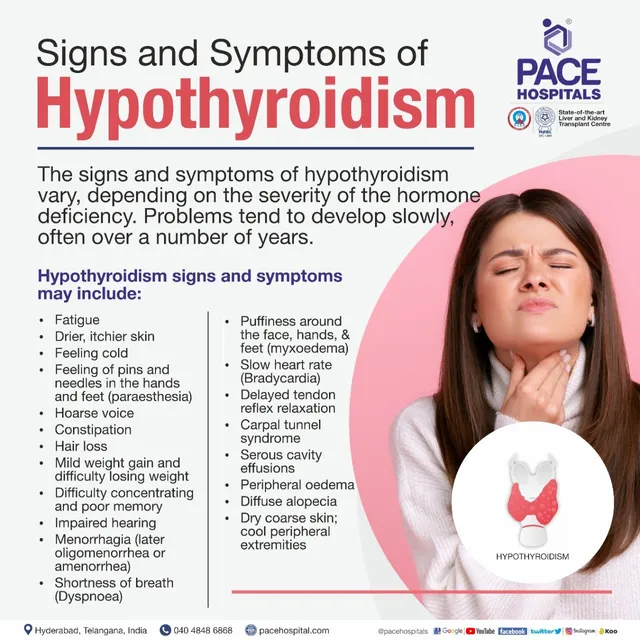
Hypothyroidism can cause a variety of signs and symptoms:

The most sensitive way to find out is to listen to your body. People with a sluggish thyroid usually experience:

Lethargy – Fatigue and lack of energy are typical signs of thyroid dysfunction. Depression has also been           linked to the condition. If you’ve been diagnosed with depression, make it a point that your physician checks your thyroid levels.

    • It’s essential to note that not all tiredness or lack of energy can be blamed on a dysfunctional thyroid gland. Thyroid-related fatigue begins to appear when you cannot sustain energy long enough, especially when compared to a past level of fitness or ability. If your thyroid foundation is weak, sustaining energy output is going to be a challenge. You will notice you just don’t seem to have the energy to do the things like you used to.
      • Feeling like you don’t have the energy to exercise, and typically not exercising on a consistent basis
      • A heavy or tired head, especially in the afternoon; your head is a very sensitive indicator of thyroid hormone status
      • Falling asleep as soon as you sit down when you don’t have anything to do.
  • Rough and scaly skin and/or dry, coarse, and tangled hair– If you have perpetually dry skin that doesn’t respond well to moisturizing lotions or creams, consider hypothyroidism as a factor.
  • Hair loss– Women especially would want to pay attention to their thyroid when unexplained hair loss occurs. Fortunately, if your hair loss is due to low thyroid function, your hair will come back quickly with proper thyroid treatment.
  • Sensitivity to cold– Feeling cold all the time is also a sign of low thyroid function. Hypothyroid people are slow to warm up, even in a sauna, and don’t sweat with mild exercise.
  • Low basal temperature – Another telltale sign of hypothyroidism is a low basal body temperature (BBT), less than 97.6 degrees Fahrenheit averaged over a minimum of three days. It is best to get a BBT thermometer to assess this.
  • Weight gain– Easy weight gain or difficulty losing weight, despite an aggressive exercise program and watchful eating, is another indicator.

Hypothyroidism in infants

Anyone can get hypothyroidism, including infants. Most babies born without a thyroid gland or with a gland that doesn’t work correctly don’t have symptoms right away. But if hypothyroidism isn’t diagnosed and treated, symptoms start to appear. They may include:

  • Feeding problems.
  • Poor growth.
  • Poor weight gain.
  • Yellowing of the skin and the whites of the eyes, a condition called jaundice.
  • Constipation.
  • Poor muscle tone.
  • Dry skin.
  • Hoarse crying.
  • Enlarged tongue.
  • A soft swelling or bulge near the belly button, a condition called umbilical hernia.

When hypothyroidism in infants isn’t treated, even mild cases can lead to severe physical and mental development problems.

Hypothyroidism in children and teens

In general, children and teens with hypothyroidism have symptoms similar to those in adults. But they also may have:

  • Poor growth that leads to short stature.
  • Delayed development of permanent teeth.
  • Delayed puberty.
  • Poor mental development.

When to see a doctor

See your health care provider if you’re feeling tired for no reason or if you have other symptoms of hypothyroidism.

If you’re taking thyroid hormone medicine for hypothyroidism, follow your health care provider’s advice on how often you need medical appointments. At first, you may need regular appointments to make sure you’re receiving the right dose of medicine. Over time, you may need checkups so that your health care provider can monitor your condition and medicine.

Causes:

The thyroid is a small, butterfly-shaped gland located at the base of the neck, just below the Adam’s apple. The thyroid gland makes two main hormones: thyroxine (T-4) and triiodothyronine (T-3). These hormones affect every cell in the body. They support the rate at which the body uses fats and carbohydrates. They help control body temperature. They have an effect on heart rate. And they help control how much protein the body makes.

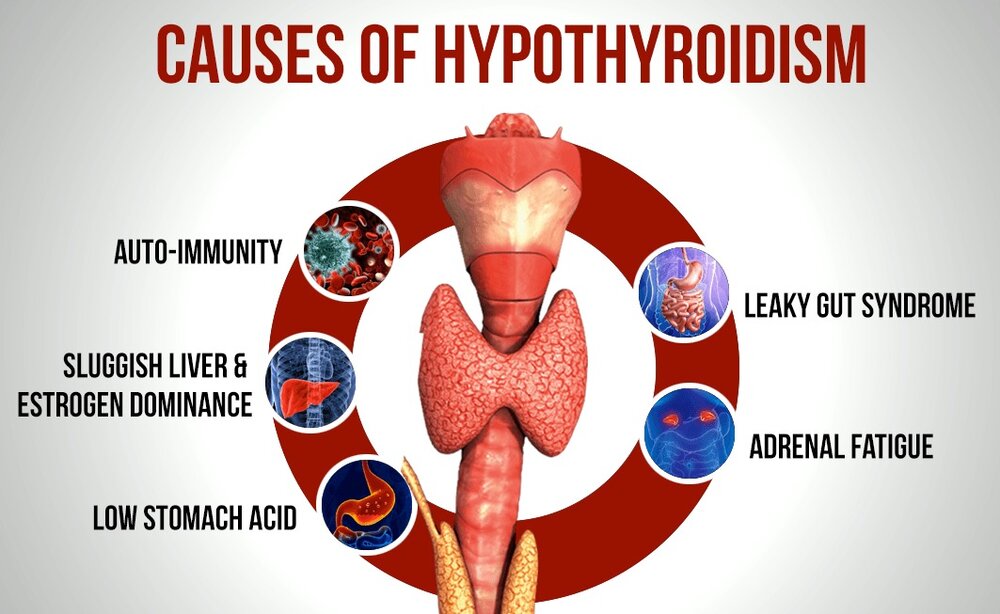
Hypothyroidism happens when the thyroid gland doesn’t make enough hormones. Conditions or problems that can lead to hypothyroidism include:

  • Autoimmune disease. The most common cause of hypothyroidism is an autoimmune disease called Hashimoto’s disease. Autoimmune diseases happen when the immune system makes antibodies that attack healthy tissues. Sometimes that process involves the thyroid gland and affects its ability to make hormones.
  • Thyroid surgery. Surgery to remove all or part of the thyroid gland can lower the gland’s ability to make thyroid hormones or stop it completely.
  • Radiation therapy. Radiation used to treat cancers of the head and neck can affect the thyroid gland and lead to hypothyroidism.
  • Thyroiditis. Thyroiditis happens when the thyroid gland becomes inflamed. This may be due to an infection. Or it can result from an autoimmune disorder or another medical condition affecting the thyroid. Thyroiditis can trigger the thyroid to release all of its stored thyroid hormone at once. That causes a spike in thyroid activity, a condition called hyperthyroidism. Afterward, the thyroid becomes underactive.
  • Medicine. A number of medicines may lead to hypothyroidism. One such medicine is lithium, which is used to treat some psychiatric disorders. If you’re taking medicine, ask your heath care provider about its effect on the thyroid gland.

Less often, hypothyroidism may be caused by:

  • Problems present at birth. Some babies are born with a thyroid gland that doesn’t work correctly. Others are born with no thyroid gland. In most cases, the reason the thyroid gland didn’t develop properly is not clear. But some children have an inherited form of a thyroid disorder. Often, infants born with hypothyroidism don’t have noticeable symptoms at first. That’s one reason why most states require newborn thyroid screening.
  • Pituitary disorder. A relatively rare cause of hypothyroidism is the failure of the pituitary gland to make enough thyroid-stimulating hormone (TSH). This is usually because of a noncancerous tumor of the pituitary gland.
  • Pregnancy. Some people develop hypothyroidism during or after pregnancy. If hypothyroidism happens during pregnancy and isn’t treated, it raises the risk of pregnancy loss, premature delivery and preeclampsia. Preeclampsia causes a significant rise in blood pressure during the last three months of pregnancy. Hypothyroidism also can seriously affect the developing fetus.
  • Not enough iodine. The thyroid gland needs the mineral iodine to make thyroid hormones. Iodine is found mainly in seafood, seaweed, plants grown in iodine-rich soil and iodized salt. Too little iodine can lead to hypothyroidism. Too much iodine can make hypothyroidism worse in people who already have the condition. In some parts of the world, it’s common for people not to get enough iodine in their diets. The addition of iodine to table salt has almost eliminated this problem in the United States.

Diseases caused by hypothyroidism include:

  • Hashimoto’s disease (autoimmune disorder)
  • Graves disease (autoimmune disorder)
  • Iodine deficiency
  • Congenital hypothyroidism (present at birth)
  • Thyroiditis (inflammation of the thyroid)
  • Surgical removal of part or all of the thyroid

When to be checked by the doctor:

When any of these signs or symptoms listed above if you have that where never checked out by the doctor or if the new symptom (s) just recently started that match the symptoms above and where never diagnosed by the MD .  If you’ve been treated for hypothyroidism or even currently being treated, see your doctor regularly as advised so that he or she can monitor your condition.  Also, if you are at a age that makes you in a age group that is more common to have this disease than have your MD check you out to see if you have the disease.

If hypothyroidism isn’t treated, it can cause some major health problems.

Risk factors

Although anyone can develop hypothyroidism, you’re at an increased risk if you:

  • Are a woman.
  • Have a family history of thyroid disease.
  • Have an autoimmune disease, such as type 1 diabetes or celiac disease.
  • Have received treatment for hyperthyroidism.
  • Received radiation to your neck or upper chest.
  • Have had thyroid surgery.

Complications

Hypothyroidism that isn’t treated can lead to other health problems, including:

  • Goiter. Hypothyroidism may cause the thyroid gland to become larger. This condition is called a goiter. A large goiter may cause problems with swallowing or breathing.
  • Heart problems. Hypothyroidism can lead to a higher risk of heart disease and heart failure. That’s mainly because people with an underactive thyroid tend to develop high levels of low-density lipoprotein (LDL) cholesterol — the “bad” cholesterol.
  • Peripheral neuropathy. Hypothyroidism that goes without treatment for a long time can damage the peripheral nerves. These are the nerves that carry information from the brain and spinal cord to the rest of the body. Peripheral neuropathy may cause pain, numbness and tingling in the arms and legs.
  • Infertility. Low levels of thyroid hormone can interfere with ovulation, which can limit fertility. Some of the causes of hypothyroidism, such as autoimmune disorders, also can harm fertility.
  • Birth defects. Babies born to people with untreated thyroid disease may have a higher risk of birth defects compared with babies born to mothers who do not have thyroid disease.Infants with hypothyroidism present at birth that goes untreated are at risk of serious physical and mental development problems. But if the condition is diagnosed within the first few months of life, the chances of typical development are excellent.
  • Myxedema coma. This rare, life-threatening condition can happen when hypothyroidism goes without treatment for a long time. A myxedema coma may be triggered by sedatives, infection or other stress on the body. Its symptoms include intense cold intolerance and drowsiness, followed by an extreme lack of energy and then unconsciousness. Myxedema coma requires emergency medical treatment.