Spring with summer around the corner have certain insects coming out of hibernation which are little insects with STINGERS and know how to deal with them.
Yes it’s that time of the year again better weather and getting warmer with certain individual insects waking up and popping into our site again that go BUZZZZZZZZZZZZZZ Enjoy the weather but know these insect stingers and what to do.
At least 40 deaths occur each year in the U.S. as a result of serious anaphylactic sting reactions.
A bee sting is strictly a sting from a bee (honey bee, bumblebee, sweat bee, etc.). In the vernacular it can mean a sting of a bee, wasp, hornet, or yellow jacket. Some peoplemay even call the bite of a horse-fly a bee sting. The stings of most of these species can be quite painful, and are therefore keenly avoided by many people.
Bee stings differ from insect bites, and the venom or toxin of stinging insects is quite different. Therefore, the body’s reaction to a bee sting may differ significantly from one species to another.
The most aggressive stinging insects are vespid wasps (including bald-faced hornets and other yellow jackets) but not hornets in general (e.g., the European hornet is less harmful). All of these insects aggressively defend their nests.
In people with insect sting allergy, a bee sting may trigger a dangerous anaphylactic reaction that is potentially deadly. Honey bee stings release pheromones that prompt other nearby bees to attack.
There are over 25,000 species of wasps found throughout the world. Some of the most common wasps include:
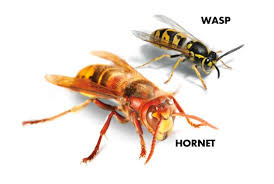
- The yellow jacket and hornet, both of which live in groups, or colonies, in temperate climates.
- Yellow jackets, which have black and yellow stripes on the abdomen, form underground nests.
- Hornets are predominantly black with some yellow markings on the head and thorax. Hornets form paper-like nests that are attached to trees, bushes, or buildings.
Certain animals have developed stinging as a form of defense or hunting. Venomous stings can have a local reaction, meaning pain, swelling, redness, itching, and possible oozing around the sting site, or a systemic reaction, meaning with local symptoms plus hives or airway and circulatory problems across the whole body. Local symptoms meaning the reaction to the sting is in one local area and systemic meaning the reaction is generalized throughout the body.
- For starters let us begin with the types of Wasps.
A-Hornets
Hornets are a type of wasp closely related to and resembling yellow jackets, according to National Geographic. While the majority of the approximately 20 species of hornets are found in tropical parts of Asia, these stinging insects can also be found throughout Europe, Africa and North America. Hornets are social insects that live in community hives dominated by queens.They are considered pests and potentially dangerous by many because they aggressively defend their hives by using their stingers. Reacting quickly after disturbing a hornets’ nest will help you prevent excessive stings and potential allergic reactions.
Hornets are a large species of wasp, growing up to 2 1/2-inches in length. Hornets become aggressive when they feel threatened or must defend their nest. Unlike a bee, hornets can sting multiple times, as their stingers are not barbed. A hornet sting delivers venom beneath the skin that causes a painful reaction for up to three days following. You can treat a hornet sting to relieve some of the pain and swelling, making the healing process tolerable.
Hornets are very, very painful. As soon as you are stung by a Hornet a red welt will develop and the throbbing pain will begin. Before trying to treat a Hornet sting be sure you are safely away from the Hornet and nest. A Hornet will sting many times and if you kill a Hornet their Hornet friends back at the nest will come after you too. When a Hornet is killed it releases a scent and other Hornets will come to investigate. If you are allergic to Hornet stings seek emergency medical attention.
B.) Yellow Jackets–Stinging Wasps
Overall, stinging wasps have warning colors, either yellow, brown, to even blue or red. Wasps have pointed abdomens attached to the thorax by a thin waist called a petiole. They build papery nests from wood fibers, very common in the northeast. The colonies that live in these nests are led by one egg-laying queen. The female nest-building workers are the only ones with stingers, which are modified egg laying apparatuses. If threatened, they will gather into a stinging swarm to protect the nest. REMEMBER wasps have the ability to sting repeatedly.
Tune into to Part 2 for learning about BEES.