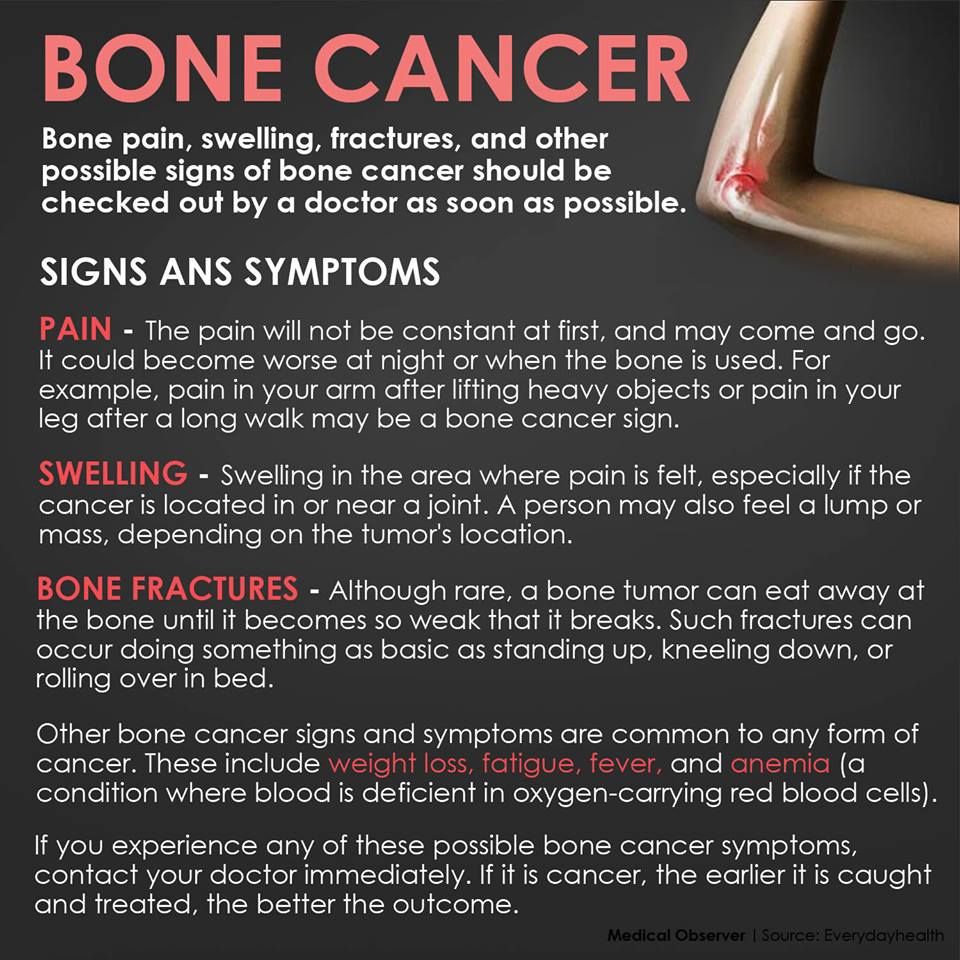
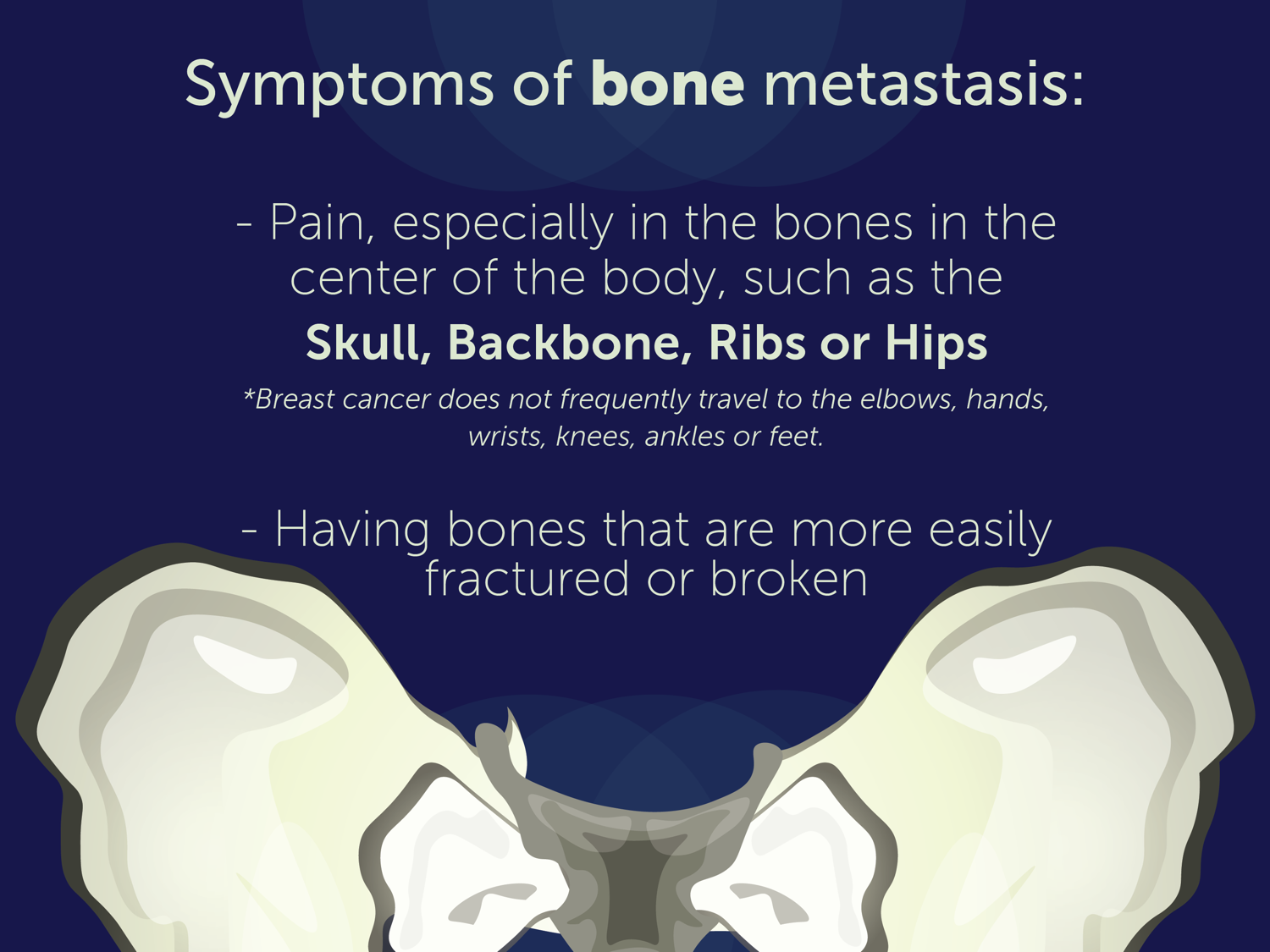
There are many treatments to cancer that spreads to the bone.

Many different treatments can help if your cancer has spread to bone, commonly called bone metastasis. Treatment cannot cure bone metastasis. But it can relieve pain, help prevent complications, and improve your quality of life.

Doctors use two types of treatments for metastatic cancer in the bones. Systemic treatments can reach cancer cells throughout the body. Local treatments directly target the cancer in the bone.

The treatment you get will depend upon:

  • Where your cancer started, and the kind of primary tumor you have
  • Which bones the cancer has invaded
  • The extent of damage to the bones
  • Which types of treatment you already have had
  • Your overall health
 Treating Bone Metastasis
Bisphosphonates

This group of drugs works best in cases where metastasis is weakening the bone.

How it works. You receive bisphosphonates by IV infusion every 3 to 4 weeks. These drugs help with bone metastasis by:

  • Slowing bone damage and reducing the risk of bone fractures
  • Easing bone pain
  • Reducing high levels of calcium in the blood

Possible side effects. The most common ones include:

  • Fatigue
  • Fever
  • Nausea or vomiting
  • Anemia
  • Bone or joint pain
A rare and serious side effect is bone death (osteonecrosis) of the jaw. Ask your doctor about precautions to take before beginning this treatment. Osteonecrosis may cause:
  • Jaw bone pain, swelling, or numbness
  • Loss of gum tissue
  • Loose teeth
  • Infection

Another available treatment is denosumab (Xgeva). It’s given by injection and may work as well as or better than bisphosphonates to prevent fractures. But it also can cause osteonecrosis, as well as low calcium levels in the blood.

Radiopharmaceuticals

These drugs contain radioactive elements that target cancer cells. Doctors tend to use this systemic treatment when the metastasis is stimulating new bone growth. This is more common with prostate cancer.

If your cancer has spread to many bones, these drugs may be a better option than standard radiation, which uses a beam to aim radiation at each bone metastasis. However, sometimes doctors combine radiopharmaceuticals and standard radiation.

How it works. The doctor injects a single dose of the drug into a vein. It then travels to the areas of bone with cancer and gives off radiation to kill the cancer. This single dose may be effective against pain for several months. You can receive another treatment later.

Possible side effects. The most common ones include:

  • Infections
  • Bleeding
  • Temporary increase in pain (flare reaction)

Immunotherapy

This systemic treatment helps your immune system spot and more effectively kill cancer cells. Some methods of immunotherapy have been used for a while, and some are still experimental.

How it works. Immunotherapy works in one of two main ways:

  • It boosts your body’s immune system to fight the cancer.
  • It uses a man-made version of proteins to kill cancer cells.

Examples of immunotherapy for cancer include:

  • Cytokines — substances secreted by the immune system that have an effect on other cells
  • Monoclonal antibodies — a class of antibodies made in the lab from a single population of cells
  • Tumor vaccines — vaccines using a substance that prompts the immune system to respond to a tumor

Possible side effects. Side effects vary, depending upon the type of immunotherapy. They may include:

  • Fever and chills
  • Weakness
  • Headache
  • Nausea or diarrhea
  • Rashes
 Chemotherapy

Chemotherapy is a common systemic treatment for bone metastasis. Your doctor will use a type of chemo that is effective against your primary tumor. So, if you have metastatic lung cancer, for example, your doctor will use drugs that are effective against lung cancer.

How it works. Anti-cancer drugs target and curb cancer growth. In most cases, you take chemo by mouth or through a vein (by IV). This can often shrink the tumors, which will ease your pain and help you feel better.

Possible side effects. Chemo can kill normal cells in addition to cancer cells. The side effects you might have will depend on:

  • The type and amount of drugs you take
  • The length of your treatment

Common side effects of chemotherapy include:

  • Loss of appetite, nausea, or vomiting
  • Hair loss
  • Mouth sores
  • Infection
  • Bleeding or bruising
  • Weakness or fatigue

Your doctor can help you prevent or manage these. Most side effects go away once you stop treatment.

Hormone Therapy

This is another common systemic treatment for cancer that can help with bone mets. Certain hormones, such as estrogen and testosterone, promote the growth of some cancers, such as breast and prostate cancers. Stopping these hormones may reduce bone mets from those cancers.

How it works. There are two main ways to stop the body from making hormones. One is surgery to remove the organs that produce the hormones, such as the ovaries or testicles. More often, doctors prescribe drugs that stop the hormone from being made or block its effect.

Possible side effects. These depend on the specific treatment. Hot flashes are common. Some hormone therapy, such as aromatase inhibitors, may speed up bone loss.

Side effects of hormone therapy for prostate cancer can include:

  • Anemia
  • Weight gain
  • Loss of sex drive

Side effects of hormone therapy for breast cancer can include:

  • Blood clots
  • Uterine cancer

Radiation Therapy

Radiation is a “local treatment” because it does not affect your entire body. It uses high-energy X-rays or particles to destroy or slow the growth of cancer cells in the bone. It helps most if you have only one or two bone metastases. You may receive it alone or combined with other types of treatment.

How it works. A machine focuses a beam of radiation on the bone metastasis. This treatment, called external beam radiation, lasts only a few minutes. You may receive radiation in one large dose or in smaller amounts over several treatments.

Possible side effects. Early, temporary side effects depend on the location being treated, but may include:

  • Fatigue
  • Skin changes
Continue reading below…
 Surgery

Surgery can often help relieve bone metastasis symptoms.

How it works. If a bone is broken, surgery may help relieve pain quickly. Surgery can also help stabilize a weak bone to keep it from breaking. The surgeon may insert:

  • Screws
  • Rods
  • Pins
  • Plates
  • Cages

Possible side effects. These include the usual risks of any surgery, such as infection.

If surgery is not an option, your doctor may use a cast or splint, or inject bone cement to help you move better and relieve pain.

Ablation

With this local treatment, a needle or probe is put into the tumor to destroy it. Though used more often for other types of metastasis, ablation can help if you have a problem with one or two bone tumors.

How it works. Some methods of ablation use chemicals or alcohol to kill the tumor. Two common methods include:

  • Radiofrequency ablation (RFA). A needle delivers an electric current to heat the tumor.
  • Cryoablation. A probe is used to freeze the tumor.

Afterward, the doctor may fill the space created by ablation with bone cement to help stabilize the bone.

Possible side effects. This procedure is generally safe but may cause some temporary soreness, swelling, and bruising.

Nerve End Ablation

This noninvasive procedure uses ultrasound energy and MRI technology to provide pain relief by destroying nerve endings in the area of the tumor. Because there is no incision, and no probe is inserted, the procedure is typically done on an outpatient basis with a local anesthetic rather than general anesthesia. While complications are possible, they are rare.

How it works. A specialist uses MRI scanning to target the specific area to be treated with ultrasound. Then, heat that’s made when ultrasound penetrates the targeted tissue destroys nerve endings in the bone around the tumor. The destruction of nerve endings results in pain relief.

Possible side effects. Possible complications include skin burns and damage to heat-sensitive organs that are next to the treated area.
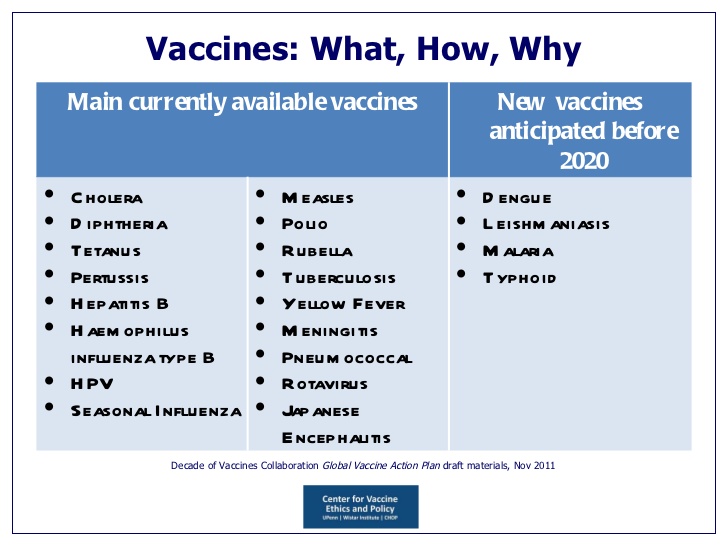
Prevent Measles Epidemics, common sense Vaccines!

Measles

It isn’t just a little rash

Measles can be dangerous, especially for babies and young children.

Measles symptoms typically include:

  • High fever (may spike to more than 104° F)
  • Cough
  • Runny nose
  • Red, watery eyes
  • Rash breaks out 3-5 days after symptoms begin

Measles Are Serious especially letting anyone with it  just go in public and allowing other people to be exposed to it with spreading the illness on to others causing a possible epidemic; like in Rockland County now.  WHY has this happened since parents, particularly Hasidic Jewish but there are others in communities not getting vaccines against measles.  Foolish for their children and no concern for their community in prevention of them getting measles.  That is just not right.

About 1 out of 4 people who get measles will be hospitalized.

1 out of every 1,000 people with measles will develop brain swelling due to infection (encephalitis), which may lead to brain damage.

1 or 2 out of 1,000 people with measles will die, even with the best care.

You have the power to protect your yourself and your child.

Provide your children with safe and long-lasting protection against measles by making sure they get the measles-mumps-rubella (MMR) vaccine according to CDC’s recommended immunization schedule.  Be a responsible parent and citizen in the United States.

Complications

Measles can be a serious in all age groups. However, children younger than 5 years of age and adults older than 20 years of age are more likely to suffer from measles complications.

Common Complications

Common measles complications include ear infections and diarrhea.

  • Ear infections occur in about one out of every 10 children with measles and can result in permanent hearing loss.
  • Diarrhea is reported in less than one out of 10 people with measles.

Severe Complications

Some people may suffer from severe complications, such as pneumonia (infection of the lungs) and encephalitis (swelling of the brain). They may need to be hospitalized and could die.

  • As many as one out of every 20 children with measles gets pneumonia, the most common cause of death from measles in young children.
  • About one child out of every 1,000 who get measles will develop encephalitis (swelling of the brain) that can lead to convulsions and can leave the child deaf or with intellectual disability.
  • For every 1,000 children who get measles, one or two will die from it.

Measles may cause pregnant woman to give birth prematurely, or have a low-birth-weight baby.

Long-term Complications

Subacute sclerosing panencephalitis (SSPE) is a very rare, but fatal disease of the central nervous system that results from a measles virus infection acquired earlier in life. SSPE generally develops 7 to 10 years after a person has measles, even though the person seems to have fully recovered from the illness. Since measles was eliminated in 2000, SSPE is rarely reported in the United States.

Among people who contracted measles during the resurgence in the United States in 1989 to 1991, 4 to 11 out of every 100,000 were estimated to be at risk for developing SSPE. The risk of developing SSPE may be higher for a person who gets measles before they are two years of age.

Be responsible to yourself, to your child and to your community get the VACCINE for measles to prevent yourself, your child and your community getting measles.  Vaccines prevent you getting the measles, what is so hard to understand and no God in his right mind would condemn you for getting vaccines for yourself, children and community.  There surely was no vaccines invented when God existed, just do your research.

QUOTE FOR TUESDAY:


“Epilepsy and seizures can develop in any person at any age. Seizures and epilepsy are more common in young children and older people.

  • About 1 in 100 people in the U.S. has had a single unprovoked seizure or has been diagnosed with epilepsy.
  • 1 in 26 people will develop epilepsy in their lifetime”

Epilepsy Foundation


QUOTE FOR MONDAY:

“Epilepsy is the fourth most common neurological disorder and affects people of all ages.

  • Epilepsy means the same thing as “seizure disorders.”
  • Epilepsy is characterized by unpredictable seizures and can cause other health problems.
  • Epilepsy is a spectrum condition with a wide range of seizure types and control varying from person-to-person.
  • Public misunderstandings of epilepsy cause challenges that are often worse than the seizures.”

Epilepsy Foundation

QUOTE FOR THE WEEKEND:

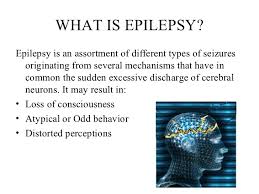
“Epilepsy is a central nervous system (neurological) disorder in which brain activity becomes abnormal, causing seizures or periods of unusual behavior, sensations, and sometimes loss of awareness.

Anyone can develop epilepsy. Epilepsy affects both males and females of all races, ethnic backgrounds and ages.  Seizure symptoms can vary widely.

At least two unprovoked seizures are generally required for an epilepsy diagnosis.”

MAYO Clinic

Epilepsy


Most people with epilepsy are otherwise healthy; as long as it is controlled like most other diseases.  A seizure is a physical manifestation of paroxysmal and abnormal electrical firing of neurons in the brain.  Think of it as numerous voltage (hyperexcitability of neurons) going throughout the brain meaning brain waves going in all directions with the brain saying its too much activity causing the brain to go into a seizure.

When the seizure occurs there is a decrease in oxygen since the brain isn’t capable to send messages during the seizure.  If the seizure continues to repeat one right after another the person is in status epilepticus and if the seizures doesn’t stop the person can lead to a neuronal death;  like John Travolta’s son who died of this.

The term seizure disorder may refer to any number of conditions that result in such a paroxysmal electrical discharge.  These conditons could be metabolic or structural in nature.   Epilepsy is the term for those who have a second seizure that occurs spontaneously and without preceding metabolic or structural cause for the occurrence.  Epilepsy is a chronic disorder that requires antiepileptic drug therapy; usually thorough out life.

Etiology of Epilepsy is generally a sign of underlying pathology involving the brain.  It may be the first sign of nervous system disease (ex. Brain tumor), or it may be a sign of a systemic or metabolic derangement.

Metabolic and Systemic Causes of Seizures:

a.) Electrolyte Imbalance=Acidosis, heavy metal poisoning, Hypocalcemia, Hypocapnea, Hypoglycemia, Hypoxia, Sodium-Potassium imbalance, Systemic  diseases (liver, renal failure, etc…) Toxemia of pregnancy, and water intoxication.

b.) Infections like meningitis, encephalitis, brain abcess.

c.) Withdrawal of sedative-hypnotic drugs=Alcohol, Antiepileptic drugs, Barbiturates, Benzodiazepines.

d.) Iatrogenic drug overdose=Theopylline, Penicillin.

Other causes of epilepsy can be Trauma, Heredity.

Structural causes of epilepsy:

Head trauma/Degenerative Disease like Alzheimer’s or Creutfeldz-Jacob or Huntington’s Chorea or Multiple Sclerosis or Pick’s Disease. There is also tumors or genetic disease or Stroke or Infections or Febrile seizures.

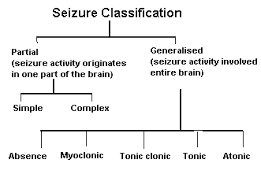
Types of seizures

I-Partial seizures (seizures beginning local)

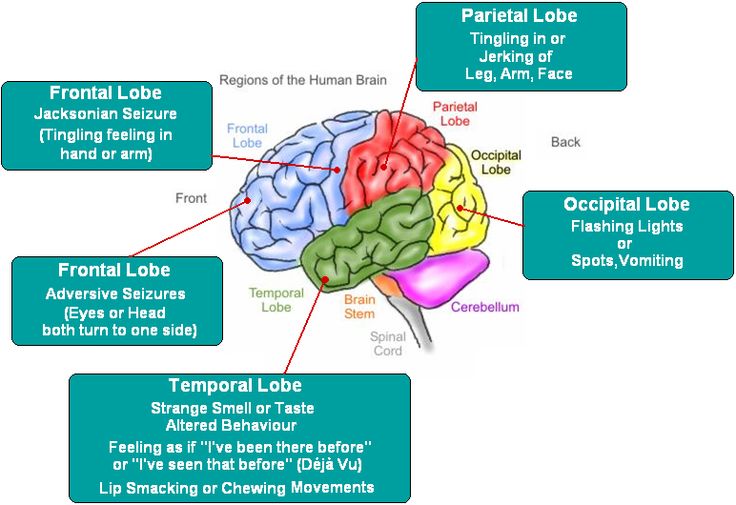
1-simple partial seizures-(the person is conscious and not impaired).  With motor symptoms, autonomic symptoms and even psychic symptoms.

2.)-Complex partial seizures-(the person is with impairment of consciousness)

II-Generalized seizures-(bilaterally symmetrical and without local onset).

3.) Tonic clonic seizures – Grand Mal


QUOTE FOR THURSDAY:

“Genital warts are one of the most common types of sexually transmitted infections. Nearly all sexually active people will become infected with at least one type of human papillomavirus (HPV), the virus that causes genital warts, at some point during their lives. Women are somewhat more likely than men to develop genital warts.

As the name suggests, genital warts affect the moist tissues of the genital area. Genital warts may look like small, flesh-colored bumps or have a cauliflower-like appearance. In many cases, the warts are too small to be visible.”

MAYO Clinic

QUOTE FOR TUESDAY:

“How many people use alcohol in the United States? The National Institute on Alcohol Abuse and Alcoholism (NIAAA) reports that according to the 2015 National Survey on Drug Use and Health (NSDUH), the prevalence of drinking in the United States was 86 percent of people ages 18 or older reported that they drank alcohol at some point in their lifetime; 70 percent reported that they drank in the past year; and 56 percent reported that they drank in the past month. Based on these numbers it is safe to say the overall use of alcohol across the country is very high. Since such a great number of us have reported that we engage in the use and consumption of alcohol it should be our duty to get involved.

How about the numbers related to Alcohol Use Disorder (AUD) in the United States? According to the same study, 15.1 million adults ages 18 and older had AUD (9.8 million of which were men and 5.3 million were women). Only about 1.3 million adults received treatment for AUD at a specialized facility in 2015 (898,000 of which were men and 417,000 were women) – only 1.3 million of the 15.1 million?? This means only about 8.3% of adults with AUD sought treatment. These numbers alone highlight the need for awareness.”

Quit Alcohol (quitalcohol.com)

QUOTE FOR MONDAY:

”Too much alcohol is dangerous. Heavy drinking can increase the risk of certain cancers. It can cause damage to the liver, brain, and other organs. Drinking during pregnancy can harm your baby. Alcohol also increases the risk of death from car crashes, injuries, homicide, and suicide.

Genetic, psychological, social and environmental factors can impact how drinking alcohol affects your body and behavior.”

An American Addiction Center Resource (www.alcohol.org)