Part II What is Cushing’s Syndrome


Complications can include:

-Diabetes (High or Low blood glucose levels)

-Enlargement of pituitary tumor and other complications from the tumor growth

-Fractures due to osteoporosis which are common in older people

-High blood pressure which could be life threatening

-Kidney stones from the increase in cortisol and other chemicals filtered through the kidneys

-Serious infections which could lead to further secondary infections

How Cushing’s syndrome is diagnosed and treated?

Diagnosis is established on a survey of the patient’s medical history including somatic examination and laboratory tests.

Frequently x-ray exams of the adrenal or pituitary glands are beneficial for locating tumors. These tests assist to find out if excess levels of cortisol are exhibited and why.

Radiologic imaging: direct visualization of the endocrine glands. Imaging tests reveal the size and shape of the pituitary and adrenal glands and help determine if a tumor is present.  The most common imaging tests are the computerized tomography (CT) scan and magnetic resonance imaging (MRI).  A CT scan produces a series of x-ray pictures giving a cross-sectional image of a body part.  MRI also produces images of internal organs but without exposing patients to ionizing radiation.

Imaging procedures are used to find a tumor after a diagnosis has been made. Imaging is not used to make the diagnosis of Cushing’s syndrome because benign tumors are commonly found in the pituitary and adrenal glands.  These tumors, sometimes called incidentalomas, do not produce hormones in quantities that are harmful.  They are not removed unless blood tests show they are a cause of symptoms or they are unusually large.  Conversely, pituitary tumors may not be detectable by imaging in almost half of people who ultimately need pituitary surgery for Cushing’s syndrome.

24-hour urinary free cortisol level. In this test, a person’s urine is collected several times over a 24-hour period and tested for cortisol.  Levels higher than 50 to 100 micrograms a day for an adult suggest Cushing’s syndrome.  Low-dose dexamethasone suppression test (LDDST). In the LDDST, a person is given a low dose of dexamethasone, a synthetic glucocorticoid, by mouth every 6 hours for 2 days.  Urine is collected before dexamethasone is administered and several times on each day of the test.  A modified LDDST uses a onetime overnight dose.

The normal upper limit varies in different laboratories, depending on which measurement technique is used.

Midnight plasma cortisol and late-night salivary cortisol measurements. The midnight plasma cortisol test measures cortisol concentrations in the blood.

Dexamethasone-corticotropin-releasing hormone (CRH) test. Some people have high cortisol levels but do not develop the progressive effects of Cushing’s syndrome, such as muscle weakness, fractures, and thinning of the skin.  These people may have pseudo-Cushing’s syndrome, a condition sometimes found in people who have depression or anxiety disorders, drink excess alcohol, have poorly controlled diabetes, or are severely obese.  Pseudo-Cushing’s does not have the same long-term effects on health as Cushing’s syndrome and does not require treatment directed at the endocrine glands.

Treatment of Cushings Syndrome:

Treatment of cushings syndrome is by castigation of the under lying cause. Treatments for Cushing’s syndrome are contrived to pass your body’s cortisol production to normal. By indurate, or even distinctly lowering cortisol levels, you’ll feel evident improvements in your signs and symptoms. Left untreated, however, Cushing’s syndrome can finally induce to death. The treatment choice depend on the cause. For example:

*If a tumour in an adrenal gland is the reason, an operation to withdraw it will cure the condition.

*For adrenal hyperplasia, both adrenal glands may require to be withdraw. You will then require to take lifelong replacement therapy of several adrenal hormones.

*Other tumours in the body that produce ‘ectopic’ ACTH may be able to be removed, depending on the kind of tumour, where it is, etc.

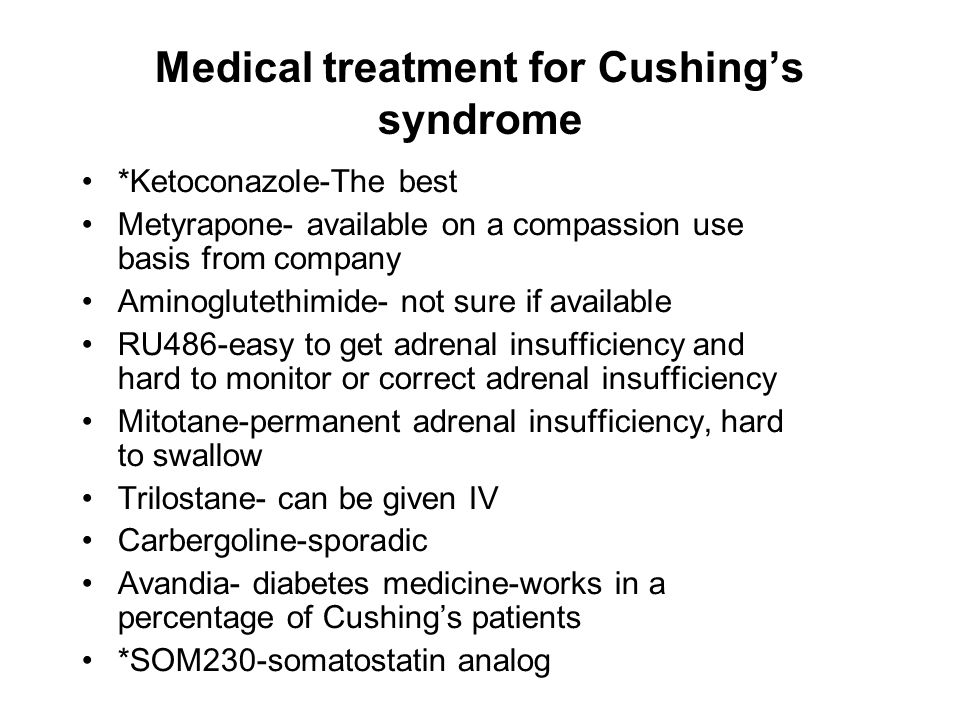
*Medication to block the production or consequence of cortisol may be a choice.

Ending line treatments for Cushing syndrome are designed to lower the high level of cortisol in your body. The best treatment for you depends on the cause of the syndrome. Treatment options include:

  • Reducing corticosteroid use. If the cause of Cushing syndrome is long-term use of corticosteroid medications, your doctor may be able to keep your Cushing signs and symptoms under control by reducing the dosage of the drug over a period of time, while still adequately managing your asthma, arthritis or other condition. For many of these medical problems, your doctor can prescribe noncorticosteroid drugs, which will allow him or her to reduce the dosage or eliminate the use of corticosteroids altogether.

Don’t reduce the dose of corticosteroid drugs or stop taking them on your own. Do so only under your doctor’s supervision.

Abruptly discontinuing these medications could lead to deficient cortisol levels. Slowly tapering off corticosteroid drugs allows your body to resume normal cortisol production.

  • If the cause of Cushing syndrome is a tumor, your doctor may recommend complete surgical removal. Pituitary tumors are typically removed by a neurosurgeon, who may perform the procedure through your nose. If a tumor is present in the adrenal glands, lungs or pancreas, the surgeon can remove it through a standard operation or in some cases by using minimally invasive surgical techniques, with smaller incisions.

After the operation, you’ll need to take cortisol replacement medications to provide your body with the correct amount of cortisol. In most cases, you’ll eventually experience a return of normal adrenal hormone production, and your doctor can taper off the replacement drugs.

However, this process can take up to a year or longer. In some instances, people with Cushing syndrome never experience a resumption of normal adrenal function; they then need lifelong replacement therapy.

  • Radiation therapy. If the surgeon can’t totally remove a pituitary tumor, he or she will usually prescribe radiation therapy to be used in conjunction with the operation. Additionally, radiation may be used for people who aren’t suitable candidates for surgery.

Radiation can be given in small doses over a six-week period, or with a technique called stereotactic radiosurgery (Gamma Knife surgery). In the latter procedure, administered as a single treatment, a large dose of radiation is delivered to the tumor, and the radiation exposure to surrounding tissues is minimized.

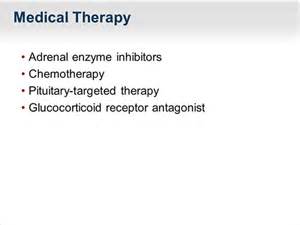
  • Medications can be used to control cortisol production when surgery and radiation don’t work. Medications may also be used before surgery in people who have become very sick with Cushing syndrome. Doctors may recommend drug therapy before surgery to improve signs and symptoms and minimize surgical risk.

Medications to control excessive production of cortisol at the adrenal gland include ketoconazole (Nizoral), mitotane (Lysodren) and metyrapone (Metopirone).

Mifepristone (Korlym) is approved for people with Cushing syndrome who have type 2 diabetes or glucose intolerance. Mifepristone does not decrease cortisol production, but it blocks the effect of cortisol on your tissues.

Side effects from these medications may include fatigue, nausea, vomiting, headaches, muscle aches, high blood pressure, low potassium and swelling. Some have more serious side effects, such as neurological side effects and liver toxicity.

The newest medication for Cushing’s is pasireotide (Signifor), and it works by decreasing ACTH production from a pituitary tumor. This medication is given as an injection twice daily. It’s recommended if pituitary surgery is unsuccessful or cannot be done.

Side effects are fairly common, and may include diarrhea, nausea, high blood sugar, headache, abdominal pain and fatigue.

In some cases, the tumor or its treatment will cause other hormones produced by the pituitary or adrenal gland to become deficient and your doctor will recommend hormone replacement medications.

If none of these treatment options are appropriate or effective, your doctor may recommend surgical removal of your adrenal glands (bilateral adrenalectomy). This procedure will cure excess production of cortisol, but will require lifelong replacement medications.

Complications are rare but include:

Bruising on your thigh

Ear pain during the procedure

Very rarely, neurological problems
QUOTE FOR MONDAY:

“Cushing’s syndrome is a hormonal disorder caused by prolonged exposure of the body’s tissues to high levels of the hormone cortisol.”

NIH National Institute of Diabetes and Digestive and Kidney Diseases (U.S. Department of Health and Human Services)

Part I What is Cushing’s Syndrome


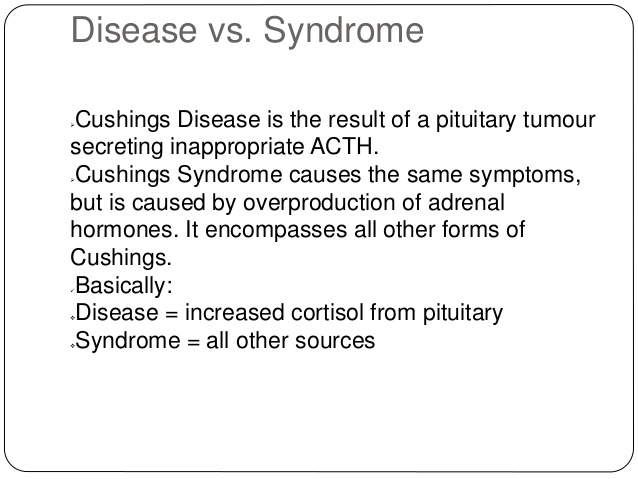
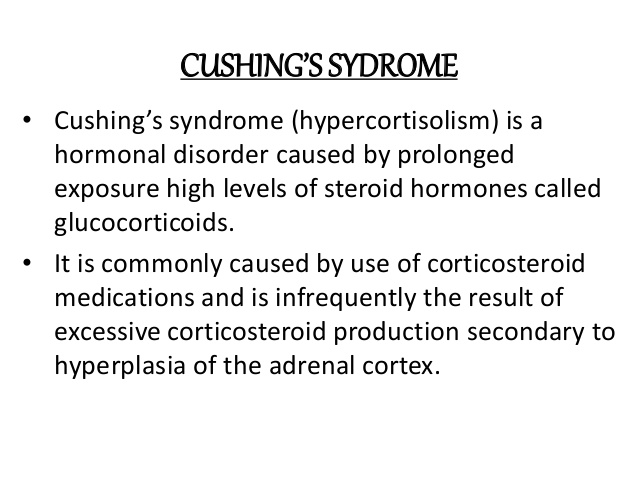
Cushing’s syndrome describes the signs and symptoms associated with prolonged exposure to inappropriately high levels of the hormone cortisol. This can be caused by taking glucocorticoid drugs, or diseases that result in excess cortisol, adrenocorticotropic hormone (ACTH), or CRH levels.

Cushing’s syndrome appears when the body’s tissues are display to immoderate levels of cortisol for long periods of time.

There are two types of the disease and they are known as exogenous and endogenous.  Exogenous Cushing syndrome is caused by something outside of the body, like when hormones are given to a patient during a RX for another condition.

Endogenous is caused by natural causing problems within the body.  Endogenous is likely to be hereditary and not caused by an outside force like a steroid complex.

Causes of Cushing Syndrome

The most common cause of Cushing’s syndrome is exogenous administration of glucocorticoids prescribed by a health care practitioner to treat other diseases (called iatrogenic Cushing’s syndrome). This can be an effect of corticosteroid treatment of a variety of disorders such as asthma and rheumatoid arthritis, or in immunosuppression after an organ transplant.

Administration of synthetic ACTH(adrenocorticotropichormone) is also possible, but ACTH is less often prescribed due to cost and lesser utility. Although rare, Cushing’s syndrome can also be due to the use of medroxyprogesterone   In this form of Cushing’s, the adrenal glands atrophy due to lack of stimulation by ACTH, since glucocorticoids downregulate production of ACTH. Cushing syndrome in childhood usually results from use of glucocorticoid medication.

Endogenous Cushing’s syndrome results from some derangement of the body’s own system of secreting cortisol. Normally, ACTH is released from the pituitary gland when necessary to stimulate the release of cortisol from the adrenal glands.

In pituitary Cushing’s, a benign pituitary adenoma secretes ACTH. This is also known as Cushing’s disease and is responsible for 70% of endogenous Cushing’s syndrome.

In adrenal Cushing’s, excess cortisol is produced by adrenal gland tumors, hyperplastic adrenal glands, or adrenal glands with nodular adrenal hyperplasia.

Tumors outside the normal pituitary-adrenal system can produce ACTH (occasionally with CRH) that affects the adrenal glands. This etiology is called ectopic or paraneoplastic Cushing’s disease and is seen in diseases like small cell lung cancer.

Finally, rare cases of CRH-secreting tumors (without ACTH secretion) have been reported, which stimulates pituitary ACTH production.

Pseudo-Cushing’s syndrome

 Elevated levels of total cortisol can also be due to estrogen found in oral contraceptive pills that contain a mixture of estrogen and progesterone, leading to Pseudo-Cushing’s syndrome. Estrogen can cause an increase of cortisol-binding globulin and thereby cause the total cortisol level to be elevated. However, the total free cortisol, which is the active hormone in the body, as measured by a 24 hour urine collection for urinary free cortisol, is normal.

Epidemiology

Iatrogenic Cushing’s syndrome (caused by treatment with corticosteroids) is the most common form of Cushing’s syndrome.

Symptoms of Cushings Syndrome

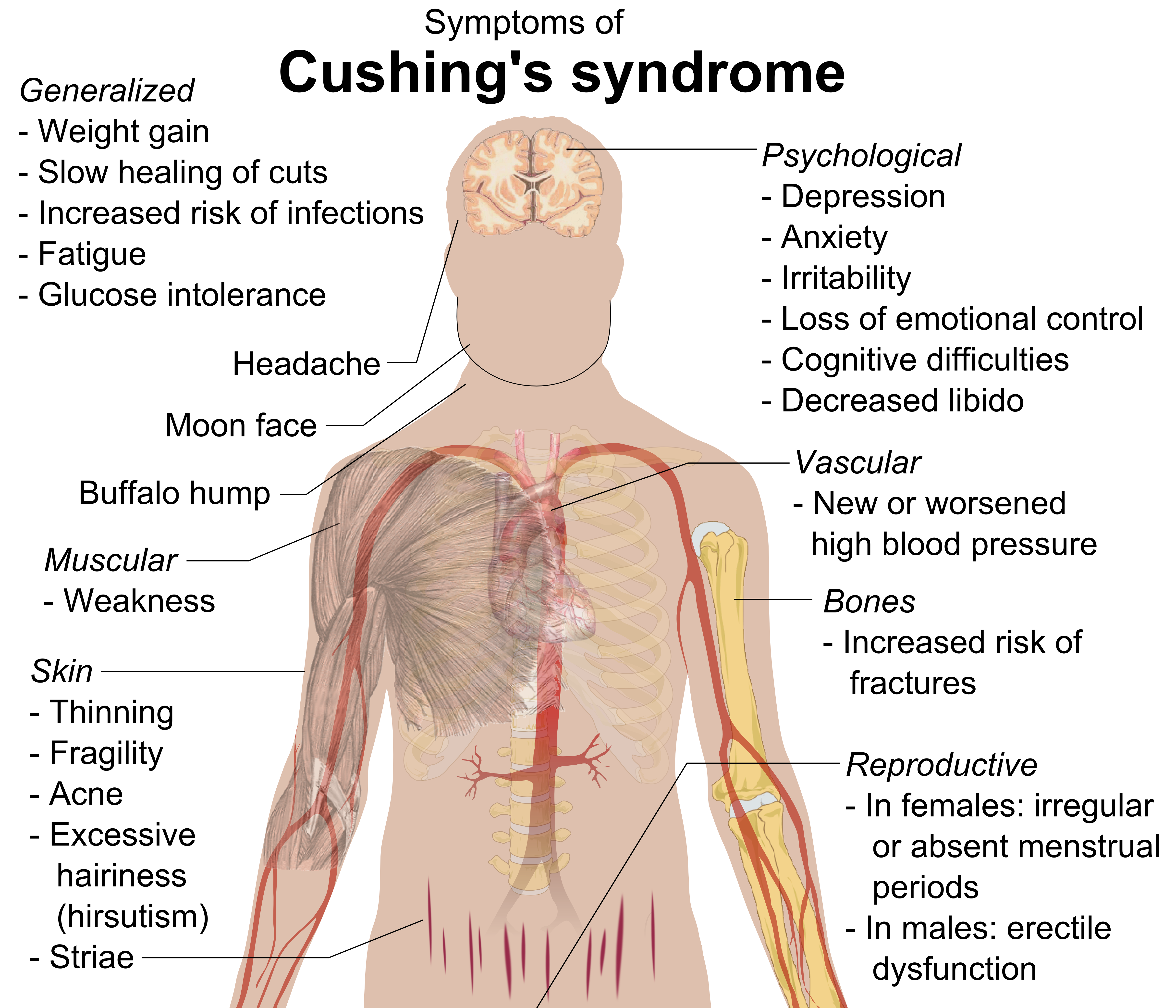
Symptom of cushings syndrome include fat deposits close to the face neck and trunk; weariness; muscular weakness; salt and water retention; acne; leisurely bruising; menstlruall irregularities; and signs (in women) of virilisation, such as increase of the voice, commute in body, shape, loss of scalp hair, and extend in facial and body hair. Complications of cushings syndrome include advanced blood pressure, The symptoms and signs of cushings syndrome induced by a chronic redundant of corticosteroid hormones in the blood. The redundant may be acquired by a tumour of the outer part (cortex) of the adrenal gland, or may be referable to over inspiration of the adrenal glands by a tumour the pituitary gland.

Many children and teenagers with Cushing’s syndrome will exhibit various symptoms of the following:

-extreme weight gain

-growth retardation

-missed periods in teenage girls

-excess hair growth

-acne

-reddish-blue streaks on the skin

-high blood pressure

-tiredness and weakness

-either very early or late puberty

Adults with the disease may also have symptoms of intense weight gain, redundant hair growth, high blood pressure, and skin difficulties. In addition, they may show:

-muscle and bone weakness

-moodiness, irritability, or depression

-sleep disturbances

-high blood sugar

-menstrual disorders in women and diminished fertility in men


QUOTE FOR THE WEEKEND:

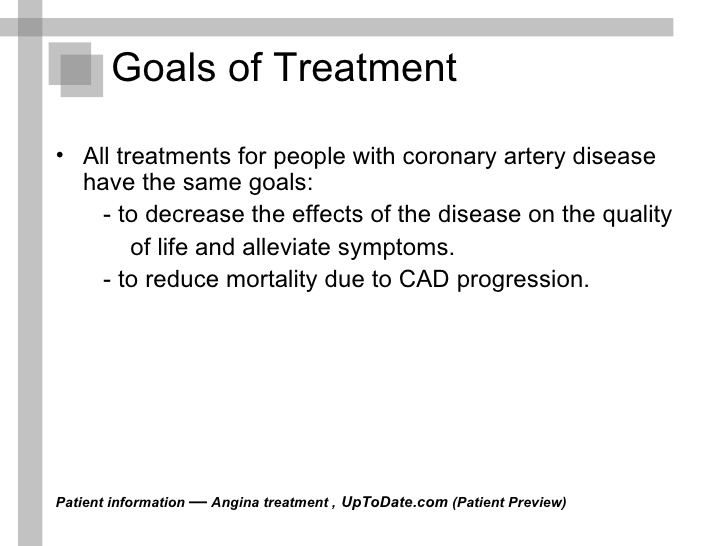
“Treatments for coronary heart disease include heart-healthy lifestyle changes, medicines, medical procedures and surgery, and cardiac rehabilitation.”

National Heart, Lung and Blood Institute

Part III Know what Coronary Artery Disease treatments are!

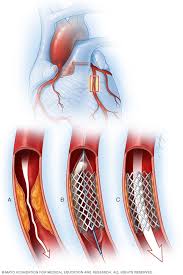
Surgery inserting a stent

Treatments of Coronary Artery Disease!

1.) Lifestyle changes

Making a commitment to the following healthy lifestyle changes can go a long way toward promoting healthier arteries:

  • Quit smoking.
  • Eat healthy foods.
  • Exercise regularly.
  • Lose excess weight.
  • Reduce stress.

2.) Drugs

Various drugs can be used to treat coronary artery disease, including:

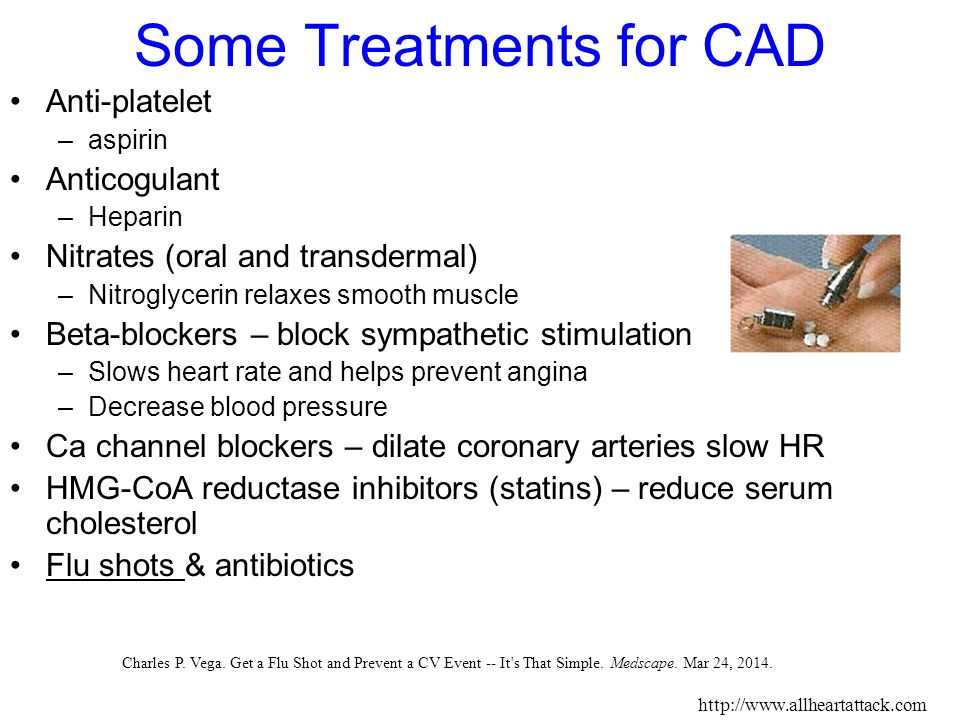
  • Cholesterol-modifying medications. By decreasing the amount of cholesterol in the blood, especially low-density lipoprotein (LDL, or the “bad”) cholesterol, these drugs decrease the primary material that deposits on the coronary arteries. Your doctor can choose from a range of medications, including statins, niacin, fibrates and bile acid sequestrants.
  • Your doctor may recommend taking a daily aspirin or other blood thinner. This can reduce the tendency of your blood to clot, which may help prevent obstruction of your coronary arteries.

If you’ve had a heart attack, aspirin can help prevent future attacks. There are some cases where aspirin isn’t appropriate, such as if you have a bleeding disorder or you’re already taking another blood thinner, so ask your doctor before starting to take aspirin.

  • Beta blockers. These drugs slow your heart rate and decrease your blood pressure, which decreases your heart’s demand for oxygen. If you’ve had a heart attack, beta blockers reduce the risk of future attacks.
  • Nitroglycerin. Nitroglycerin tablets, sprays and patches can control chest pain by temporarily dilating your coronary arteries and reducing your heart’s demand for blood.
  • Angiotensin-converting enzyme (ACE) inhibitors and angiotensin II receptor blockers (ARBs). These similar drugs decrease blood pressure and may help prevent progression of coronary artery disease.

3.) Procedures to restore and improve blood flow

Coronary artery stent

Surgical procedure in which one or more blocked coronary arteries are bypassed by a blood vessel graft to restore normal blood flow to the heart. These graft usually come from the patient’s own arteries and veins located in the chest (thoracic), leg (saphenous) or arm (radial). The graft goes around the blocked artery (or arteries) to create new pathways for blood to flow to the heart.

Sometimes more aggressive treatment is needed. Here are some options:

  • Angioplasty and stent placement (percutaneous coronary revascularization). Your doctor inserts a long, thin tube (catheter) into the narrowed part of your artery. A wire with a deflated balloon is passed through the catheter to the narrowed area. The balloon is then inflated, compressing the deposits against your artery walls.

A stent is often left in the artery to help keep the artery open. Some stents slowly release medication to help keep the artery open.

  • Coronary artery bypass surgery. A surgeon creates a graft to bypass blocked coronary arteries using a vessel from another part of your body. This allows blood to flow around the blocked or narrowed coronary artery as described at the top of this article. Because this requires open-heart surgery, it’s most often reserved for cases of multiple narrowed coronary arteries.

Alternative medicine

Omega-3 fatty acids are a type of unsaturated fatty acid that’s thought to reduce inflammation throughout the body, a contributing factor to coronary artery disease. However, recent studies have not shown them to be beneficial. More research is needed.

  • Fish and fish oil. Fish and fish oil are the most effective sources of omega-3 fatty acids. Fatty fish — such as salmon, herring and light canned tuna — contain the most omega-3 fatty acids and, therefore, the most benefit. Fish oil supplements may offer benefit, but the evidence is strongest for eating fish.
  • Flax and flaxseed oil. Flax and flaxseed oil also contain beneficial omega-3 fatty acids, though studies have not found these sources to be as effective as fish. The shell on raw flaxseeds also contains soluble fiber, which can help lower blood cholesterol.
  • Other dietary sources of omega-3 fatty acids. Other dietary sources of omega-3 fatty acids include canola oil, soybeans and soybean oil. These foods contain smaller amounts of omega-3 fatty acids than do fish and fish oil, and evidence for their benefit to heart health isn’t as strong.

QUOTE FOR FRIDAY:

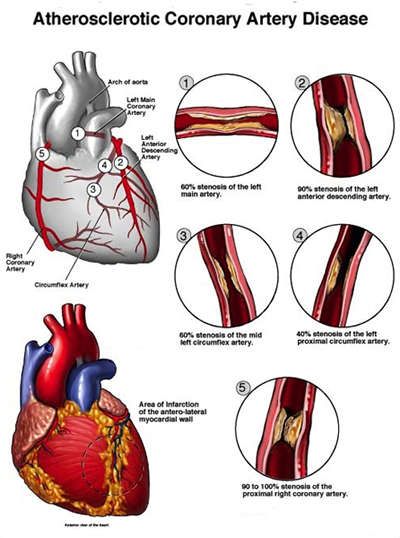
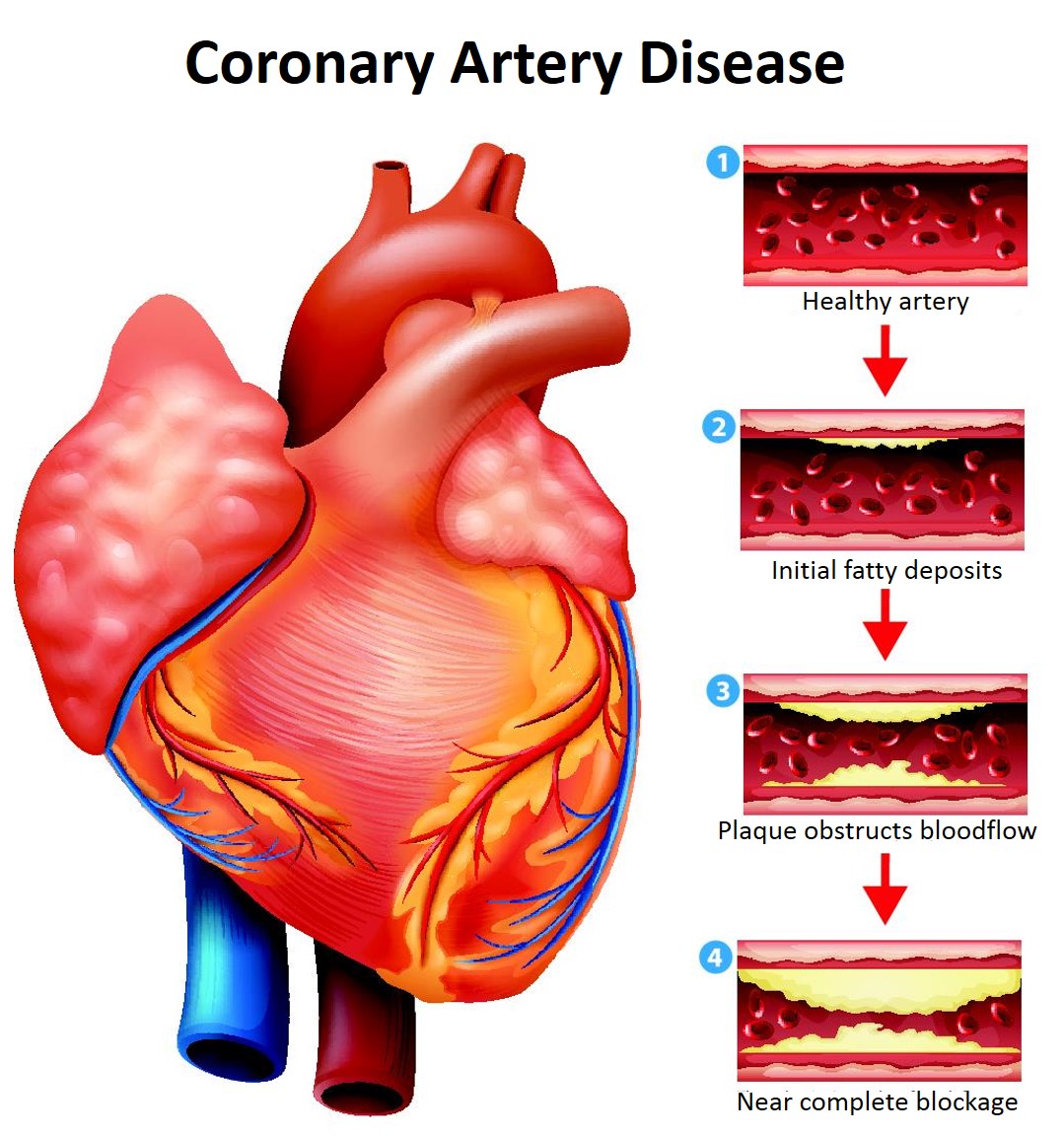
“Plaque“ might begin to build up where the arteries are damaged. The buildup of plaque in the coronary arteries may start in childhood. Over time, plaque can harden or rupture (break open). Hardened plaque narrows the coronary arteries and reduces the flow of oxygen-rich blood to the heart. This can cause angina (chest pain or discomfort).”

National Heart, Lung and Blood Institute

Part II Know what causes of Coronary Artery Disease is!

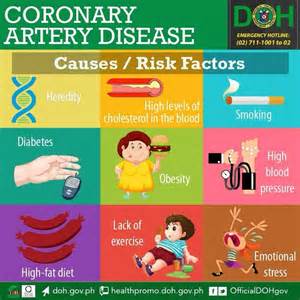
Coronary artery disease is thought to begin with damage or injury to the inner layer of a coronary artery, sometimes as early as childhood. The damage may be caused by various factors, including the following which are problems we can prevent or better control through better diet, some form of exercise balanced with rest.  Including keeping our stress controlled in a productive way (like work out program to doing hobbies).

Causes that are modifiable (that we can change or help control):

  • Smoking-Stop it
  • High blood pressure-Lose weight, decrease junk food and sodium in your diet, exercise.  If on B/P meds be compliant in taking them.
  • High cholesterol-Eat better food, lose weight, or if on anti-cholesterol meds be compliant in taking them.
  • Diabetes or insulin resistance-Lose weight, eat foods=no sugar, and be compliant with your diabetic meds.
  • Sedentary lifestyle-Get in an exercise program; stay active.

Causes that are nonmodifiable (that you can’t change):

-Race:  Race refers to common characteristics passed down through the genes. Non-Hispanic whites (63%) have roots in Europe, the Middle East, or North Africa. Blacks (13%) have origins in any of the black racial groups of Africa or Afro-Caribbean countries. Asians (5%) may have ancestors anywhere from India to Japan. This geographic diversity within racial groups means that there are actually greater genetic differences within than between certain groups.

Know this: Rates of high blood pressure, diabetes, and heart disease vary among people of different backgrounds.

Adults living in the United States are more likely to die from heart disease than any other cause, regardless of their racial or ethnic heritage. But certain minority groups face a greater risk than others. These differences appear to stem from an increased prevalence of high blood pressure, diabetes, and obesity seen in some populations compared with white Americans.

Still, teasing out the reasons isn’t easy. Genetic differences do exist. But diversity within different racial and ethnic groups means that genetic traits common to some groups can’t be generalized to an entire race.

Many intertwined factors likely contribute to the higher heart disease rates seen among some groups. Their lower average incomes affect where they live, which in turn affects their access to healthy food, safe places to exercise, and quality health care. In other words, “your ZIP code is more important than your genetic code,” says Dr. Eldrin Lewis, a cardiologist at Harvard-affiliated Brigham and Women’s Hospital.

But even after adjustment for factors related to socioeconomic differences, disparities in rates of heart disease and its risk factors persist, Dr. Lewis says. In the United States, nearly half of all black adults have some form of cardiovascular disease, compared with about one-third of all white adults. A genetic difference that predisposes blacks to high blood pressure might play a role.

Heredity:  A family history of heart disease is associated with a higher risk of coronary artery disease, especially if a close relative developed heart disease at an early age. Your risk is highest if your father or a brother was diagnosed with heart disease before age 55 or if your mother or a sister developed it before age 65.

-Age:Just like a car the older you get the highier the risk of problems with the vehicle and the same with the body. 

-Gender: Men are generally at greater risk of coronary artery disease. However, the risk for women increases after menopause.

Learn more tomorrow on treatment of CAD in Part III!

QUOTE FOR THURSDAY:

“Coronary artery disease develops when the major blood vessels that supply your heart with blood, oxygen and nutrients (coronary arteries) become damaged or diseased=narrowing or blockages of the arteries=decreased blood flow to heart tissue.”

American Heart Association

Part I Know what Coronary Artery Disease (CAD) & its symptoms!


Coronary artery disease develops when the major blood vessels that supply your heart with blood, oxygen and nutrients (coronary arteries) become damaged or diseased. Cholesterol-containing deposits (plaque) in your arteries and inflammation are usually to blame for coronary artery disease.

To better understand how CAD operates here is a metaphor like when we drive our car if our transmission is temporarily blocked the engine struggles to operate ( Just like in this disease CAD you get symptoms or no specific symptoms with resulting to struggle to do your activities of daily living)with a temporary block and definitely a complete block).   Ending probem with CAD the you need the blockage resolved so the blood can get 100% oxygen from our lungs (they provide blood oxygen to the red blood cells that provide this nutrient to our tissues to stay alive–without it our body goes through starvation=no oxygen to tissure=pain like angina).  So again as a metaphor using the car, the engine of the body is the heart, the transmission of the body is the lungs (one can’t live without the other) and the kidney system ( that filters our blood removing toxins from it to keep our blood stream cells clean) that would be the oil system of the car.  All the systems have a function that relate to the body in keeping it alive.  If oxygen is deprived long enough or toxins just continue to build up in our body it will die without resolution to getting back to normal or providing some oxygen or removing some toxins of the body like through hemodialysis for exampte.

Signs and Symptoms of CAD:

When plaque builds up, they narrow your coronary arteries, decreasing blood flow to your heart. Eventually, the decreased blood flow may cause symptoms like chest pain (This pain, referred to as angina, usually occurs on the middle or left side of the chest. Angina is generally triggered by physical or emotional stress.  It maybe triggered by stress the cause is lack of oxygen=nutrients to our body).

The symptom shortness of breath– is also caused by lack of oxygen due to this blockage which could be partial or complete in our major blood vessels and there are other coronary artery disease signs and symptoms (which are listed below).

A partial or complete blockage can cause a heart attack.

Because coronary artery disease often develops over decades, you might not notice a problem until you have a significant blockage with or without specific symptoms to even a heart attack. Remember many heart attacks can be silent: that is why at a certain age we should be having a 6mth or yearly check up by a cardiologist (the expert) but if your insurance doesn’t cover a referral than go to your general doctor for a yearly physical or sooner.  But there’s plenty you can do to prevent and treat coronary artery disease. A healthy lifestyle can make a big impact on prevention or even help treating CAD.

Women are somewhat more likely than men are to experience less typical signs and symptoms of a heart attack, such as neck or jaw pain. Sometimes a heart attack occurs without any apparent signs or symptoms.

Learn more about the causes, risks that put you more at causes and risks of CAD tomorrow in Part II!


QUOTE FOR TUESDAY:

“Check your car seat before holiday travel. Seventy-three percent of car seats are not used or installed correctly, so check it before you hit the road.Prepare for weather emergencies, if you live in a cold-weather state. Pack extra blankets, food and diapers, in case your car is stuck in snow or disabled. Keep your cell phone charged, make sure someone knows your route, and clear the exhaust of packed snow. ”

safekids.org