

Archive | January 2026

QUOTE FOR THURSDAY:

Key facts

  • Cervical cancer is largely preventable through HPV vaccination and regular screening, as recommended by national guidelines, and it can be cured if detected early and treated promptly.
  • Cervical cancer is the fourth most common cancer in women globally with around 660 000 new cases and around 350 000 deaths in 2022.
  • The highest rates of cervical cancer incidence and mortality are in low- and middle-income countries. This reflects major inequities driven by lack of access to national HPV vaccination, cervical screening and treatment services and social and economic determinants.
  • Cervical cancer is caused by persistent infection with human papillomavirus (HPV). Women living with HIV are 6 times more likely to develop cervical cancer compared to women without HIV.
  • Countries worldwide are accelerating efforts to eliminate cervical cancer, guided by the global 90–70–90 targets: 90% of girls fully vaccinated with HPV vaccine by age 15, 70% of women screened by ages 35 and 45, and 90% of women with pre-cancer or invasive cancer receiving appropriate treatment.

World Health Organization – WHO (Cervical cancer)

Part III Cervical Cancer Awareness Month – Diagnosing & Staging this cancer.


HOW TO GET DIAGNOSE FOR CERVICAL CANCER:

Key Points to remember about cervical cancer:

  • Cervical cancer is a disease in which malignant (cancer) cells form in the cervix.
  • Screening for cervical cancer using the Pap test has decreased the number of new cases of cervical cancer and the number of deaths due to cervical cancer since 1950.
  • Human papillomavirus (HPV) infection is the major risk factor for cervical cancer.

1-Screening is looking for cancer before a person has any symptoms. This can help find cancer at an early stage. When abnormal tissue or cancer is found early, it may be easier to treat. By the time symptoms appear, cancer may have begun to spread.

Know this about screening:

  • Tests are used to screen for different types of cancer when a person does not have symptoms.
  • Studies show that screening for cervical cancer helps decrease the number of deaths from the disease.
  • A Pap test is commonly used to screen for cervical cancer.
  • After certain positive Pap test results, an HPV test may be done.
  • An HPV test may be done with or without a Pap test to screen for cervical cancer.
  • Samples for an HPV test may be self-collected.
  • Screening tests for cervical cancer are being studied in clinical trials.

Scientists are trying to better understand which people are more likely to get certain types of cancer.

Cervical dysplasia occurs more often in women who are in their 20s and 30s. Death from cervical cancer is rare in women younger than 30 years and in women of any age who have regular screenings with the Pap test. The Pap test is used to detect cancer and changes that may lead to cancer. The chance of death from cervical cancer increases with age. In recent years, deaths from cervical cancer have been slightly higher in Black women younger than 50 years than in White women younger than 50 years. Deaths from cervical cancer are almost twice as likely in Black women older than 60 years than in White women older than 60 years.

Human papillomavirus (HPV) infection is the major risk factor for cervical cancer.

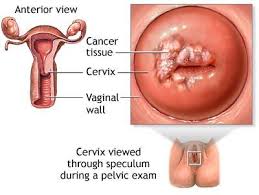
2.If cervical cancer is suspected, your doctor is likely to start with a thorough examination of your cervix. A special magnifying instrument (colposcope) is used to check for abnormal cells.

During the colposcopic examination, your doctor is likely to take a sample of cervical cells (biopsy) for laboratory testing. To obtain tissue, your doctor may use:

  • Punch biopsy, which involves using a sharp tool to pinch off small samples of cervical tissue.
  • Endocervical curettage, which uses a small, spoon-shaped instrument (curet) or a thin brush to scrape a tissue sample from the cervix

If the punch biopsy or endocervical curettage is worrisome, your doctor may perform one of the following tests:

  • Electrical wire loop, which uses a thin, low-voltage electrified wire to obtain a small tissue sample. Generally this is done under local anesthesia in the office.
  • Cone biopsy (conization), which is a procedure that allows your doctor to obtain deeper layers of cervical cells for laboratory testing. A cone biopsy may be done in a hospital under general anesthesia.

Staging the cervical cancer:

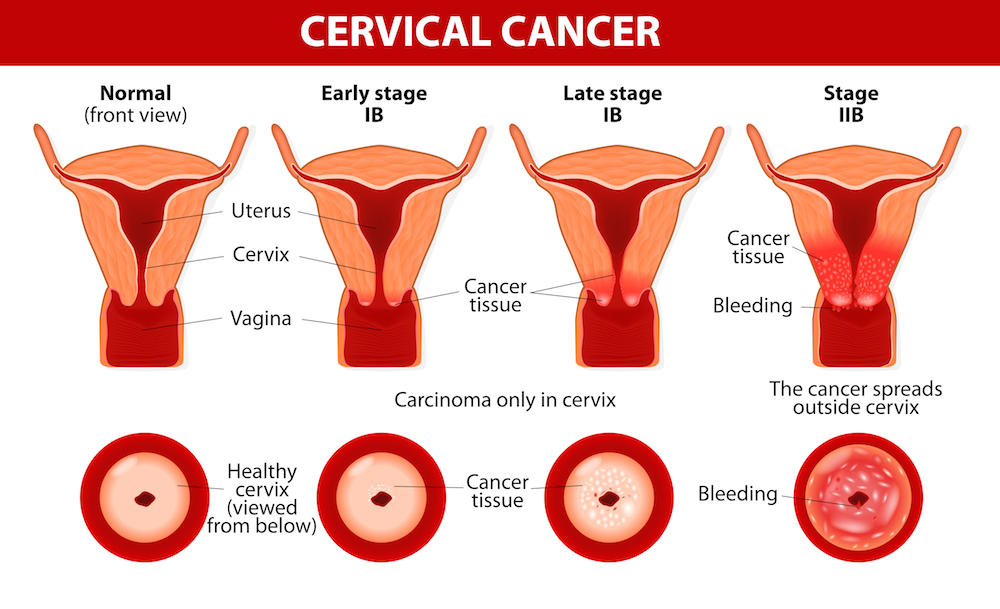
Cervical Cancer. Carcinoma of Cervix. Malignant neoplasm arising from cells in the cervix uteri. Vaginal bleeding. Vector diagram

If your doctor determines that you have cervical cancer, you’ll have further tests to determine the extent (stage) of your cancer. Your cancer’s stage is a key factor in deciding on your treatment.

Staging exams include:

  • Imaging tests. Tests such as X-ray, CT, MRI and positron emission tomography (PET) help your doctor determine whether your cancer has spread beyond your cervix.
  • Visual examination of your bladder and rectum. Your doctor may use special scopes to see inside your bladder and rectum.


QUOTE FOR WEDNESDAY:

“The American Cancer Society’s estimates for cervical cancer in the United States for 2025 are:

  • About 13,360 new cases of invasive cervical cancer will be diagnosed.
  • About 4,320 women will die from cervical cancer.

Cervical precancers are diagnosed far more often than invasive cervical cancer.

Cervical cancer is most frequently diagnosed in women between the ages of 35 and 64, with the average age being 50. It rarely develops in women younger than 20.

Many older women don’t realize that they are still at risk of developing cervical cancer as they age. More than 20% of cervical cancers are found in women over 65. However, these cancers rarely occur in women who have been getting regular tests to screen for cervical cancer before they were 65.

Cervical cancer incidence rates decreased by more than half from the mid-1970s to the mid-2000s, largely because of the increased use of screening, but they have stabilized over the past decade. In women ages 30 to 44, however, rates have increased 1.7% each year from 2012 to 2019.

In contrast, rates declined 11% each year for women ages 20 to 24.”

American Cancer Society (Cervical Cancer Statistics | Key Facts About Cervical Cancer | American Cancer Society)

Part II Cervical Cancer Awareness Month-Risk Factors, Symptoms of it, Signs of advanced cervical cancer!

 Print

Cervical Cancer. Carcinoma of Cervix. Malignant neoplasm arising from cells in the cervix uteri. Vaginal bleeding. Vector diagram

Cervical cancer risk factors

GENERAL

  • Pregnancy: Women who have had three or more full-term pregnancies, or who had their first full-term pregnancy before age 17, are twice as likely to get cervical cancer.

GENETICS

  • Family history: Women with a sister or mother who had cervical cancer are two to three times more likely to develop cervical cancer.

LIFESTYLE

  • Sexual history: Certain types of sexual behavior are considered risk factors for cervical cancer and HPV infection. These include: sex before age 18, sex with multiple partners and sex with someone who has had multiple partners. Studies also show a link between chlamydia infection and cervical cancer.
  • Smoking: A woman who smokes doubles her risk of cervical cancer.
  • Oral contraceptive use: Women who take oral contraceptives for more than five years have an increased risk of cervical cancer, but this risk returns to normal within a few years after the pills are stopped.

OTHER CONDITIONS

  • Weakened immune system: In most people with healthy immune systems, the HPV virus clears itself from the body within 12-18 months. However, people with HIV or other health conditions or who take medications that limit the body’s ability to fight off infection have a higher risk of developing cervical cancer.
  • Diethylstilbestrol (DES): Women whose mothers took DES, a drug given to some women to prevent miscarriage between 1940 and 1971, have a higher risk of developing cervical cancer.
  • HPV: Though HPV causes cancer, having HPV does not mean you will get cancer. The majority of women who contract HPV clear the virus or have treatment so the abnormal cells are removed. HPV is a skin infection, spread through skin-to-skin contact with a person who has the virus.

Additional facts about HPV:

  • There are more than 100 types of HPV, 30-40 of which are sexually transmitted.
  • Of these, at least 15 are high-risk HPV strains that can cause cervical cancer. The others cause no symptoms or genital warts.
  • Up to 80 percent of women will contract HPV in their lifetime. Men get HPV, too, but there is no test for them.
  • A healthy immune system will usually clear the HPV virus before there is a symptom, including the high-risk types of HPV.
  • Only a small percentage of women with high-risk HPV develop cervical cancer.

Understanding risk factors:

Anything that increases your risk of getting a disease is called a risk factor. Having a risk factor does not mean that you will get cancer. Not having risk factors doesn’t mean that you will not get cancer. If you think you may be at risk, you should discuss it with your doctor.

Regarding symptoms of cervical cancer:

In most cases, cervical cancer does not cause noticeable symptoms in the early stages of the disease. Routine Pap screening is important to check for abnormal cells in the cervix, so they can be monitored and treated as early as possible. Most women are advised to get a Pap test starting at age 21.

The Pap test is one of the most reliable and effective cancer screening methods available, and women should have yearly exams by an OB-GYN. However, the Pap test may not detect some cases of abnormal cells in the cervix. The HPV test screens women for the high-risk HPV strains that may lead to cervical cancer. It is approved for women over age 30.

Although screening methods are not 100 percent accurate, these tests are often an effective method for detecting cervical cancer in the early stages when it is still highly treatable. Talk with your doctor about which type of cervical cancer screening is right for you.

When present, common symptoms of cervical cancer may include:

  • Vaginal bleeding: This includes bleeding between periods, after sexual intercourse or post-menopausal bleeding.
  • Unusual vaginal discharge: A watery, pink or foul-smelling discharge is common.
  • Pelvic pain: Pain during intercourse or at other times may be a sign of abnormal changes to the cervix, or less serious conditions.

All of these cervical cancer symptoms should be discussed with your doctor.

Signs of advanced stages of cervical cancer:

Cervical cancer may spread (metastasize) within the pelvis, to the lymph nodes or elsewhere in the body. Signs of advanced cervical cancer include:

  • Weight loss
  • Fatigue
  • Back pain
  • Leg pain or swelling
  • Leakage of urine or feces from the vagina
  • Bone fractures

QUOTE FOR TUESDAY:

“The two most important things you can do to prevent cervical cancer are to get the HPV vaccine if you are eligible, and to be tested regularly according to American Cancer Society (ACS) guidelines. These can be found in The American Cancer Society Guidelines for the Prevention and Early Detection of Cervical Cancer.

The most common form of cervical cancer starts with pre-cancerous changes and there are ways to stop this from developing. The first way is to find and treat pre-cancers before they become invasive cancers, and the second is to prevent the pre-cancers.”

American Cancer Society (Can Cervical Cancer Be Prevented | Ways to Prevent Cervical Cancer | American Cancer Society)

Part I Cervical Cancer Awareness Month-warning signs to watch out for!


  cervical-cancer-month5

What is Cervical Health Awareness Month?

The United States Congress designated January as Cervical Health Awareness Month. During January, NCCC and its many local chapters across the country highlight issues related to cervical cancer, HPV disease and the importance of early detection. More than 40 years ago cervical cancer was a major cancer death risk for women. With the development of pap tests and in-depth recognition of warning signs those numbers are dropping significantly. We still aren’t completely safe however, as many thousands of women are still affected by cervical cancer every year.

Cervical Cancer is today’s issue. Through National Cervical Cancer Coalition with Dr. Warner Huh stated the following information about today’ topic:

Cervical cancer screening used to all be so simple==PREVENTION.   Women were told just go for your annual Pap but now we have new tests to screen for cervical cancer, plus updated guidelines that—for most women—mean routine screening is done every few years rather than annually. Dr. Warner Huh of the University of Alabama, Birmingham sorts out the new landscape of Pap and HPV tests.

Human papillomavirus, or HPV, is a common sexually transmitted infection. So common that most (~80%) sexually active people will be infected with HPV at some point.

Cervical cancer begins in the cervix, the narrow organ at the bottom of the uterus that connects to the vagina. The cervix dilates during childbirth to allow for passage of a baby.

Picking up on risk factors and warning signs could save an individual from a lifetime of suffering. These include whether or not you’ve contracted HPV, if you eat a whole diet, have used birth control, have HIV, smoke cigarettes, or if it’s just in your genetics.

Here are some signs to watch out for:

Leg Pain – Some women exhibiting early stages of cervical cancer experience swelling and pain in the leg. When the cervix swells it can lead to an obstructed blood flow, which eventually causes the leg to swell and gives a sore, painful sensation. This may be a sign of early cervical cancer.

Vaginal discharge colored with blood – It’s normal for a woman to experience small amounts of clear discharge without color or odor. However, bloody, dark, or smelly discharge is usually a sign of infection. But sometimes, it’s a sign of cervical or endometrial cancer.

Abnormal vaginal bleeding – More than 90% of women diagnosed with endometrial cancer experience irregular bleeding. If you have already undergone menopause, any bleeding — spotting included — should be evaluated. Haven’t gone through menopause yet? See your doctor if you experience bleeding between periods, heavy bleeding or bleeding during sex.

Discomforting Urination – Keeping track of urination can help reveal the presence of cervical cancer in several ways. The most immediately obvious and prevalent symptom is discomfort while urinating.  You may experience burning, stinging, or a tight sensation. This is another symptom to see a doctor about either way.

Irregular Urination – The appearance of the urine and urinary habits can also be symptoms of cervical cancer. If you notice strange changes in the frequency of your urine, loss of bladder control (incontinence) or a discoloration – especially with blood – seek the input of a medical professional.

Irregular Menstrual Cycles – There should be some level of consistency when it comes to monthly periods. If time, frequency, or any other changes disrupt the regular routine, it can also be a sign that you’re at a much higher risk for cancer and will require regular screenings.

Uncomfortable Sex – Painful intercourse, otherwise known as dyspareunia, is another discomforting side effect of cervical cancer. There are several possible reasons for this symptom to develop, as is the case with many of the symptoms on this list. This symptom is most commonly linked to conditions that require medical attention, however, so it shouldn’t be ignored.

Pain in the pelvis or abdominal area – Abdominal pain or discomfort — including gas, indigestion, pressure, bloating, and cramps — can signal ovarian cancer. And, constant pelvic pain or pressure can be a sign of endometrial cancer.

Back Pain – Back pain is common, affecting around 80 percent of the population, and it can happen for a wide variety of reasons, but if accompanied with other symptoms from the list, go for a medical check-up.

Stayed tune to Part II of Cervical Awareness Month tomorrow!


QUOTE FOR MONDAY:

“Neural tube defects (NTDs) are birth defects of the brain, spine or spinal cord that happen in fetuses within the first month of pregnancy. NTDs are linked to folate (folic acid) deficiency before and during pregnancy, so it’s important to make sure you’re getting enough folate through supplements and in your diet before and during pregnancy.”

Folic Acid Awareness Month-how it impacts a baby’s growth during pregnancy!

National Folic Acid Awareness of Month, which was in the beginning of this month!  For those who may have missed the info on it don’t fret striveforgoodhealth  is covering Folic acid today and its especially important to women who might become pregnant, as it can help prevent serious birth defects of the brain, neck and spine. Recent studies suggest that it can also help lower the risk of neural tube defects and orofacial clefts (cleft lip and palate). Notably, folic acid has been shown to lower the risk of anencephaly (the absence of a large part of the brain and skull) and spina bifida (an opening in the spinal column) by 50 to 70%.

Much of the baby’s growth and development happens very early in pregnancy, even before most women know they’re pregnant. Experts estimate that women need to start taking folic acid at least one month before they become pregnant for it to prevent birth defects, so it’s important to make folic acid-enriched foods and vitamins a part of your daily routine.

The benefits aren’t limited to your baby: your body needs folic acid, too. The acid helps to create healthy new cells in the body, from hair to nails to skin and blood cells. Without it, blood cells become unstable, and the body is susceptible to disease. The vitamin also protects your liver, allowing it to continue purifying your body. Folic acid is a water-soluble vitamin that your body cannot store, so it should be taken every day to replenish your body’s supply.

Many foods are now being fortified with more folic acid, such as grains, pastas and breakfast cereals. Check the nutritional facts label on your favorite products to see how much they contain. Many cereals now contain as much as 100% of the recommended daily value. Additionally, prenatal vitamins typically contain folic acid. If you’re not yet taking a prenatal vitamin, you can also look for multivitamins with added acid, or buy folic acid pills.

Birth defects are common, costly, and critical conditions that affect one in every 33 U.S. newborns annually. Women can reduce their risk of having a baby born with a birth defect by making healthy choices and adopting healthy habits before and during pregnancy.

Health care providers can encourage parents-to-be to make a PACT for birth defects prevention by taking the following steps: Planning ahead for pregnancy; Avoiding harmful substances like chemicals in the home or workplace (2); Choosing a healthy lifestyle, including eating a healthy diet (3); and Talking with their health care provider before and during pregnancy, particularly about medication use.

Centers for Disease Control and Prevention encourages health care providers to become active participants in National Birth Defects Prevention Month by joining the nationwide effort to raise awareness of birth defects, their causes, and their impact.

CDC urges all women of childbearing age who can become pregnant to get 400 µg of folic acid every day to help reduce the risk for neural tube defects. Health care providers should encourage women of childbearing age to consume folic acid in fortified foods or supplements, or a combination of the two, in addition to a diet rich in folate CDC urges all women of childbearing age who can become pregnant to get 400 µg of folic acid every day to help reduce the risk for neural tube defects. Health care providers should encourage women of childbearing age to consume folic acid in fortified foods or supplements, or a combination of the two, in addition to a diet rich in folate.

An easy way to be sure you’re getting enough folic acid is to take a daily multivitamin with folic acid in it. Most multivitamins have all the folic acid you need. If you get an upset stomach from taking a multivitamin, try taking it with meals or just before bed. If you have trouble taking pills, you can try a multivitamin that is gummy or chewable. Also be sure to take it with a full glass of water.

Folic acid has been added to foods such as enriched breads, pastas, rice and cereals. Check the Nutrition Facts label on the food packaging. A serving of some cereals has 100% of the folic acid that you need each day.

In addition to getting 400 mcg of folic acid from supplements and fortified foods, you can eat a diet rich in folate. You can get food folate from beans, peas and lentils, oranges and orange juice, asparagus and broccoli, and dark leafy green vegetables such as spinach, and mustard greens.

Nutritional habits

Although all enriched cereals and grain products in the U.S. are fortified with the B-vitamin folic acid, only one-third of U.S. women of childbearing age consume the recommended amount from their diet. Taking a multivitamin with folic acid every day is a key way that women can get the recommended amount of 400 mcg.

Be prepared before pregnancy

Women need folic acid, even if not planning to become pregnant, since 50% of all pregnancies are unplanned. Taking folic acid before pregnancy reduces the risk of birth defects of the brain and spine, called neural tube defects (NTDs), by up to 70%.

Message to the Hispanic community

Hispanic babies are 1.5 to 2 times more likely than others in the U.S. to be born with an NTD. The Centers for Disease Control and Prevention (CDC) report that Latinas in the U.S. consume the least amount of folic acid and have the least knowledge about folic acid among racial or ethnic groups.


QUOTE FOR THE WEEKEND:

“You’ve got something rare to share! You are a rare blood donor. Your blood type is present in less than 1/1000 people. That’s a big deal and we want to be sure you to know it.

    • Having rare blood means that your blood is either missing one very common antigen that is present in most of the general population or it’s missing a combination of antigens. An antigen is a substance on your red cells like a protein.
    • Every 2 seconds someone needs blood. And people with rare blood depend on one another to be sure there’s an abundant supply of blood available when needed.
    • Rare blood may run in your family. If you have biological siblings, tell them about your rare blood. They have a chance of having rare blood too. You can make donation a family event!”

American Red Cross (Rare Blood Types Donor | Red Cross Blood)

Rh Null “The Golden Blood Type!”

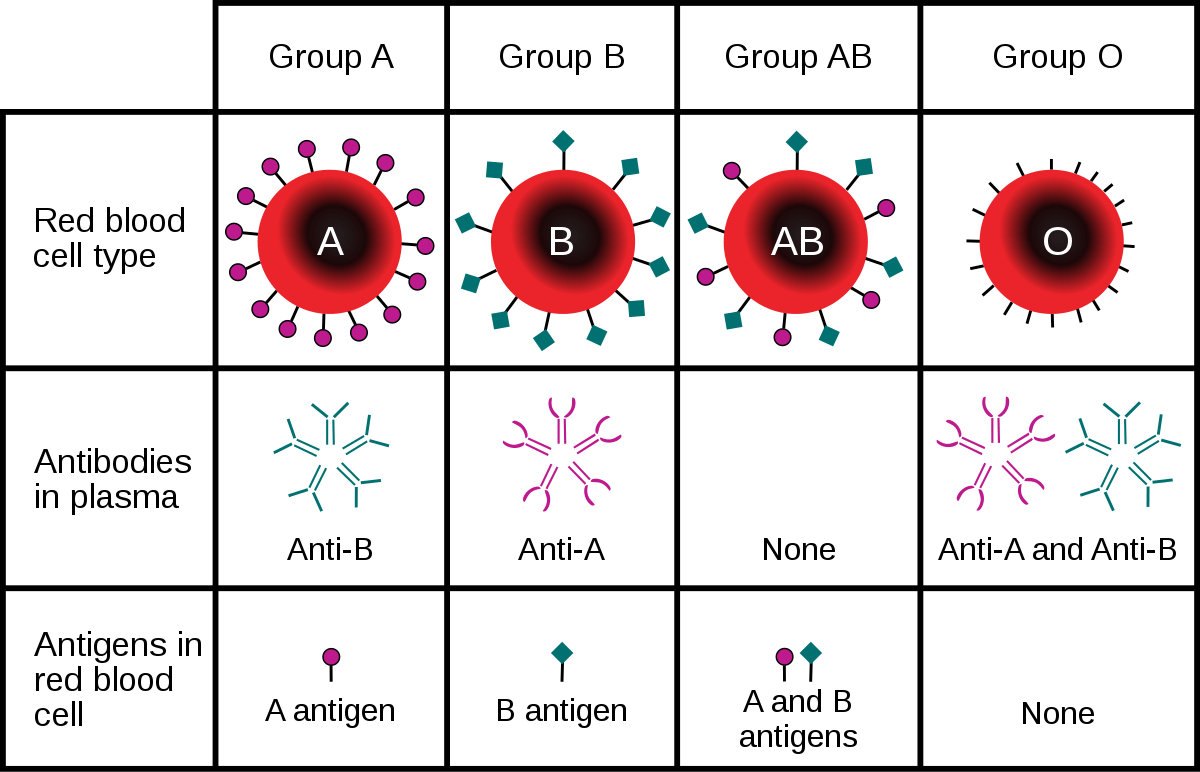
Blood type (also called blood group) is genetically determined. Blood is primarily categorised based on the presence and/or absence of antigens on the surface of our red blood cells (RBCs). Antigens are distinct molecules or substances capable of coaxing an immune response. Our immune system sends out mini soldiers called antibodies (also known as immunoglobulins), which are special proteins that recognise and bind to these antigens.

If our antibodies recognise these antigens as allies or naturally part of our body, our immune system happily leaves it alone.  But if they detect enemy or foreign antigens, our immune system will go on an all-out war to destroy them. This is the reason you need give the blood type and Rh factor (positive or negative) that a patient is if they need blood transfusions to prevent this destructive action to take place unless your the universal donor type O with no antibodies.  Unfortunately, our immune system isn’t perfect. In rare cases, it does attack ‘self’ antigens, as seen in some cases of autoimmune blood disorders.

You might be familiar with the ABO blood group system. When you ask someone what blood type they are, they might respond with “AB”. They are referring to this most important blood group system in human-blood transfusion. It comprises of only two antigens (antigen A and antigen B), but it can produce these four ABO blood types: A, B, AB or O.  At present, the International Society of Blood Transfusion recognises 36 human blood group systems and more than 300 different antigens.  The most common are type ABO and AB blood types.

Why does Rh positive or negative matter in knowing for your blood type?

The Rh blood group system has a colourful history. It consists of 61 blood group antigens (Rh antigens), which are expressed as part of a protein complex found only in RBC membranes. Rh antigens are believed to be essential for maintaining the integrity of RBCs.

Briefly going back to ABO blood group system, some people might tell you that they’re “O negative” or “A positive”. The negative/positive part refers to the absence or presence of one Rh antigen: the Rh(D) antigen. It’s the main Rh antigen considered for human-blood transfusion.

So what is Rh Null?

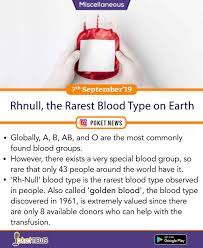
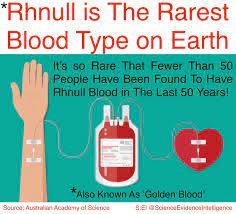
People who have the ‘golden blood’ type lack these Rh antigens. Their DNA lacks the genes responsible for building those RBC protein complexes. These people don’t just lack one, two or three of these 61 Rh antigens, they actually lack all of them. Yes, you read that right: all of them. As you might have guessed, people with Rh Null blood type have abnormal RBCs. They have deformed shapes, leaky membranes and shorter lifespans, which sometimes result in mild anaemia for the individual. Still, the absence of all Rh antigens makes Rh null the ‘golden blood’, which is highly admired for its rarity and medical purposes.

Rare blood types within the Rh blood type system can make it difficult or even impossible to get a blood transfusion. This makes Rh Null blood as the ‘universal’ life-saving blood for the Rh blood type system (especially if the donor has an ABO blood type O too).

But rarity comes at a price. If people with Rh Null blood type requires a blood transfusion, they can only receive Rhnull blood themselves. Even if they receive an O-negative blood, the presence of other Rh antigens on the RBCs may trigger a severe immune response. Therefore, these ‘golden blood’ carriers are solely dependent on other Rh Null donors, but only a few of them regularly donate and they are all spread out across the world.

This is why Rh Null blood is considered as the ‘golden blood’, but it’s not all sunshine and rainbows for those people who carry it. Still, we can’t deny the life-saving properties of this rare blood type and we can deeply appreciate the generosity of those selfless donors.