Archive | January 2026

QUOTE FOR WEDNESDAY:

“Why the urgency? Glaucoma, often called the silent thief of sight, is a leading cause of irreversible blindness in the United States, yet as many as half of the people who have it don’t know they are affected.

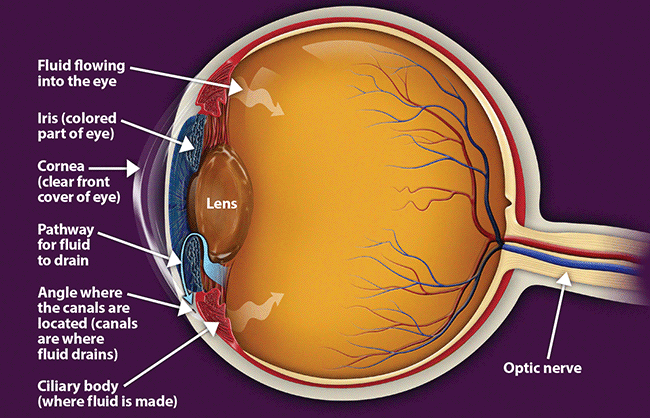
Glaucoma is not just one disease. It is a group of eye conditions that damage the optic nerve, the cable that sends visual information from your eye to your brain. Most types of glaucoma are linked to high intraocular pressure, although some people develop glaucoma without it.

A 2024 meta-analysis estimated that about 4.22 million adults in the United States have glaucoma, and more than 1.4 million already have vision loss from the disease. Globally, glaucoma affects an estimated 80 million people, a number expected to rise as populations age.”

Glaucoma Research Foundation (Don’t Let The Silent Thief Steal Your Sight: January Is Glaucoma Awareness Month – Glaucoma Research Foundation)


Part III National Glaucoma Awareness: The types of treatments of Glaucoma!

If you are diagnosed with glaucoma, it is important to set a regular schedule of examinations with your eye doctor to monitor your condition and make sure that your prescribed treatment is effectively maintaining a safe eye pressure.

Treatments

The Treatment of Glaucoma: The damage caused by glaucoma can’t be reversed. But treatment and regular checkups can help slow or prevent vision loss, especially in you catch the disease in its early stage. The goal of glaucoma treatment is to lower pressure in your eye (intraocular pressure). Depending on your situation, your options may include eyedrops, laser treatment or surgery. 

Remember The damage caused by glaucoma can’t be reversed. But treatment and regular checkups can help slow or prevent vision loss, especially in you catch the disease in its early stage. The goal of glaucoma treatment is to lower pressure in your eye (intraocular pressure). Depending on your situation, your options may include eyedrops, laser treatment or surgery.

Eyedrops

Glaucoma treatment often starts with prescription eyedrops. These can help decrease eye pressure by improving how fluid drains from your eye or by decreasing the amount of fluid your eye makes. Depending on how low your eye pressure needs to be, more than one of the eyedrops below may need to be prescribed.

Prescription eyedrop medications include:

  • Prostaglandins. These increase the outflow of the fluid in your eye (aqueous humor), thereby reducing your eye pressure. Medicines in this category include latanoprost (Xalatan), travoprost (Travatan Z), tafluprost (Zioptan), bimatoprost (Lumigan) and latanoprostene bunod (Vyzulta). Possible side effects include mild reddening and stinging of the eyes, darkening of the iris, darkening of the pigment of the eyelashes or eyelid skin, and blurred vision. This class of drug is prescribed for once-a-day use.
  • Beta blockers. These reduce the production of fluid in your eye, thereby lowering the pressure in your eye (intraocular pressure). Examples include timolol (Betimol, Istalol, Timoptic) and betaxolol (Betoptic). Possible side effects include difficulty breathing, slowed heart rate, lower blood pressure, impotence and fatigue. This class of drug can be prescribed for once- or twice-daily use depending on your condition.
  • Alpha-adrenergic agonists. These reduce the production of aqueous humor and increase outflow of the fluid in your eye. Examples include apraclonidine (Iopidine) and brimonidine (Alphagan P, Qoliana). Possible side effects include an irregular heart rate, high blood pressure, fatigue, red, itchy or swollen eyes, and dry mouth. This class of drug is usually prescribed for twice-daily use but sometimes can be prescribed for use three times a day.
  • Carbonic anhydrase inhibitors. These medicines reduce the production of fluid in your eye. Examples include dorzolamide (Trusopt) and brinzolamide (Azopt). Possible side effects include a metallic taste, frequent urination, and tingling in the fingers and toes. This class of drug is usually prescribed for twice-daily use but sometimes can be prescribed for use three times a day.
  • Rho kinase inhibitor. This medicine lowers eye pressure by suppressing the rho kinase enzymes responsible for fluid increase. It is available as netarsudil (Rhopressa) and is prescribed for once-a-day use. Possible side effects include eye redness, eye discomfort and deposits forming on the cornea.
  • Miotic or cholinergic agents. These increase the outflow of fluid from your eye. An example is pilocarpine (Isopto Carpine). Side effects include headache, eye ache, smaller pupils, possible blurred or dim vision, and nearsightedness. This class of medicine is usually prescribed to be used up to four times a day. Because of potential side effects and the need for frequent daily use, these medications are not prescribed very often anymore.

Because some of the eyedrop medicine is absorbed into your bloodstream, you may experience some side effects unrelated to your eyes. To minimize this absorption, close your eyes for one to two minutes after putting the drops in. You may also press lightly at the corner of your eyes near your nose to close the tear duct for one or two minutes. Wipe off any unused drops from your eyelid.

If you have been prescribed multiple eyedrops or you need to use artificial tears, space them out so that you are waiting at least five minutes in between types of drops.

Oral medications

If eyedrops alone don’t bring your eye pressure down to the desired level, your doctor may also prescribe an oral medication, usually a carbonic anhydrase inhibitor. Possible side effects include frequent urination, tingling in the fingers and toes, depression, stomach upset, and kidney stones.

Surgery and other therapies

Other treatment options include laser therapy and various surgical procedures. The following techniques are intended to improve the drainage of fluid within the eye, thereby lowering pressure:

  • Laser therapy. Laser trabeculoplasty (truh-BEK-u-low-plas-tee) is an option if you have open-angle glaucoma. It’s done in your doctor’s office. Your doctor uses a small laser beam to open clogged channels in the trabecular meshwork. It may take a few weeks before the full effect of this procedure becomes apparent.
  • Filtering surgery. With a surgical procedure called a trabeculectomy (truh-bek-u-LEK-tuh-me), your surgeon creates an opening in the white of the eye (sclera) and removes part of the trabecular meshwork.
  • Drainage tubes. In this procedure, your eye surgeon inserts a small tube shunt in your eye to drain away excess fluid to lower your eye pressure.
  • Minimally invasive glaucoma surgery (MIGS). Your doctor may suggest a MIGS procedure to lower your eye pressure. These procedures generally require less immediate postoperative care and have less risk than trabeculectomy or installing a drainage device. They are often combined with cataract surgery. There are a number of MIGS techniques available, and your doctor will discuss which procedure may be right for you.

After your procedure, you’ll need to see your doctor for follow-up exams. And you may eventually need to undergo additional procedures if your eye pressure begins to rise again or other changes occur in your eye.


QUOTE FOR TUESDAY:

“The Vision and Eye Health Surveillance System (VEHSS) modeled estimates of Glaucoma are CDC’s primary estimates of the prevalence of glaucoma in the United States.

“VEHSS used a statistical model to combine multiple sources of data available in VEHSS to produce these estimates.

In 2022, an estimated 4.2 million Americans of all ages were living with glaucoma, including 1.5 million people with vision-affecting glaucoma. Non-Hispanic Black people had the highest crude prevalence rate of glaucoma (1.97%) and vision-affecting glaucoma (0.74%). Females had higher prevalence rates than males for glaucoma (1.36% vs. 1.17%) and vision-affecting glaucoma (0.48% vs. 0.41%).”

Center for Disease Control and Prevention – CDC (VEHSS Modeled Estimates: Prevalence of Glaucoma | Vision and Eye Health Surveillance System (VEHSS) | CDC)

Part II National Glaucoma Awareness: Secondary types of Glaucoma & The key to prevention of glaucoma.

glaucoma3   glaucoma2                                        Glaucoma-TableSecondary Types of Glaucoma:

Sometimes glaucoma is caused by another medical condition — this is called secondary glaucoma.

Neovascular glaucoma

Treatments: Medicines, laser treatment, surgery

Neovascular glaucoma happens when the eye makes extra blood vessels that cover the part of your eye where fluid would normally drain. It’s usually caused by another medical condition, like diabetes or high blood pressure.

If you have neovascular glaucoma, you may notice:

  • Pain or redness in your eye
  • Vision loss

This type of glaucoma can be hard to treat. Doctors need to treat the underlying cause (like diabetes or high blood pressure) and use glaucoma treatments to lower the eye pressure that results from it.

Pigmentary glaucoma

Treatments: Medicines, laser treatment, surgery

Pigment dispersion syndrome happens when the pigment (color) from your iris (the colored part of your eye) flakes off. The loose pigment may block fluid from draining out of your eye, which can increase your eye pressure and cause pigmentary glaucoma.

Young, white men who are near-sighted are more likely to have pigment dispersion syndrome than others. If you have this condition, you may have blurry vision or see rainbow-colored rings around lights, especially when you exercise.

Doctors can treat pigmentary glaucoma by lowering eye pressure, but there currently isn’t a way to prevent pigment from detaching from the iris.

Exfoliation glaucoma

Treatments: Medicines, laser treatment, surgery

Exfoliation glaucoma (sometimes called pseudoexfoliation) is a type of open-angle glaucoma that happens in some people with exfoliation syndrome, a condition that causes extra material to detach from parts of the eye and block fluid from draining.

Recent research shows that genetics may play a role in exfoliation glaucoma. You are at higher risk if someone else in your family has exfoliation glaucoma.

This type of glaucoma can progress faster than primary open-angle glaucoma, and often causes higher eye pressure. This means that it’s especially important for people who are at risk to get eye exams regularly.

Uveitic glaucoma

Treatments: Medicines, surgery

Uveitic glaucoma can happen in people who have uveitis, a condition that causes inflammation (irritation and swelling) in the eye. About 2 in 10 people with uveitis will develop uveitic glaucoma.

Experts aren’t sure how uveitis causes uveitic glaucoma, but they think that it may happen because uveitis can cause inflammation and scar tissue in the middle of the eye. This may damage or block the part of the eye where fluid drains out, causing high eye pressure and leading to uveitic glaucoma.

In some cases, the medicines that treat uveitis may also cause uveitic glaucoma, or make it worse. This is because corticosteroid medicines may cause increased eye pressure as a side effect.

Steroid-Induced Glaucoma

Treatments: The treatment for steroid-induced glaucoma involves stopping or reducing steroid use. Glaucoma medications can also help lower eye pressure. However, while the increase in eye pressure is treatable, damage to the optic nerve is irreversible.

Steroid-induced glaucoma is open-angle glaucoma caused by prolonged steroid use (longer than 3 weeks). It interferes with the outflow of aqueous humor, gradually increasing eye pressure.

Because the increase in eye pressure is slow, steroid-induced glaucoma is typically asymptomatic. Some people may notice blurry vision as an early warning sign. Eyebrow pain has also been associated with IOP. However, these symptoms only occur if IOP is very high.

Trauma Induced Glaucoma

Treatments:  After an eye injury, your doctor may recommend glaucoma medication, steroids, and antibiotics. These can reduce intraocular pressure -IOP, prevent inflammation, and reduce the risk of infection.

Trauma-induced glaucoma is caused by an eye injury that usually involves blunt trauma or penetrating eye injury. Penetrating and blunt trauma injuries can block your eye’s drainage system, gradually increasing IOP over time.

However, the symptoms of traumatic glaucoma depend on the nature of the injury and how fast IOP increases. For example, glaucoma from a penetrating eye injury may develop after the wound heals. Oftentimes, glaucoma symptoms won’t develop for months or years later.

The KEY is take the steps to help PREVENT Glaucoma:

These self-care steps can help you detect glaucoma in its early stages, which is important in preventing vision loss or slowing its progress.

  • Get regular dilated eye examinations. Regular comprehensive eye exams can help detect glaucoma in its early stages, before significant damage occurs. As a general rule, the American Academy of Ophthalmology recommends having a comprehensive eye exam every five to 10 years if you’re under 40 years old; every two to four years if you’re 40 to 54 years old; every one to three years if you’re 55 to 64 years old; and every one to two years if you’re older than 65. If you’re at risk of glaucoma, you’ll need more frequent screening. Ask your doctor to recommend the right screening schedule for you.
  • Know your family’s eye health history. Glaucoma tends to run in families. If you’re at increased risk, you may need more frequent screening.
  • Exercise safely. Regular, moderate exercise may help prevent glaucoma by reducing eye pressure. Talk with your doctor about an appropriate exercise program.
  • Take prescribed eyedrops regularly. Glaucoma eyedrops can significantly reduce the risk that high eye pressure will progress to glaucoma. To be effective, eyedrops prescribed by your doctor need to be used regularly even if you have no symptoms.
  • Wear eye protection. Serious eye injuries can lead to glaucoma. Wear eye protection when using power tools or playing high-speed racket sports in enclosed courts.


QUOTE FOR MONDAY:

“Glaucoma is a leading cause of vision loss and blindness in the United States. But as many as half of people with glaucoma don’t know they have it.

Glaucoma has no early symptoms. The only way to check for it is to get a comprehensive dilated eye exam. There’s no cure for glaucoma, but starting treatment as early as possible can help stop vision loss.

Anyone can get glaucoma, but some people are at higher risk, including people who:

  • Are over age 60
  • Are Black/African American and over age 40
  • Are Asian American
  • Are Hispanic/Latino
  • Have a family history of glaucoma”

National Eye Institute (Glaucoma Awareness Month | National Eye Institute)

Part I National Glaucoma Awareness: Definition of Glaucoma, the Primary Types of Glaucoma and their symptoms.

   glaucoma2                      

 Glaucoma-Table

A common eye condition in which the fluid pressure inside the eye rises to a level higher than healthy for that eye. If untreated, it may damage the optic nerve, causing the loss of vision or even blindness. The elderly, African-Americans, and people with family histories of the disease are at greatest risk.

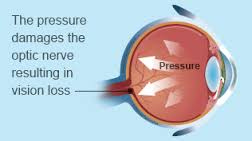
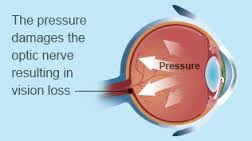
Glaucoma is a multi-factorial, complex eye disease with specific characteristics such as optic nerve damage and visual field loss. While increased pressure inside the eye (called intraocular pressure or IOP) is usually present, even patients with normal range IOP can develop glaucoma.

There is no specific level of elevated eye pressure that definitely leads to glaucoma; conversely, there is no lower level of IOP that will absolutely eliminate a person’s risk of developing glaucoma. That is why early diagnosis and treatment of glaucoma is the key to preventing vision loss.

Eye pressure is measured in millimeters of mercury (mm Hg). Normal eye pressure ranges from 12-22 mm Hg, and eye pressure of greater than 22 mm Hg is considered higher than normal. When the IOP is higher than normal but the person does not show signs of glaucoma, this is referred to as ocular hypertension.

High eye pressure alone does not cause glaucoma. However, it is a significant risk factor. Individuals diagnosed with high eye pressure should have regular comprehensive eye examinations by an eyecare professional to check for signs of the onset of glaucoma.

A person with elevated IOP is referred to as a glaucoma suspect, because of the concern that the elevated eye pressure might lead to glaucoma. The term glaucoma suspect is also used to describe those who have other findings that could potentially, now or in the future, indicate glaucoma. For example, a suspicious optic nerve, or even a strong family history of glaucoma, could put someone in the category of a glaucoma suspect.

Vision loss from glaucoma occurs when the eye pressure is too high for the specific individual and damages the optic nerve. Any resultant damage cannot be reversed. The peripheral (side) vision is usually affected first. The changes in vision may be so gradual that they are not noticed until a lot of vision loss has already occurred.

In time, if the glaucoma is not treated, central vision will also be decreased and then lost; this is how visual impairment from glaucoma is most often noticed. The good news is that glaucoma can be managed if detected early, and with medical and/or surgical treatment, most people with glaucoma will not lose their sight.

Most common signs and symptoms of Glaucoma:

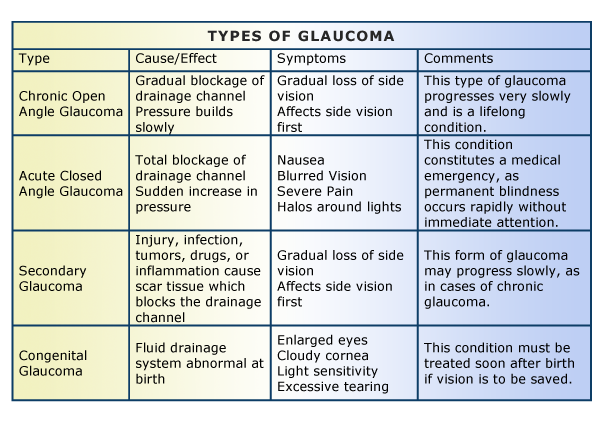
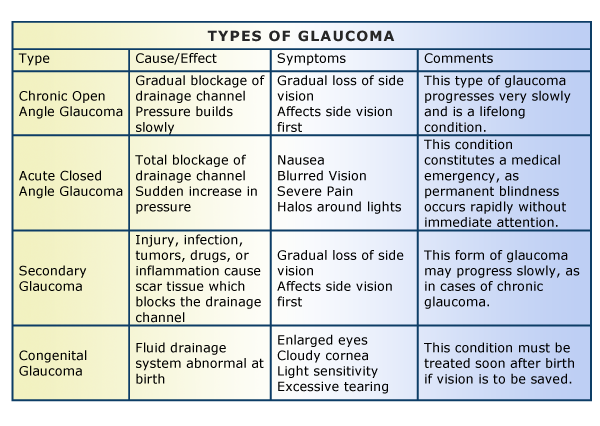
There are several forms of glaucoma; the two most common forms are primary open-angle glaucoma (POAG) and angle-closure glaucoma (ACG). Open-angle glaucoma is often called “the sneak thief of sight” because it has no symptoms until significant vision loss has occurred.

Types of Glaucoma:

1-Open Angle Glaucoma

2-Angle Closure Glaucoma

3-Normal Tension Glaucoma

1-Open-Angle Glaucoma

Open-angle glaucoma, the most common form of glaucoma, accounting for at least 90% of all glaucoma cases:

  • Is caused by the slow clogging of the drainage canals, resulting in increased eye pressure
  • Has a wide and open angle between the iris and cornea
  • Develops slowly and is a lifelong condition
  • Has symptoms and damage that are not noticed.

“Open-angle” means that the angle where the iris meets the cornea is as wide and open as it should be. Open-angle glaucoma is also called primary or chronic glaucoma. It is the most common type of glaucoma, affecting about three million Americans.

Symptoms of Open-Angle Glaucoma

There are typically no early warning signs or symptoms of open-angle glaucoma. It develops slowly and sometimes without noticeable sight loss for many years.

Most people who have open-angle glaucoma feel fine and do not notice a change in their vision at first because the initial loss of vision is of side or peripheral vision, and the visual acuity or sharpness of vision is maintained until late in the disease.

By the time a patient is aware of vision loss, the disease is usually quite advanced. Vision loss from glaucoma is not reversible with treatment, even with surgery.

Because open-angle glaucoma has few warning signs or symptoms before damage has occurred, it is important to see a doctor for regular eye examinations. If glaucoma is detected during an eye exam, your eye doctor can prescribe a preventative treatment to help protect your vision.

In open-angle glaucoma, the angle in your eye where the iris meets the cornea is as wide and open as it should be, but the eye’s drainage canals become clogged over time, causing an increase in internal eye pressure and subsequent damage to the optic nerve. It is the most common type of glaucoma, affecting about four million Americans, many of whom do not know they have the disease.

You are at increased risk of glaucoma if your parents or siblings have the disease, if you are African-American or Latino, and possibly if you are diabetic or have cardiovascular disease. The risk of glaucoma also increases with age.

2-Angle-Closure Glaucoma

Angle-closure glaucoma, a less common form of glaucoma:

  • Is caused by blocked drainage canals, resulting in a sudden rise in intraocular pressure
  • Has a closed or narrow angle between the iris and cornea
  • Develops very quickly
  • Has symptoms and damage that are usually very noticeable
  • Demands immediate medical attention.

It is also called acute glaucoma or narrow-angle glaucoma. Unlike open-angle glaucoma, angle-closure glaucoma is a result of the angle between the iris and cornea closing.

Symptoms of Angle-Closure Glaucoma

  • Hazy or blurred vision
  • The appearance of rainbow-colored circles around bright lights
  • Severe eye and head pain
  • Nausea or vomiting (accompanying severe eye pain)
  • Sudden sight loss

Angle-closure glaucoma is caused by blocked drainage canals in the eye, resulting in a sudden rise in intraocular pressure. This is a much more rare form of glaucoma, which develops very quickly and demands immediate medical attention

In contrast with open-angle glaucoma, symptoms of acute angle-closure glaucoma are very noticeable and damage occurs quickly. If you experience any of these symptoms, seek immediate care from an ophthalmologist.

If you are diagnosed with glaucoma, it is important to set a regular schedule of examinations with your eye doctor to monitor your condition and make sure that your prescribed treatment is effectively maintaining a safe eye pressure.

3-Normal-tension glaucoma

Normal-tension glaucoma is a type of open-angle glaucoma that happens in people with normal eye pressure.

You may be at higher risk for normal-tension glaucoma if you:

  • Are of Japanese ancestry
  • Have a family history of normal-tension glaucoma
  • Have had certain heart problems, like an irregular heartbeat
  • Have low blood pressure

Signs and symptoms of Normal-Tension Glaucoma:

  • Reduced vision
  • Loss of peripheral vision
  • Bulging or swollen cornea
  • Pupil dilation that doesn’t change with light adjustments
  • Redness in the white (sclera) of the eye

Experts don’t know what causes normal-tension glaucoma, but research shows that treatments that lower eye pressure can help slow the disease and stop vision loss.

For Treatments to ALL 3 primary types of Glaucoma listed above are:

Medicines, laser treatment, surgery.

Tomorrow stay tune for part II on glaucoma awareness giving other types of glaucoma, how its diagnosed & the risks.

QUOTE FOR THE WEEKEND:

Key points to know:

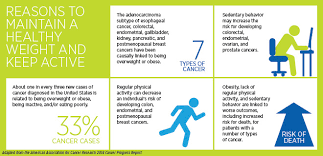
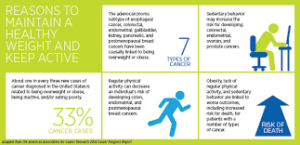
  • Being overweight or having obesity increases your risk of getting cancer.
  • Keeping a healthy weight is an important step you can take to lower your risk of getting cancer.
  • People are overweight or have obesity when they weigh more than what doctors consider a healthy weight for their height.
  • Body mass index (BMI) is used as a screening tool for overweight and obesity. For adults, a person with a BMI from 25.0 to 29.9 is considered overweight. A person with a BMI that is 30.0 or higher has obesity. About 2 in 5 adults in the United States have obesity.
  • For children and teens, BMI is calculated the same way, but interpreted in a different way. A child’s or teen’s BMI is compared to those of the same sex and age. About 1 in 5 children and adolescents in the United States have obesity.
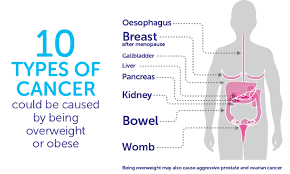
  • Being overweight or having obesity are associated with a higher risk of getting 13 types of cancer. These cancers make up 40% of all cancers diagnosed in the United States each year.

Center for Disease Control and Prevention – CDC (Obesity and Cancer | Cancer | CDC)

Now there is a Obesity and Cancer Link

LOOKING AT ACTUAL STUDIES SUPPORTING OBESITY&CANCER LINK

Take for example through the American Cancer Society they stated in an article 2006 that a substantial evidence from clinical trials has established that obesity significantly increases the risk for heart disease and diabetes. More recently, suspicions that obesity is linked to prostate cancer have been supported by a number of investigations, but the relationship has remained unclear. Now through a pair of new studies provides scientists with some important insights that may have an impact on how physicians manage their patients with prostate cancer.

The pair of studies show 2 significant studies relating how obesity links with prostate cancer, which were:

The implication is that prostate cancer patients who are obese should probably be followed more closely than patients with similar cancer characteristics who are not obese. That could include regular digital rectal exams, more frequent prostate-specific antigen (PSA) testing, and perhaps setting a lower PSA cutoff point as an indication of recurrence, Kane explained.

The greater risk associated with obesity may be related to technical issues, Kane said. For example, it’s more difficult for surgeons to perform a radical prostatectomy in obese patients. However, surgical challenges offer only a partial explanation. In studies where surgeons verified that they had removed all cancer cells during radical prostatectomy, obese patients were still more likely to experience a recurrence of the disease.

The second study, a multi-center trial coordinated at the Duke University School of Medicine in Durham, NC, found that obese men under the age of 63 tend to have larger prostates, which makes finding tumors more difficult. As a result, there’s a real danger of delayed diagnosis, which decreases the chances of a cure and puts patients at greater risk for dying of the disease. The findings appear in the Journal of Urology.

“It’s harder to find cancer in larger prostate glands,” explained Stephen J. Freedland, MD, assistant professor of urology and member of the Duke Prostate Center at the Duke University School of Medicine. “Consequently, our data suggest that we may be underdiagnosing cancers in younger obese men. That also means that the tumors we do pick up are likely to be at a more advanced stage and perhaps more aggressive, and therefore more difficult to treat.”

Let’s look at this at a broader aspect, not just pertaining to prostate cancer. This would be, “It’s not just patients with prostate cancer that studies like this should be directed toward,” Dr. Kane said. “Patients who are clearly at risk for developing the disease should also take notice of our findings. The central message is yet again that obesity has been identified as an important risk factor for a potentially deadly disease. For all of us, controlling our weight through diet and exercise is important, and we shouldn’t have blinders on and just think of prostate cancer. The number one risk of death for American men is heart disease, so anything we can do to reduce that risk that also reduces the risk for prostate cancer is useful.” Including it reduces risk for other cancers as well that are impacted by disease, it makes sense.

Obesity links to an increased risk of ovarian cancer. Let’s look at this no: Atlanta 2009/01/05 -A new epidemiological study has found that among women who have never used menopausal hormone therapy, obese women are at an increased risk of developing ovarian cancer compared with women of normal weight. Published in the February 15, 2009 issue of CANCER, a peer-reviewed journal of the American Cancer Society, the research indicates that obesity may contribute to the development of ovarian cancer through a hormonal mechanism. Ovarian cancer is the most fatal of gynecologic malignancies, and has a 5-year survival rate of only 37 percent.

To investigate this issue, Dr. Michael F. Leitzmann of the National Cancer Institute and colleagues studied 94,525 U.S. women aged 50 to 71 years over a period of seven years. The researchers documented 303 ovarian cancer cases during this time and noted that among women who had never taken hormones after menopause, obesity was associated with an almost 80 percent higher risk of ovarian cancer. In contrast, no link between body weight and ovarian cancer was evident for women who had ever used menopausal hormone therapy.

According to Dr. Leitzmann, these findings support the hypothesis that obesity may enhance ovarian cancer risk in part through its hormonal effects. Excess body mass in postmenopausal women leads to an increased production of estrogen, which in turn may stimulate the growth of ovarian cells and play a role in the development of ovarian cancer.

In another study done 2003, American Cancer Society researchers analyzed data based on 900,000 American adults with obesity and cancer that they monitored for a total of 16 years. This is what they found in their landmark study: 1)The researchers found that the most obese women had a 62% increase in their risk of dying from cancer than women of normal weight; for obese men, the increase was 52%. The wide range of tumor types included colorectal, liver, gallbladder, pancreas, esophageal, kidney, prostate, breast, uterine, endometrial, and ovarian cancers. The researchers conclusion was that above-normal weight was associated with almost 20% of all cancer deaths in the United States. “There’s an incredibly powerful link between obesity and cancer,” says oncologist Joyce Slingerland of the University of Miami, Florida. “Everyone’s heard of obesity’s effect on heart disease and diabetes, and we’re now beginning to understand that the cancer risk is just as great,” she says.

Although researchers and epidemiologists had long suspected that diet and cancer were linked, efforts to explain why being fat makes cancer more deadly have only begun to deliver results in the past decade.

So it is up to the people in society of that country they live in to take on responsible actions to make their country a better for all, not just one. I say that is becoming as healthy as possible that an individual can reach and without America has the answers in knowing how to make this happen 100% in our country.

A new study from American Cancer Society researchers finds it’s not just how much physical activity you get, but how much time you spend sitting that can affect your risk of death.

My final study supporting how obesity links with cancer:

Just think if this was you or someone you know in the world and this happens to you or them; GOD FORBID, but you can help yourself through prevention with losing the weight or just staying slim and tone if you already are. This will just decrease your risk of getting the cancer.

The JCCC study, led by Dr. Guido Eibl, JCCC member and professor-in-residence in the department of surgery at David Geffen School of Medicine, revealed that mice made obese with high-calorie, high-fat diets developed abnormally high numbers of these lesions.

This is the first study to show a direct causal link in an animal model between obesity and risk of this deadly pancreatic cancer.

The JCCC study, led by Dr. Guido Eibl, JCCC member and professor-in-residence in the department of surgery at David Geffen School of Medicine, revealed that mice made obese with high-calorie, high-fat diets developed abnormally high numbers of these lesions. This is the first study to show a direct causal link in an animal model between obesity and risk of this deadly pancreatic cancer.

The mice eating the normal diet gained an average of approximately 7.2 g over 14 months. Mice on the high-fat, high-calorie diet more than doubled this with an average weight gain of 15.9 g.

Pathological tests showed that mice fed the normal diet had mostly normal pancreases with very few scattered PanIN lesions=intraepithelial neoplasias=precursors to pancreatic lesions. They are used as markers but can only be seen microscopically so a biopsy is needed. The mice fed high fat & cholesterol in their diet had significantly more PanIN lesions with less overall healthy pancreases.

The study showed that the mice fed a diet high in fats and calories gained significantly more weight, had abnormalities of their metabolism and increased insulin levels, and had marked pancreatic tissue inflammation with the development of PanIN lesions.

These observations suggest that such a diet like this which leads to weight gain, metabolism disturbances, pancreas inflammation and pancreas lesions that are precursors to cancer.

Obviously research is showing obesity has a link with cancer. We now know this information let’s make a move America and people elsewhere to become a healthier nation including world. For diversity is the US and other countries filled with all cultures, races and genders need to learn this knowledge to help make their country whether they were either born there and stayed or those born elsewhere moving to a new country, like America and we the people making up the country need to be responsible not just for yourselves but for your children and future generations in spreading good habits, good dieting, and good exercise to prevent high disease in the country for yourself and your children and the future generations by being a good role model in thinking=live healthy not unhealthy. In time this would play an impact on your countries economy and health care system in how its run. So come with me, like many others if you need to know the simple steps in how to go about losing weight safely but easy with learning better healthy habits and practicing some form of exercise which will benefit you in having a healthier body than join me at my website healthyusa.tsfl.com and become a member with getting guidance through Dr. Anderson on his healthy habits through his book and me as your health coach. Take a peek you might just like what you see. You make all the choices in what you want and going to the site costs nothing. There will come a point you get your routine down and don’t need our help with staying healthy for life with decreasing your chance of so many diseases, not just cancer, from occurring. Help me with so many others in tring to make a difference in America by becoming healthier. Slowly but surely I am and I know you can to at your pace.

References:

1 –American Institute for Cancer Research, Schernhammer ES et al. Circulating levels of insulin-like growth factors, their binding proteins, and breast cancer risk. Cancer Epidemiol Biomarkers Prev. 2005 Mar;14(3):699-704 ES et al. their binding proteins, and breast cancer risk— Cancer Epidemiol Biomarkers Prev. 2006 Mar;14(3):699-704/ AICR ScienceNow /Volume 16/Spring 2006

2 – Studies Help Clarify Link Between Obesity and Prostate Cancer  Article date: March 2, 2006 Impact of Obesity on Prostate Cancer Recurrence After Radical Prostatectomy: Data from CaPSURE.” Published in the Nov., 2005 Urology (Vol. 66, No. 5: 1060-1065). First author: William W. Bassett, University of California, San Francisco.

“Obesity, Serum Prostate Specific Antigen and Prostate Size: Implications for Prostate Cancer Detection.” Published in the Feb. 2006 Journal of Urology (Vol. 175, No. 2: 500-504). First author: Stephen J. Freedland, MD, Duke University School of Medicine.

3 – Director, Medical & Scientific Communications American Cancer Society david.sampson@cancer.org Article: “Body mass index and risk of ovarian cancer.” Michael F. Leitzmann, Corinna Koebnick, Kim N. Danforth.

QUOTE FOR FRIDAY:

“In the United States, 1 in 3 people will be diagnosed with cancer during their lifetime. Here is some information to help you better understand what cancer is.

Cancer needs to be understood that it is more than just one disease. There are many types of cancer, and it can develop anywhere in the body. Cancer is a group of diseases where abnormal cells grow out of control and crowd out normal cells. It affects 1 in 3 people in the United States. Chances are that you or someone you know has been affected by cancer.

There are many different kinds of cancer, but they all involve abnormal cells. Cancers often have these features:

  • Gene changes (mutations): Cancer cells have changes in their genes that make them abnormal. Some of these gene changes may be passed down from a parent (inherited mutations), while others may happen later in life (acquired mutations).
  • Uncontrolled cell growth: Most abnormal cells die off or are unable to reproduce. But cancer cells can keep growing and dividing to make more abnormal cells. Cancer cells can crowd out normal cells.
  • Tumor formation: Not all cancer cells form tumors, and not all tumors are cancer. But many types of cancer cells do clump together to form tumors.
  • Cancer spread (metastasis): Cancer cells can invade nearby tissues, and many can even spread to other parts of the body.

Many types of abnormal cell growths have some of these features, but not all of them are cancer.

Cancer starts when something goes wrong in the normal process of cells growing and dividing to make new cells. A cell’s genes (pieces of DNA that tell the cell how to function) change and make the cell abnormal. Most cells die if they become abnormal, but some gene changes allow cells to survive, grow, and divide to make more abnormal cells.

Gene changes that lead to cancer can have many possible causes. Lifestyle habits, genes you get from your parents, and being exposed to certain chemicals or radiation can all play a role. Many times, there is no clear cause.

Cancers are often grouped into two main categories:

  • Blood (hematologic) cancers start in blood cells or blood-forming tissues. These include leukemia, lymphoma, and multiple myeloma.
  • Solid tumor cancers develop in organs or tissues. The most common solid tumors are breast, prostate, lung, and colorectal cancers.

It’s very important to know the type (and subtype) of cancer before starting treatment, if possible. Knowing the exact type helps doctors know which treatment will work best.”

American Cancer Society (What Is Cancer? | Cancer Basics | American Cancer Society)

Part IV Cervical Cancer Awareness Month – Prevention methods and Treatments for cervical cancer!


There is steps you can take early in life and steps you can take through out your life to prevent cervical cancer:

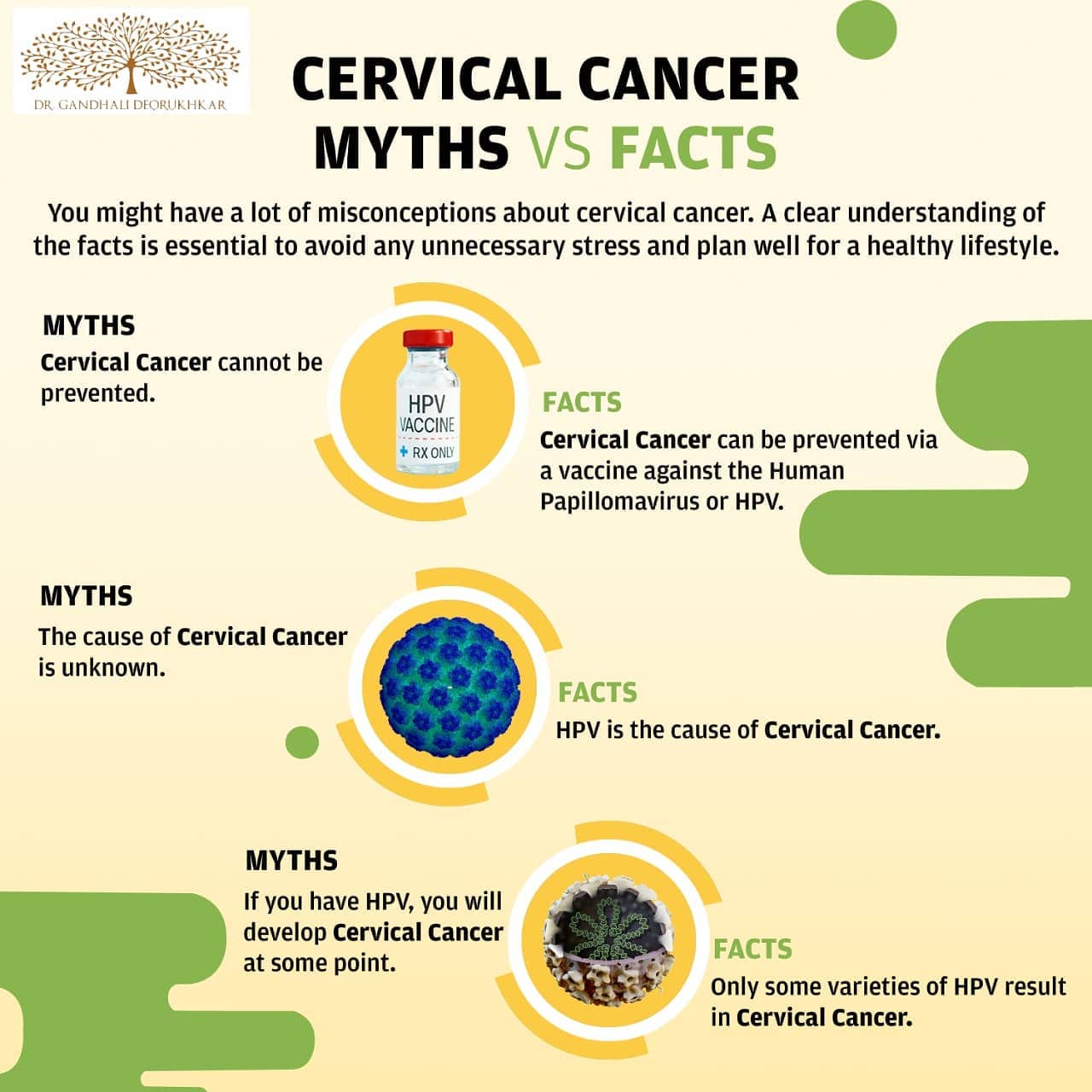
1. Three HPV vaccines—9-valent HPV vaccine (Gardasil 9, 9vHPV), quadrivalent HPV vaccine (Gardasil, 4vHPV), and bivalent HPV vaccine (Cervarix, 2vHPV)—have been licensed by the U.S. Food and Drug Administration (FDA). All three HPV vaccines protect against HPV types 16 and 18 that cause most HPV cancers.

Gardasil 9 is an HPV vaccine approved by the U.S. Food and Drug Administration and can be used for both girls and boys. This vaccine can prevent most cases of cervical cancer if the vaccine is given before girls or women are exposed to the virus. This vaccine can also prevent vaginal and vulvar cancer.

2. For cancer prevention as well as overall health and wellness through out your life, many experts recommend a plant-based diet that consists primarily of fruits, vegetables, beans and whole grains. These foods contain a variety of beneficial chemical compounds that can be easily incorporated into daily meals. Some examples include:

  • Flavonoids – These chemical compounds, which are believed to provide protection against cancer, are found in apples, asparagus, black beans, broccoli, brussels sprouts, cabbage, cranberries, garlic, lettuce, lima beans, onions, soy and spinach.
  • Folate – This water-soluble B vitamin has been found to reduce the risk of cervical cancer in women who have HPV. Foods that are rich in folate include avocados, chickpeas, lentils, orange juice, romaine lettuce and strawberries.
  • Carotenoids – These valuable sources of vitamin A are found in most fruits, vegetables and beans, and particularly in orange foods such as carrots, sweet potatoes, pumpkin and squash.

While a healthy diet is an important component of an overall cancer prevention plan, it should not be the only component.

Treatment of cervical cancer:

Cervical cancer treatments include surgery, chemotherapy, and radiation therapy. If your doctor says that you have cervical cancer, ask to be referred to a gynecologic oncologist—a doctor who has been trained to treat cancers of a woman’s reproductive system.

Different treatments may be provided by different doctors on your medical team.

  • Gynecologic oncologists are doctors who have been trained to treat cancers of a woman’s reproductive system.
  • Surgeons are doctors who perform operations.
  • Medical oncologists are doctors who treat cancer with medicine.
  • Radiation oncologists are doctors who treat cancer with radiation.

You always go with MD specialist in treating any cancer starting with a oncologist who will work you up with further specialists if needed.

Memorial Sloan Kettering Cancer Center in NYC states:

“Early-stage cervical cancer can often be treated with surgery. It’s possible you may not even need other forms of treatment, such as chemotherapy or radiation. The key to treating early-stage cancers or precancers is to catch them early.

Each year, approximately 200 women with cervical cancer, and 50 with invasive disease, come to us for care. The outlook for women with cervical cancer has never been better. And our doctors and specialists are always looking for new ways to improve the treatment options for women with this disease.”