Archive | July 2025

QUOTE FOR THURSDAY:

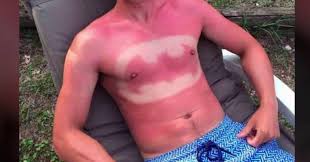
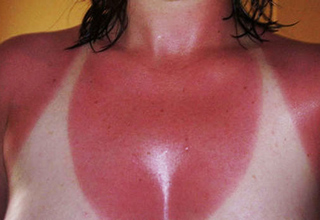
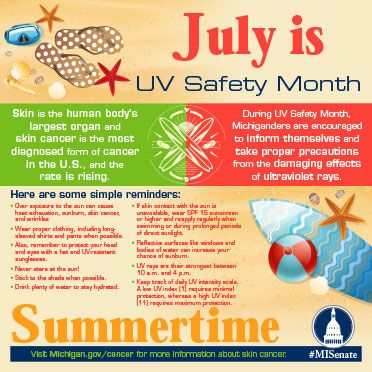
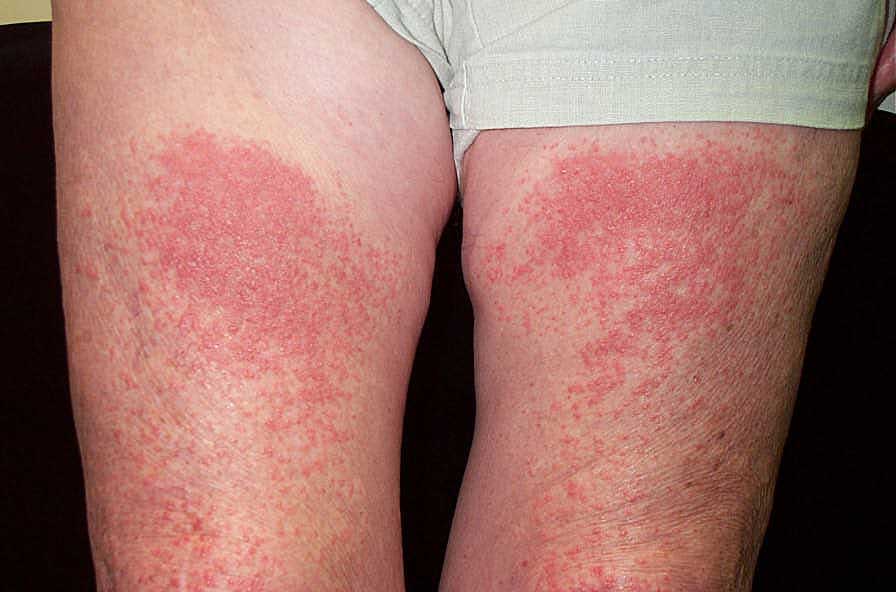
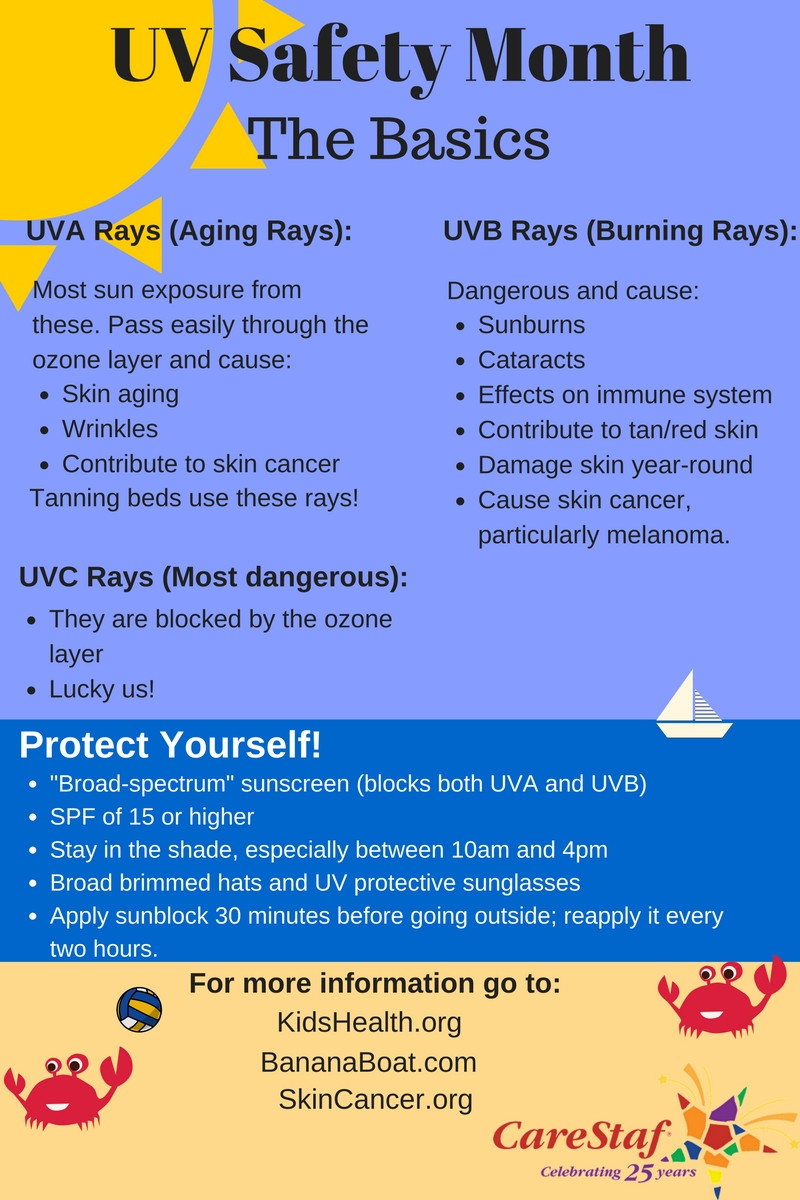
“Most skin cancers are caused by too much exposure to ultraviolet (UV) light. Protection from UV rays is important all year. Spending time outside is a great way to be physically active and reduce stress. You can work and play outside without raising your skin cancer risk by protecting your skin from the sun.

Most skin cancers are caused by too much exposure to ultraviolet (UV) light. UV rays are an invisible kind of radiation that comes from the sun, tanning beds, and sunlamps. UV rays can damage skin cells.

Protection from UV rays is important all year, not just during the summer. UV rays can reach you on cloudy and cool days, and they reflect off of surfaces like water, cement, sand, and snow. In the continental United States, UV rays tend to be strongest from 10 a.m. to 4 p.m. daylight saving time (9 a.m. to 3 p.m. standard time).

The UV Index forecasts the strength of UV rays each day. If the UV index is 3 or higher in your area, protect your skin from too much exposure to the sun.”

Centers for Disease Control and Prevention – CDC (https://www.cdc.gov/skin-cancer/sun-safety/index.html)

QUOTE FOR WEDNESDAY:

“According to the World Health Organization (WHO),  each year nearly 20 million pregnant women carry group B strep (GBS). Although GBS is harmless for most pregnant individuals, it can be extremely serious when it passes to babies during pregnancy, childbirth or in the first months of life.”

www.groupBstrepinternational (Group B Strep International – Home)


QUOTE FOR TUESDAY:

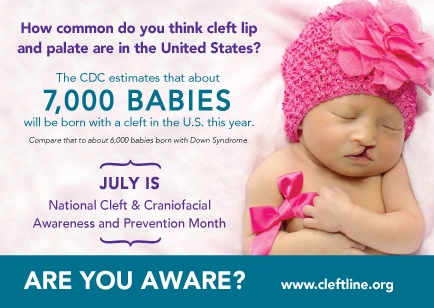
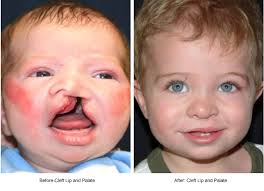
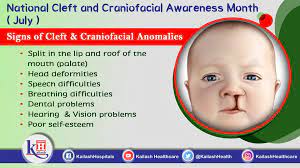
“July is National Cleft and Craniofacial Awareness and Prevention Month, a time to raise awareness and improve understanding of orofacial clefts (clefts of the lip and palate) and other conditions of the head and face (Centers for Disease Control and Prevention, 2015). About 1 in every 1,600 babies is born with cleft lip with cleft palate in the United States (Centers for Disease Control and Prevention, 2023). What are the potential effects of orofacial clefts and other craniofacial conditions on the child? Children with orofacial clefts and other craniofacial conditions often have impaired ability to feed and impaired language development, and might be at increased risk for a greater number of ear infections, hearing issues, and problems with their teeth.

Recently childlife.org found the following information about this diagnosis.  In 2023 important findings from research studies about some factors that increase the chance of having a baby with an orofacial cleft:

  • Smoking―Women who smoke during pregnancy are more likely to have a baby with an orofacial cleft than women who do not smoke.
  • Diabetes―Women with diabetes diagnosed before pregnancy have an increased risk of having a child with a cleft lip with or without cleft palate, compared to women who did not have diabetes.
  • Use of certain medicines―Women who used certain medicines to treat epilepsy, such as topiramate or valproic acid, during the first trimester (the first 3 months) of pregnancy have an increased risk of having a baby with cleft lip with or without cleft palate, compared to women who didn’t take these medicines.”

Association of Child Life Professionals (National Cleft and Craniofacial Awareness and Prevention Month ​)

QUOTE FOR THE WEEKEND:

“Cord blood is the blood remaining in your baby’s umbilical cord after he or she is born. This blood is rich with nutrients and stem cells, a type of cell that can regenerate and replace damaged cells with newer, healthier ones. Cord blood banking — also known as stem cell banking — refers to how we cryogenically preserve these cells for future medical or therapeutic use.

Storing your child’s stem cells will offer them the most comprehensive, cutting-edge treatment opportunities in the future. Regenerative medicine is a rapidly expanding field that creates extensive opportunities for your child to use their stored stem cells. Having access to stored stem cells can alleviate the trouble of locating a stem cell donor, securing a match, or facing incompatibility risks. Plus, your newborn’s stem cells have the potential to provide life-saving treatment for other matching family members, including siblings, parents, and grandparents.

As a result, storing your child’s stem cells could offer them immediate access to over 80 FDA-approved treatment opportunities and hundreds of clinical trials, including:  malignant diseases, non-malignant conditions including congenital conditions, and metabolic disorders.”

Like all blood it is so precious!

Americord Registry (Best Offer Landing | Americord Registry)


QUOTE FOR THURSDAY:

“Juvenile idiopathic arthritis, formerly known as juvenile rheumatoid arthritis, is the most common type of arthritis in children under the age of 16.

Juvenile idiopathic arthritis occurs when the body’s immune system attacks its own cells and tissues. It’s not known why this happens, but both heredity and environment seem to play a role. Some forms of juvenile idiopathic arthritis are more common in girls.”

MAYO CLINIC (https://www.mayoclinic.org/diseases-conditions/juvenile-idiopathic-arthritis/symptoms-causes/syc-20374082)”

QUOTE FOR WEDNESDAY:

“Arthritis affects persons of all ages; little is known about arthritis prevalence among children and adolescents aged <18 years.

Approximately 220,000 children and adolescents had arthritis during 2017–2021. Prevalence increased with age and was highest among those aged 12–17 years, non-Hispanic Black or African American children and adolescents, children and adolescents with anxiety or depression, those who were physically inactive, had overweight or a heart condition, or lived in a food-insecure or smoking household.

Arthritis affects persons of all ages, including younger adults, adolescents, and children; however, recent arthritis prevalence estimates among children and adolescents aged <18 years are not available. Previous prevalence estimates among U.S. children and adolescents aged <18 years ranged from 21 to 403 per 100,000 population depending upon the case definition used. CDC analyzed aggregated 2017–2021 National Survey of Children’s Health data to estimate the national prevalence of parent-reported arthritis diagnosed among children and adolescents aged <18 years. An estimated 220,000 (95% CI = 187,000–260,000) U.S. children and adolescents aged <18 years (305 per 100,000) had diagnosed arthritis. Arthritis prevalence among non-Hispanic Black or African American children and adolescents was twice that of non-Hispanic White children and adolescents.”

Center for Disease Control and Prevention – CDC (Arthritis Among Children and Adolescents Aged 18 Years — United States, 2017–2021 | MMWR)


QUOTE FOR TUESDAY:

While 4th of July is a time for barbecues and parties, it can also increase the risk for accidents and injuries.  A recent survey found that unsafe fireworks displays and drunk driving are two of the biggest concerns for the upcoming holiday. Planning ahead – and prioritizing safety – are the keys to a safe and fun holiday.  Fourth of July is right around the corner, and there’s no better time to start preparing for barbecues, trips, and celebrations.

The survey findings highlighted some of the biggest safety risks that pop up around this time of year:

  • Nearly 60% of respondents said they’ve seen unsafe fireworks use during 4th of July

  • About 33% of Gen Z and Millennial respondents said they’ve been pressured into risky behavior

  • Nearly 70% of respondents said they’ve seen someone try to drive drunk on 4th of July

  • Under 30% of respondents said they trust other Americans to celebrate responsibly

“Stick with people and activities you are familiar with,” Steadman said. “Don’t take unnecessary risks or get caught up in a crowd of unruly people. Be cognizant of children and others who may need extra looking after.

“The 4th of July is a time for celebration of America and freedom. By taking the necessary precautions and avoiding risky behavior, everyone can enjoy the day. Stay vigilant and be prepared for if things go south, and always make sure you are practicing safe behavior with both fireworks and alcohol.”

Always keep a first aid kit nearby!”

Consumer Affairs (How to stay safe for 4th of July)


Part I How to be safe this 4th of July! Learn facts and tips in advance!


Were saying to celebrate the 4th of July but what we are saying is be SAFE, SAFE, SAFE!

The Fourth of July is a time for America to commemorate the passage of the Declaration of Independence and often celebrated with parades, concerts, firework shows, family road trips, barbeques, and parties where participants toast to the nation.

Sadly, these holiday festivities can lead to potentially deadly consequences on the roads, especially when alcohol is thrown into the mix. According to the National Highway Traffic and Safety Administration, 812 people died in motor vehicle crashes involving drunk drivers during the July 4th holiday period from 2014-2018.

“Many of our service members and their families will take to the roads in hopes of celebrating our nation’s birthday someplace special,” said Michael Ballard, chief of occupational safety, Air Force Safety Center. “I urge leadership at all levels to take time to engage with Airmen and Guardians about having a plan to reduce the risks associated with their holiday weekend activities.”

On average, 10,200 home fires are started by a grill each year, with gas grills contributing to a higher number of fires than charcoal grills, according to the National Fire Protection Association.

The USFA reported that almost half (49%) of grill fires on residential properties occur between 5 and 8 p.m., with more than half (57%) occurring between May and August.

Nearly a third (32%) of grill fires on residential properties start on patios, terraces, screened-in porches or courtyards, while an additional 24% start on exterior balconies and unenclosed porches.

The leading power source of grill fires is “gas fuels,” with fires primarily being fueled by propane, according to the USFA.

The leading factors contributing to the ignition of these fires are mechanical failures or malfunctions, misuse of materials and operational deficiencies.

The Office of the Illinois State Fire Marshal advises everyone to take the following steps to help ensure safe grilling:

  • Propane and charcoal grills should be used only outdoors.
  • The grill should be placed away from the home or deck railing, and out from under the eaves of your home and overhanging tree branches.
  • Keep children and pets at least three feet away from the grilling area.
  • Keep your grill clean by removing grease or fat buildup from the grills and in the trays below the grill.
  • Never leave your grill unattended.
  • Always make sure gas grill lids are open before lighting it.
  • Check the gas tank on your propane grills and hoses for leaks each time before using.
  • If you smell gas while grilling, immediately get away from the grill and call the fire department.
  • Make sure charcoal grill coals are cool before disposing of them in a metal container.
  • Always have a fire extinguisher, bucket of water or garden hose nearby or know where you can access one quickly.
  • Campfires need to be built at least 25 feet way from tents, shrubs and anything that can burn. Make sure fires are allowed in the area where you are camping.
  • Use of chimneys, outdoor fireplaces and fire pits need to be at least 10 feet away from your home or anything that can burn.

You can find an easy-to-follow grill safety guide published by the USFA here.

According to the Insurance Institute for Highway Safety (IIHS), July 4th is historically the deadliest day of the year for traffic fatalities in the United States. This is primarily due to a combination of increased travel and alcohol consumption. The National Safety Council (NSC) projects that in 2025 alone, as many as 599 people could die in motor vehicle crashes during the holiday weekend.

What makes this time so hazardous? For one, over 43 million Americans are expected to travel during the holiday period, the majority of them by car. Heavy traffic, long travel times, and drivers unfamiliar with their routes create an environment ripe for accidents. Add alcohol into the mix, and the risks escalate dramatically.

In fact, over 40% of July 4th crash fatalities involve alcohol impairment. Drivers aged 21 to 34 are the highest risk group, who account for nearly half of all alcohol-related crash deaths during this period.

How to stay safe on the road:

  • Always wear your seatbelt. Seat belts reduce fatal injury risk by 45%.
  • Don’t drive under the influence of alcohol or drugs.
  • Plan your route ahead of time to avoid getting lost or fatigued.
  • Avoid driving late at night when impaired drivers are more likely to be on the road.
  • If you’re going out drinking, use a designated driver, rideshare app, or public transportation.
  • Never use your phone while driving.

Come on back for part II tomorrow on continuing with facts and safety tips!