Albert Einstein (14 March 1879 – 18 April 1955) Was a German-born theoretical physicist. known for his influence on the philosophy of science, developed the general theory of relativity, one of the two pillars of modern physics (alongside quantum mechanics).
Archives
Children/Adolescents and health today
It is the role of the government and people of America to help solve problems with society, including our health crises. Obesity is a health epidemic across our country, and we have a responsibility to promote good nutrition and healthy eating so we can reverse this alarming trend.
Learning young about healthy habits in your diet which includes the foods you eat on a regular basis with taking in moderation treats is vital to your turn out later in life. These treats would be from fast foods to even deserts that are not low in calories or fat or cholesterol or carbohydrates (Ex. Cheesecake, milk chocolate, pie, etc…). You need to keep your weight or the body mass index in therapeutic range while balancing rest and exercise that will help decrease the percentage of disease in your body with hopefully impacting others in this generation and the ones to follow in living this lifestyle. Let us not forget today’s middle age or later age group in America with disease factors already set in are due to early unhealthy eating and lifestyle for many years; but you can also change your eating habits with exercising moderately and have better health results also (It is recommended that your general practitioner clear you with diet and activity first, especially if diagnosed with disease or illness already).
The government helps out by passing through Congress in 2010 rules required under a child nutritional law in their effort to get childhood obesity decreased to a minimum, one day, like some countries. Society has gotten involved where schools took action with improving their lunches and even vending machine options with others still selling high fat & high calorie foods. Parents and teachers still have to work harder with reinforcing healthy eating habits in their children both in the home and classroom setting so that the future will be a healthier one for them and their children. For this to take place today’s children have to walk a pathway at a young age to get in the state of mind to strive for overall wellness. This will definitely decrease certain diseases caused by poor eating habits with sedentary lifestyles, sooner than you think.
From Feb. 2013 the agriculture department already involved regulating nutritional content of school breakfasts and lunches that have already been subsidized by the federal government, but most lunch rooms also have a la carte lines that sell other foods and hopefully that has changed. Also, food sold through vending machines and in other ways outside the lunchroom has never before been federally regulated as of Feb. 2013.
Mom and Dad your peeps need your guidance not just the schools or the government, since they don’t always use the best judgment but in being fair neither did all parents in history going back 30 to 50 years for lack of knowledge or not caring, which is the same for many today still (Ex. Smoking, eating high fat, no exercise, etc..). If all three were successful we would have less percentage in diseases or illnesses that are now still in high proportions not just due to heredity or sex or race or age risk factors (meaning not modifiable risk factors, which we can’t control). These factors for some may have been the primary reasons for getting the diagnosis of the disease/illness they have but for many it is due to, 100% or contributed to their modifiable risk factors, with living poor health habits that are modifiable risk factors meaning we have control in these factors through changing them. If the overall USA controlled their modifiable risk factors in time we would see this country healthier, with less disease, living longer, helping our future generations start on the right pathway to wellness at a young age with not reaching their middle age or older with health injuries that could have been prevented in many cases (Examples would be Atherosclerosis=blockages in are vessels leading to many heart attacks or strokes, Diabetes II, coronary artery disease, and more.).
It has to start somewhere and the drive to a healthy USA is increasing healthier habits in our daily lives, join me. Do you want a better body, or expanding a healthier society overall? Let’s spread a universal fit way of living today and later with making all ages more “lean and mean” with less disease. Living healthier has to start somewhere, why not today.
QUOTE FOR FRIDAY:
“Most of the human body disease such as Obesity, Cancer, Heart disease are linked with our food which we eat in our day to day life. If people are eating health food than how come there be more than 50% death from heart and cancer disease alone in a developed nation such as USA?”
Causes of right sided vs. left sided HEART FAILURE and their symptoms!
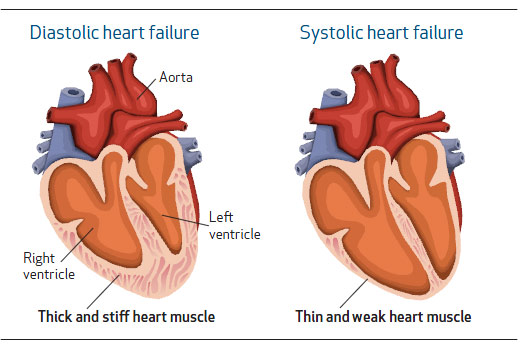
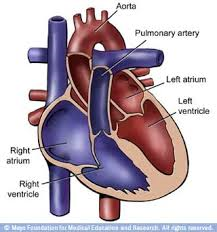
Normal Heart vs Right Failure Left Failure
Look at the size difference of the chambers and the muscle of the heart thick/stiff or weakened so proper filling of blood is affected terribly depending on the degree of heart failure on the Rt. or Lt side. The worse it is the worse the signs and symptoms will be due to the failure.
Common causes of left-sided failure include the following:
Drinking too much alcohol/Heart attack/Heart muscle infections/High blood pressure /Hypothyroidism /Leaking or narrow heart valves/Any other disease that damages the heart muscle/Poor left-side heart function due to prior heart attacks
Causes of right-sided heart failure include:
left-sided heart failure already existing spreading into right sided heart failure/ lung diseases such as chronic bronchitis and emphysema/Other causes include congenital heart disease/ clots in pulmonary arteries/ pulmonary hypertension and heart valve disease.
If you have Lt. or Rt. sided heart failure think what happens; the heart is not as strong on that side meaning it can’t do its function (pumping) as good as it use to on the side that is affected. It will be the same concept as piping not working properly. Fluids start to reverse backwards and in some cases leaks. Knowing the anatomy of how the blood flows from each side you can realize and understand the symptoms that are occurring. The symptoms of heart failure are largely determined by which side of the heart fails. Remember each side receives and delivers blood from different areas of the body.
The left sided heart failure also known as Systolic Failure, which is when the left ventricle loses its ability to contract normally. The heart can’t pump with enough force to push enough blood into circulation. The fluids back up but where? The blood reverses backward from the aorta going back up the Lt. ventricle through the mitral valve going up into the Lt. atrium that goes back up through the pulmonary vein into the lungs:
So the type of symptoms you can see with left side heart failure which is symptoms caused by blood/fluids reversing in the lungs would be:
Cough (produces frothy or blood-tinged mucus) with shortness of breath (SOB)/
Decreased urine production-retaining fluids in the body/
Difficulty lying down; need to sleep with the head elevated to avoid SOB/
Fatigue, weakness, faintness/
Irregular or rapid pulse-stress on the heart to do its function which can cause irregular pulse. /
Sensation of feeling the heartbeat (palpitations)- same as above/
Shortness of breath-fluids reversing backwards to the lungs/
Waking up due to shortness of breath (paroxysmal nocturnal dyspnea)-fluids going backwards to the lungs/
Weight gain from fluid retention-fluids going backwards and not the regular amount reaching the kidneys at first causing fluid to retain in the body./
- Symptoms in infants may include:
- Failure to thrive/ Poor feeding/Weight loss
Now let’s look at right sided heart failure symptoms; again think where the blood backs up. We are now going from the Rt. Ventricle back up the tricuspid valve to the Rt. Atrium backing out of the heart going up the superior vena cava and mostly the inferior vena cava due to the principle of gravity. So we now know the fluid primarily goes downward not back upward to the brain, due to gravity. What this means is this; fluid will back up into your abdomen, legs and feet, causing swelling.
The signs and symptoms you may see with Rt. sided heart failure is these:
Fatigue/Declining exercise capacity/Swelling in your abdomen, legs or veins in your neck/Abnormal heart rhythms/Pulsing in your neck/An enlarged liver/Shortness of breath with activity.
The symptoms all relate to where the blood and fluids in the blood (ex. H20, which is in the blood) are flowing backward too. All are symptoms created by the backflow due to the heart not its normal level of functioning in pumping due to heart failure.
Systolic heart failure is the left ventricle can’t contract vigorously, indicating a pumping problem.
Diagnostic heart failure the left ventricle can’t relax or fill fully, indicating a filling problem.
Look at the top diagrams and see what it does to the chambers of the heart in affecting the flow of blood, our ejection fraction
What is ejection fraction?
Ejection fraction is a test that determines how well your heart pumps with each beat.
Left ventricular ejection fraction (LVEF) is the measurement of how much blood is being pumped out of the left ventricle of the heart (the main pumping chamber) with each contraction.
Right ventricular ejection fraction (RVEF) is the measurement of how much blood is being pumped out of the right side of the heart to the lungs for oxygen.
In most cases, the term “ejection fraction”=EF refers to left ventricular ejection fraction.
A healthy heart beats about 60 to 80 times per minute to pump blood throughout the body. The right and left sides of the heart work together.
What do the numbers mean for EF or left ventricular EF (LVEF)?
Ejection fraction is usually expressed as a percentage. A normal heart pumps a little more than half the heart’s blood volume with each beat. (1)
A normal LVEF ranges from 55-70%. A LVEF of 65, for example, means that 65% of the total amount of blood in the left ventricle is pumped out with each heartbeat.
The LVEF may be lower when the heart muscle has become damaged due to a heart attack, heart muscle disease (cardiomyopathy), or other causes.
An EF of less than 40% may confirm a diagnosis of heart failure. Someone with diastolic failure can have a normal EF.
An EF of less than 35% increases the risk of life- threatening irregular heartbeats that can cause sudden cardiac arrest (loss of heart function) and sudden cardiac death. An implantable cardioverter defibrillator (ICD) may be recommended for these patients.
Your EF can go up and down, based on your heart condition and the therapies that have been prescribed for you in cardiac rehab or just activity alone. The EF pumps out of the LV what is therapeutic for whatever activity we do.
QUOTE FOR THURSDAY:
Know how the heart works anatomically!
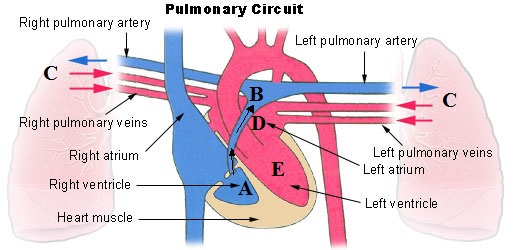
The heart works like a pump and beats 100,000 times a day. For the heart to do its function therapeutically it needs another organ to be involved called the lungs or the body could not live. If one of these organs gets damaged in time the other organ gets affected with no treatment the person will die sooner in life (Ex. Heart Failure in time affects the lungs to respiratory failure). A good metaphor for this is the car; if the engine gets damaged with no repair, in time the transmission will get affected; with no repair at all the car will die.
One of the main functions of the red blood cells (RBCs) is to carry oxygen throughout the body to give all tissues our food to stay alive, that would be oxygen. For this to take place this is done through the heart beating nonstop which allows the flow of blood to be running continuous in our blood stream (circulatory system) and at the same time this allows our cells in the blood stream to get to the lungs for oxygen and carbon dioxide exchange. These 3 functions could not take place if the heart wasn’t pumping blood to and from the heart/lungs 24 hrs a day.
This is what takes place when the heart pumps our blood:
The red blood cells carry oxygen and remove the ending result of oxygen used by our tissues, called carbon dioxide=CO2. To get rid of the CO2 (a toxin) in our body the gas is carried from our body by carrying CO2 to the lungs through the RBCs. The high CO2 with low oxygen (O2) concentration RBCs go to one side of the heart (being the right side) to get CO2 removed in exchange for more O2 in a red blood cell (RBC) this is done at the base of the lungs. This is done through breathing. Then these RBCs get highly oxygenated which then proceed to the left side of the heart. These RBCs get pumped throughout the body where the tissues utilize the oxygen in the RBCs by transferring O2 from the RBCs to the tissue as their food to stay alive. Without oxygen our tissues would starve and we would die. For the oxygen to be transported to the tissues of the body (as their food) it works like this: After the right side of the heart pumps blood to the lungs with high CO2 concentration RBCs, while we inhale to allow more oxygen in the cells at the bottom of the lungs an exchange of gas concentration in the RBCs takes place. The cells release CO2 which is released out of our body through exhaling but also when we inhale more 02 is transported into the RBCs to take another trip around the body releasing the high 02 levels to the tissues that need to utilize it BUT to do this the blood now is sent to the left side of the heart. For all this to take place the heart pumps to transport the oxygen throughout the body giving nutrition to the tissues, without it=cellular starvation but at the same time sends high CO2 RBCs to the right side for a 02/CO2 exchange at the lungs by going through the right side of the heart.
The heart has two sides, separated by an inner wall called the septum. The septum divides the right from the left side of the heart since the right and left chambers do different functions, as described above. Remember the right side of the heart is sending RBCs with highier CO2 concentration and a low oxygen concentration. You have these RBCs coming from above the heart finally entering the Rt upper chamber (Right Atrium=RA) called the Superior Vena Cava with below the heart the Inferior Vena Cava the meet into each other dumping the high CO2 blood into the RA. Then the blood goes through a valve called the tricuspid valve dumping the blood into the Rt.lower chamber called Rt. Ventricle and through the pulmonary valve going via the pulmonary artery (one of the few arteries with high CO2 concentration, usually arteries high in 02 concentration) dumping the blood at the base of the lungs for 02 and CO2 exchange when we inhale and exhale. After the gas exchange takes place the red blood cells become higher oxygenated in levels and much lower in carbon dioxide levels. Inside a cell is never 100% 02 or CO2. Now this high oxygenated blood goes to the left side of the heart leaving the lungs via the pulmonary vein (one of the few veins high in O2). The blood dumps now in the L upper chamber=Lt. atrium down through the mitral valve to the left ventricle proceeding to the aorta where the high concentrated RBCs go throughout the body dispensing oxygen to our tissues where it is needed.
If you look the right side sends blood from the heart to lungs back to heart=short distance so the muscle on the right side is thin compared to the left side. The reason for this is the left side of the heart receives the oxygen-rich blood from the lungs and pumps it to throughout the body. The left side of the heart has to dispense the high (O2) blood throughout the body so that side of the heart works out more in pumping; so the muscle on the left side is larger than the right side. The muscle of the heart is called myocardium (myo=muscle and cardium=the heart).
Let’s review the heart anatomy. It has 4 chambers in it. Two chambers are on the right side and another two on the left. The right side of the heart has only higher concentrated CO2 blood going through that side to get to the lungs for more oxygen through entrance to the right side; it removes the toxin CO2 from our body. The left side of the heart has only high oxygenated blood entering that side to have our food, O2, get dispensed throughout our tissues to stay alive. Without 02 we would go through cellular/tissue starvation. The heart moves the oxygen throughout the body via its pumping action whereas the lungs provide us the oxygen via inhaling with removing the toxin CO2 from the RBCs via exhaling.
Knowing the anatomy of the heart is so important especially to disease. We know there is a right and left side of the heart and each side having 2 chambers with completely different functions. There is left sided and right sided heart failure which can be caused by congested heart failure (CHF) or due to a massive MI in where the attack actually took place (the anterior or posterior side of the heart and the right side vs the left side.
QUOTE FOR WEDNESDAY:
Chlamydia is a common STD that can infect both men and women. It can cause serious, permanent damage to a woman’s reproductive system, making it difficult or impossible for her to get pregnant later on.
CDC (centers for disease control and prevention)
QUOTE FOR TUESDAY:
“Menopause is a natural biological process. Although it also ends fertility, you can stay healthy, vital and sexual.”
MAYO clinic
Menopause and effects of it on women’s health
What is Menopause? Menopause is when the ovaries naturally stop producing 2 hormones called estrogen and progesterone. Your ovaries are similar to what a car does in that over years it wears down, well so does the mechanism that regulates your hormones which is the ovaries. You go 12 consecutive months without having a period with no reasons to be explained for its occurrence, both biological or physical with it never returning. If both ovaries are removed surgically the menopause kicks in immediately. Menopause has signs and symptoms (s/s) that kick in which have varying intensities (it depends on the individual). You may experience mild to severe s/s. Those s/s can be : 1- Hot Flashes 2-Irregular Periods 3- Breast Pains 4- Night Sweats 5- Mood Swings 6- Loss of Labido 7- Vaginal Dryness 8-Brittle Nails 9-Bloating 10-Irritability 11-Depression 12- Weight Gain 13- Osteoporosis-one of the worst symptoms of menopause.
According to U.S. Census data from 2000, there are about 37.5 million women reaching or currently at menopause (ages 40 to 59).
As women near menopause, they may have symptoms too from the changes their body is making. Some women may not have any other symptoms at all. Symptoms that some women experience near menopause include symptoms close to the actual menopause symptoms are like the hot flashes (getting warm in the face, neck, or chest), night sweats or sleeping problems that led to feeling tired, stressed or tense, vaginal changes (the vagina may become dry and thin and sex may be painful) and thinning of bones, which may lead to loss of height and bone breaks. If a woman would like to treat her symptoms, she should talk to her health care provider to discuss treatment options.
Did you know over 60% of adult Americans are considered obese or overweight?
Weight gain happens when a person increases their body mass, whether it is a result of fat deposits, additional muscle tissue, or excess fluid. However, weight gain associated with menopause typically involves increased amounts of fat around the abdomen. One of the most accurate ways to see if you are obese is to measure your body mass index which is free online, check out the internet. I do every so often.
Go to Free BMI Calculator – AICR.org
www.aicr.org/bmi calculator.
On average, a women gains about 12 to 15 pounds between the ages of 45 and 55, this is usually when menopause typically occurs. This extra weight generally does not evenly distribute itself throughout a woman’s body. The weight tends to accumulate around the abdomen instead and women often notice the shape of their bodies slowly losing their hour-glass figure.
What can resolve this issue? As years progress the metabolism slows down; setting the physiological stage for weight gain. As a woman’s hormones fluctuate prior to menopause and preparing for a permanently reduced hormonal level, it is likely to experience weight gain. I’m over 40 y/o and in menopause. I have found a way effective for me to stay in my BMI therapeutically by increasing my metabolism and keeping it at a steady rate without any heavy workout at this time. If you too are experiencing this problem and would like guidance in how to fix this naturally with not being put on drugs than go to healthyusa.tsfl.com. They will show you how to increase your metabolism with you making the choices of what foods you want in your body. You will be able to treat yourself to foods high in fats or carbohydrates or sugars occasionally when you reach your therapeutic ratio of your body mass index. Join Dr. Anderson with his book “Dr. A’s healthy habits” and health coaches assisting you in doing what you need to know in understanding how the body works with foods and what foods (out of the 4 food groups is good for the body on a regular daily basis). I hope you join many people like myself who did this where we were so happy with ourselves with the results, how it financially stayed within our budget or cheaper, and how it all paid off. You take a look for yourself and I think you may just like what you see. No contract, No fee, No donations, it’s just a look at the website healthyusa.tsfl.com. I have been a RN over a quarter of a century and have seen disease from cancer units to cardiac units to all types of med surg. & could go on with my experience. I have worked from sea to shining sea, NY to California. I saw what unhealthy habits have done to peoples bodies of all ages in the US and will try every attempt not to end up like that. I will try to be healthier in living my life with staying out of facilities. Come aboard in helping yourselves with others making a healthier USA we take that responsibility on as a citizen in America and to those around us (particularly the young).
QUOTE FOR MONDAY:
“Physical fitness is not only one of the most important keys to a healthy body, it is the basis of dynamic and creative intellectual activity.”
John F. Kennedy (35th President of the United States)