
Archives

You smoke? Well why don’t you just drink poison!

smoking3 smoking facts smoking2

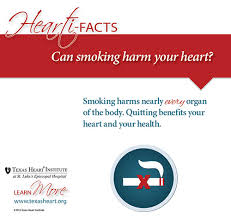
Let’s start with what smoking actually does to the body. Smoking harms nearly every organ of the body. Smoking causes many diseases and reduces the health of smokers in general. It primarily starts at the lungs. How?   Well think of your lung tissue with openings all over which are air sacs called alveoli. This is an anatomical structure that has the form of a hollow cavity which does the exchange of oxygen and carbon dioxide in and out of our body, when we inhale and exhale. The thing to know about this tissue is that before you start smoking the alveoli are expandable (think of it like a rubber band) allowing the person to get a good exchange of oxygen getting in the body to go to all our tissues and carbon dioxide getting out of the body (O2=oxygen being the fuel to our tissues and without it causes cellular starvation, carbon dioxide=CO2 being an acid / toxin to the human body and exhaled by the lungs).   After years of smoking the alveoli stretches out not allowing a good exchange of O2 and CO2. The sad thing for a smoker is the alveoli cannot REVERSE back after damage has already occurred unless you had a lung transplant with continuing to smoke, which no M.D. or health insurance would allow. More realistic would be QUIT the bad habit. The tissue doesn’t get completely better but it improves when you quit. So the pt with Emphysema has alveoli that can’t exchange oxygen and carbon dioxide from the blood like it use to at the bottom of the lungs, prior to even starting to smoke. Also, after smoking years and when diagnosed with COPD you have difficulty breathing (that is why smoking is a major cause of bronchitis or Emphysema=types of chronic obstructive pulmonary disease=COPD and it is not REVERSIBLE). Emphysema is the worst type of COPD you can get. COPD is the third leading cause of death in the U.S., and the economic burden of COPD in the U.S. in 2007 was $42.6 billion in health care costs and lost productivity. Isn’t this reason enough to stop smoking?

Emphysema is an enlargement of the air spaces distal to the terminal bronchioles, with destruction of their walls. People with emphysema have historically been known as “Pink Puffers”, due to their pink complexion.

Chronic bronchitis is defined in clinical terms as a cough with sputum production on most days for 3 months of a year, for 2 consecutive years. People with advanced COPD that have primarily chronic bronchitis were commonly referred to as “Blue Bloaters” because of the bluish color of the skin and lips (cyanosis) along with hypoxia and fluid retention.

Know when the lungs get effected in time the heart gets effected. One Affects the other in time. The heart can’t live without the lungs and viCE versa.              

Now knowing just this you’ll understand why smoking alone can cause the following conditions, Through the Centers for Disease Control and Prevention. They state the following:

Smoking and Increased Health Risks

Compared with nonsmokers, smoking is estimated to increase the risk of—

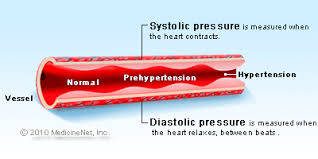
  • Coronary heart disease by 2 to 4 times, (causing atherosclerosis=thickening of the vessels or due to arteriosclerosis=hardening of the arteries and remember smoking causes vasoconstriction of the vessels = increase pressure in the vessels = high B/P.
  • Stroke by 2 to 4 times (Due to causing the above problems listed under coronary heart disease.)
  • Men developing lung cancer by 23 times,
  • Women developing lung cancer by 13 times(cancers due to constant irritation of the tissues) , and                        
  • Dying from chronic obstructive lung diseases (such as chronic bronchitis and emphysema) by 12 to 13 times. ( Explained at the top)

Smoking and Cardiovascular Disease

  • Smoking causes coronary heart disease, the leading cause of death in the United States.
  • Cigarette smoking causes reduced circulation by narrowing the blood vessels (arteries) and puts smokers at risk of developing peripheral vascular disease (i.e., obstruction of the large arteries in the arms and legs that can cause a range of problems from pain to tissue loss or gangrene) This pain to gangrene to amputation is due to lack of oxygenated blood getting to the tissue caused by the vasoconstriction the cigarette smoking caused.
  • Smoking causes abdominal aortic aneurysm (i.e., a swelling or weakening of the main artery of the body—the aorta—where it runs through the abdomen). An aneurysm with constant vasoconstriction (increases pressure) puts the aneurysm at risk for rupture because the aneurysm area isn’t as strong as the other vessels=Rupture of the aortic aneurysm

Smoking and Respiratory Disease

  • Smoking causes lung cancer.
  • Smoking causes lung diseases (e.g., emphysema, bronchitis, chronic airway obstruction) by damaging the airways and alveoli (i.e., small air sacs) of the lungs.

Smoking and Cancer

Smoking causes the following cancers: (in alphabetical order)

  • Acute myeloid leukemia
  • Bladder cancer
  • Cancer of the cervix
  • Cancer of the esophagus
  • Kidney cancer
  • Cancer of the larynx (voice box)
  • Lung cancer
  • Cancer of the oral cavity (mouth)
  • Pancreatic cancer
  • Cancer of the pharynx (throat)
  • Stomach cancer

Smoking and Other Health Effects

Smoking has many adverse reproductive and early childhood effects, including increased risk for—

  • Infertility
  • Preterm delivery
  • Stillbirth
  • Low birth weight
  • Sudden infant death syndrome (SIDS).1,2,9Smoking is associated with the following adverse health effects:1
  •  Postmenopausal women who smoke have lower bone density than women who never smoked.
  • Women who smoke have an increased risk for hip fracture than women who never smoked.
  • References
  1. S. Department of Health and Human Services. The Health Consequences of Smoking: A Report of the Surgeon General. Atlanta: U.S. Department of Health and Human Services, Centers for Disease Control and Prevention, National Center for Chronic Disease Prevention and Health Promotion, Office on Smoking and Health, 2004 [accessed 2013 June 28].
  2. S. Department of Health and Human Services. How Tobacco Smoke Causes Disease: What It Means to You. Atlanta: U.S. Department of Health and Human Services, Centers for Disease Control and Prevention, National Center for Chronic Disease Prevention and Health Promotion, Office on Smoking and Health, 2010 [accessed 2013 June 28].
  3. Centers for Disease Control and Prevention. Annual Smoking-Attributable Mortality, Years of Potential Life Lost, and Productivity Losses—United States, 2000–2004. Morbidity and Mortality Weekly Report 2008;57(45):1226–8 [accessed 2013 June 28].
  4. Centers for Disease Control and Prevention. QuickStats: Number of Deaths from 10 Leading Causes–National Vital Statistics System, United States, 2010. Morbidity and Mortality Weekly Report 2013:62(08);155. [accessed 2013 June 28].
  5. Mokdad AH, Marks JS, Stroup DF, Gerberding JL. Actual Causes of Death in the United States. JAMA: Journal of the American Medical Association 2004;291(10):1238–45 [cited 2013 June 28].
  6. S. Department of Health and Human Services. Reducing the Health Consequences of Smoking: 25 Years of Progress. A Report of the Surgeon General. Rockville (MD): U.S. Department of Health and Human Services, Public Health Service, Centers for Disease Control, National Center for Chronic Disease Prevention and Health Promotion, Office on Smoking and Health, 1989 [accessed 2013 June 28].
  7. Ockene IS, Miller NH. Cigarette Smoking, Cardiovascular Disease, and Stroke: A Statement for Healthcare Professionals from the American Heart Association. Circulation 1997;96(9):3243–7 [accessed 2013 June 28].
  8. Institute of Medicine. Secondhand Smoke Exposure and Cardiovascular Effects: Making Sense of the Evidence. [PDF–707 KB] Washington: National Academy of Sciences, Institute of Medicine, 2009 [accessed 2013 June 28].
  9. S. Department of Health and Human Services. Women and Smoking: A Report of the Surgeon General. Rockville (MD): U.S. Department of Health and Human Services, Public Health Service, Office of the Surgeon General, 2001 [accessed 2013 June 28].
QUOTE FOR THURSDAY:

“When the heart doesn’t pump blood effectively, the lungs, brain and all other organs can’t work properly and may shut down or be damaged.”

American Heart Association

How the heart works as a pump & what it’s role is regarding oxygen and carbon dioxide!

                       heart and 02,co2                       heart and 02, co2b

The heart works like a pump and beats 100,000 times a day. For the heart to do its function therapeutically it needs another organ to be involved called the lungs or the body could not live. If one of these organs gets damaged in time the other organ gets affected with no treatment the person will die sooner in life (Ex. Heart Failure in time affects the lungs to some degree, even to the severity of respiratory failure). A good metaphor for this is the car; if the engine gets damaged with no repair, in time the transmission will get affected; with no repair at all the car will die.  The heart being the engine the oil being the blood and the lungs being the transmission.

One of the main functions of the red blood cells (RBCs) is to carry oxygen throughout the body to give all tissues our food to stay alive, that would be oxygen. For this to take place this is done through the heart beating nonstop which allows the flow of blood to be running continuous in our blood stream (circulatory system) and at the same time this allows our cells in the blood stream to get to the lungs for oxygen and carbon dioxide exchange. These 3 functions could not take place if the heart wasn’t pumping blood to and from the heart/lungs 24 hrs a day. Your pulse or heart rate does the pumping.

This is what takes place when the heart pumps our blood:

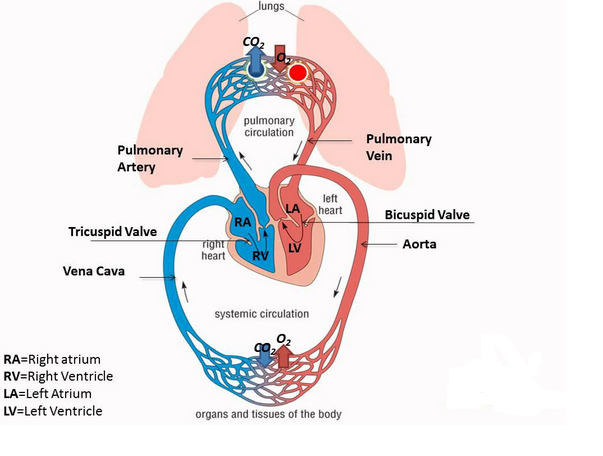
The red blood cells carry oxygen and remove the ending result of oxygen used by our tissues, called carbon dioxide=CO2. To get rid of the CO2 (a toxin) in our body the gas is carried from our body by carrying CO2 to the lungs through the RBCs. The high CO2 (carbon dioxide) with low oxygen (O2) concentration RBCs go to one side of the heart (being the right side) to get CO2 removed in exchange for more O2 in a red blood cell (RBC) this is done at the base of the lungs. This is done through breathing.  Then these RBCs get highly oxygenated which then proceed to the left side of the heart. These RBCs get pumped throughout the body where the tissues utilize the oxygen in the RBCs by transferring O2 from the RBCs to the tissue as their food to stay alive. Without oxygen our tissues would starve and we would die. For the oxygen to be transported to the tissues of the body (as their food) it works like this: After the right side of the heart pumps blood to the lungs with high CO2 concentration RBCs, while we inhale to allow more oxygen in the cells at the bottom of the lungs an exchange of gas concentration in the RBCs takes place. The cells release CO2 which is released out of our body through exhaling but also when we inhale more 02 is transported into the RBCs to take another trip around the body releasing the high 02 levels to the tissues that need to utilize it; BUT to do this the blood now is sent to the left side of the heart. For all this to take place the heart pumps to transport the oxygen throughout the body giving nutrition to the tissues, without it=cellular starvation would take place=death, but at the same time sends high CO2 RBCs to the right side for a O2/CO2 exchange at the lungs by going through the right side of the heart.

The heart has two sides, separated by an inner wall called the septum. The septum divides the right from the left side of the heart since the right and left chambers do different functions, as described above. These 2 sides work to different ways.

So lets review, remember the right side of the heart is sending RBCs with highier CO2 concentration and a low oxygen concentration. You have these RBCs coming from above the heart finally entering the Rt upper chamber (Right Atrium=RA) called the Superior Vena Cava with below the heart the Inferior Vena Cava the meet into each other dumping the high CO2 blood into the RA. Then the blood goes through a valve called the tricuspid valve dumping the blood into the Rt.lower chamber called Rt. Ventricle and through the pulmonary valve going via the pulmonary artery (one of the few arteries with high CO2 concentration, usually arteries high in 02 concentration) dumping the blood at the base of the lungs for 02 and CO2 exchange when we inhale and exhale. After the gas exchange takes place the red blood cells become higher oxygenated in levels and much lower in carbon dioxide levels. Inside a cell is never 100% 02 or CO2. Now this high oxygenated blood goes to the left side of the heart leaving the lungs via the pulmonary vein (one of the few veins high in O2). The blood dumps now in the Left side of the heart into the upper chamber=Lt. atrium down through the mitral valve to the left ventricle proceeding to the aorta where the high concentrated RBCs go throughout the body dispensing oxygen to our tissues where it is needed.

If you look the right side sends blood from the heart to lungs back to heart=short distance so the muscle on the right side is thin compared to the left side. The reason the left side has a bigger and stronger muscle is the left side of the heart receives the oxygen-rich blood from the lungs and pumps it to go throughout the body (The Lt. side of heart down to the feet, up to the brain to the ending place-back to the right side of the heart, and does this process all over again.). The left side of the heart has to dispense the high (O2) blood throughout the body so that side of the heart works out more in pumping; so the muscle on the left side is larger than the right side. The muscle of the heart is called myocardium (myo=muscle and cardium=the heart).

Let’s review the heart anatomy. It has 4 chambers in it. Two chambers are on the right side and another two on the left. The right side of the heart has only higher concentrated CO2-carbon dioxide in the blood going through that side to get to the lungs for more oxygen to be dumped into the left side. To do this the blood first is entered to the lungs from the right side of the heart. Here it removes the toxin CO2 from our body through us breathing to get more 02-oxygen into our RBCs (red blood cells). Then this blood enters to the left side of the heart where it has more high oxygenated blood entering that side to have our food, being O2, get dispensed throughout our tissues to stay alive. Without 02 we would go through cellular/tissue starvation. The heart moves the oxygen throughout the body via its pumping action whereas the lungs provide us the oxygen via inhaling with removing the toxin CO2 from the RBCs via exhaling.

How does the O2 and CO2 get moved throughout the bloodstream?  That is where the heart comes into play with its heart rate (pumping).  Without a pulse means no pumping to move the O2 & CO2 where they have to go.

Well he don’t fill the heart up with gas like a car but instead this organ has a conduction pathway that operates through electrical activity taking place by certain electrical cells with electrolytes. These electrical cells have several unique charateristics which are automaticity – the cell can generate an electrical impulse without being stimulated; excitability – the cell can change its internal electrical balance to reach its threshold; & conductivity – the cell can move an electrical impulse to the next cell.  Also we have sodium, potassium and calcium channels inside the heart that are the major electrolytes in playing a role to allow or not allow conduction to take place based on the amount of their presence out or in the way of these cardiac cells which will impact the speed of conduction to take place.

We also have a natural pacemaker (the other main ingredient) of the heart to pump; and this is called the SA Node. It sits in the the upper Rt. chamber (atrium) of the heart. This natural pacemaker conducts impulses from the top to the bottom of the heart (from both sides) with these electrolytes (mentioned above) involved to let this conduction take place in allowing the heart to beat; allowing the heart to pump the blood throughout our system to give oxygen to all tissues and remove carbon dioxide from the body bringing it to the lungs where we expel it via breathing.  To do dispense these gases to and from our RBCs the cells have to be moved in the blood via the heart pumping.  Inspiration brings the 02 via the lungs to the bottom of them to gets released into our red blood cells at the same time the RBCs release CO2 into the lungs and during expiration removes the C02 from our body. Knowing the anatomy of the heart is so important especially to understand heart disease.

We know there is a right and left side of the heart and each side having 2 chambers (upper-atriums and lowers-ventricles) with completely different functions.

QUOTE FOR WEDNESDAY:

“The “Dietary Approaches to Stop Hypertension” eating plan features plenty of fruits, vegetables, whole grains, and other foods that are heart healthy and lower in salt/sodium.”

NIH National Heart, Lung and Blood Institute (DASH DIET Dietary Approach to stop hypertension)

How to prevent and deal with Hypertension!

    blood pressure  Part III blood pressure Foods to eat

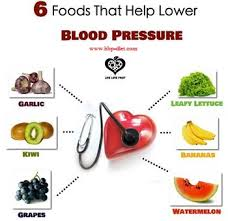
The foods to buy are low sodium foods —-What to buy:

–Fruits – Fresh, canned or frozen. I recommend with canned look at the ingredients to make sure you know how much sodium is in a serving. Remember for a person with high b/p you want to keep your sodium count less than 1800 to 2000mg a day. Sodium causes the vessels to vasoconstrict (or narrow) which increases blood pressure in a person.

-Vegetables – Fresh or frozen (no sauce or plastic pouches) Canned (UNSALTED, AGAIN check the canned label for the amount of sodium in each serving.).

–Drinks – Fruits juices, fresh or frozen.

Canned low sodium or no salt added tomato & vegetable juice.

Instant breakfast* (all flavors but eggnog) —- limit to 1 cup /day

-Dairy choices – liguid or dry milk (1% or skim milk).

Homemade buttermilk (made from powdered milk) *limit these to 2-3 cups a day*

Cottage cheese, dry cured (low sodium)

Ricotta Cheese from low fat or skim milk

Farmer Cheese, part skim mozzarella neufchated *limit cheese to 1oz or 1/2 cup of one cheese/day.

-Fats, Oils – Canola, Olive, Corn, Cottonseed, Peanut, Safflower, Soybean &

Margarine (unsalted)

–Meats, Poultry, Fish

Fish, fresh or frozen (NOT BREADED): Canned tuna and salmon (Unsalted or rinsed).

Chicken or Turkey

Lean cuts of: BEEF, VEAL, PORK, LAMB.

BEEF TONGUE if you must have.

-Meat Substitutes

Dried beans, peas, lentils (not canned)

Nuts or seeds (UNSALTED, DRY ROASTED), sunflower seeds, peanuts, almonds, walnuts.

Unsalted peanut butter

Tofu (soybean curd)

–Breads, Cerals, Grains, Starches:

Loaf of bread and yeast rolls (limit to 3 slices a day)

Homemade breads with regular flour, not self rising.

Melba Toast

Matzo Crackers

Pita Bread

Taco Shell

Tortilla (corn)

Cooked cereals like corn grits, farina (regular), oatmeal, oat bran, cream of rice, cream of wheat (AVOID instant cereals).

Puffed Rice or wheat, shredded wheat (or any cereal with 100-150mg sodium–limit to 1 cup a day).

Wheat germ

Popcorn (no salt or fat added)

Starchy vegetables: corn, potato, green beans, etc… (not canned unless salt free).

Rice (enriched white or brown)

Pasta

– Cooking ingredients, seasonings

Corn starch, tapioca

Corn meal (not self rising)

Fresh or dried herbs, salt free herb seasonings.

Flour, regular white or whole wheat (not self rising)

Fresh fruits or vegetables (lemons, limes, onions, celery, etc.)

Fresh garlic or ginger

Louisiana – type hot sauce (limit to 1 tsp/day)

Low sodium baking powder

Onion or garlic powder

Tomato paste, unsalted tomatoes, unsalted tomato sauce.

Vinegar

Water chestnuts, yeast, butter substitute (such as Molly Mc Butter—limit to 1/2 tsp/day).

– Sweets

Carob powder, cocoa powder

Flavored gelatins

Fruits (fresh, canned, frozen)

Frozen juice bars, fruit ice, sorbet, sherbet

Sugar, honey, molasses, syrup (cane or maple)

Jelly, jams, preserves, apple butter

Graham and animal crackers, fig bars, ginger snaps


OTHER WAYS TO IMPROVE HEART FUNCTION:

  1. Lose Weight, if you need to. The heart does not have to beat as hard to send blood to all parts of a slim body as opposed to a overweight or obese body.
  2. Don’t smoke-Smoking makes blood vessels constrict making it more difficult to move the blood throughout the body to all tissue parts and it also makes it more difficult in breathing.
  3. Avoid hard exercise and lifting heavy objects to prevent sudden pumping demands on your heart.
  4. Wear clothes that permit good bloodflow in the legs. Garters, hose with tight tops (like thigh-high or knee high hose) may slow blood flow to and from your legs causing clots.
  5. Avoid temperature extremes-The body works harder to keep a normal temperature when you’re too hot or cold.

6. Try to stay away from people who have colds or the flu. Ask your doctor if you should have a flu shot every year and a pneumonia shot every 6-10 years.

QUOTE FOR TUESDAY:

Look at the average American diet: ice cream, butter, cheese, whole milk, all this fat. People don’t realize how much of this stuff you get by the end of the day. High blood pressure is from all this high-fat eating.

Jack LaLanne