
Holiday heart (holiday heart syndrome) is a condition with a short-term abnormal heart rhythm (arrhythmia). It happens after people have multiple drinks or a person drinking beverages that have alcohol in them. Alcohol can lead to atrial fibrillation (AFib) for a day or two after you stop drinking. Treatments are available. People usually recover in a day, but holiday heart can be dangerous if it causes a stroke or other complications.
Researchers gave this syndrome its name when they saw more AFib cases related to alcohol use in December and January.
Alcohol can harm your heart muscle and affect how well it works. Alcohol also makes you pee more, which removes electrolytes from your body. Your heart needs the right amount of electrolytes to work well.
Holiday heart symptoms may include:
- Heart palpitations
- Fatigue
- Shortness of breath
- Weakness
- Chest pain
Holiday heart causes:
Several things linked to holidays contribute to developing this condition, like:
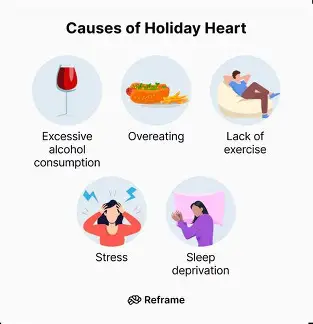
- Extra alcohol: Drinking five or more beverages that contain alcohol is the main cause of holiday heart syndrome. But this number of beverages could vary from person to person.
- Extra food: Eating a lot of food, especially salty snacks, makes your heart’s job harder.
- Holiday stress: The stress of trying to do so much during the holidays makes more demands on your heart.
Risk factors:
You can get holiday heart syndrome even if you’re young and don’t have a heart condition. But you’re more likely to get AFib from drinking alcohol if you:
- Have high blood pressure (hypertension)
- Have an issue with your heart’s structure, like your valves
- Have conditions that affect your heart, blood vessels and energy use
- Are older than 65
- Are male
- Are white
- Have sleep apnea
- Have diabetes
- Have obesity
You can decrease your risk of holiday heart syndrome by not drinking beverages with alcohol. Managing the medical conditions you have also helps decrease your risk.
How doctors diagnose holiday heart; the MD may do the following:
- Physical exam
- Medical history
- Blood tests to check electrolyte and oxygen levels
- Electrocardiogram (EKG)
- Chest X-ray
- Echocardiogram
- Holter monitor
- Telemetry
Management and Treatment:
If you have an abnormal heart rhythm, a healthcare provider will observe and monitor you. Holiday heart syndrome treatment may include:
- Hydration through an IV line
- Electrolytes and vitamins
- Anticoagulants to prevent blood clots that could cause a stroke
- Beta-blockers or calcium channel blockers to manage your heart rate
- Other medications called antiarrhythmics to control your heart rhythm
- Procedure to return your heart to a normal rhythm (cardioversion)
Recovery time:
Depending on how your healthcare provider needs to manage your case, you may be able to get back to regular physical activity in a few days. Until then, you can help prevent another AFib episode by not exerting yourself and avoiding alcohol.
When should I see my healthcare provider?
Go to the emergency room if you have heart palpitations, chest pain and shortness of breath. Don’t drive yourself. Call 911 or your local emergency number instead.