QUOTE FOR THURSDAY:

“Hearing loss can range from mild to profound and has many different causes, including injury, disease, genetic defects and the ageing process. Hearing loss at birth is known as congenital hearing loss, while hearing loss that occurs after birth is called acquired hearing loss. The most common cause of acquired hearing loss is noise, which accounts for over one quarter of people affected by hearing loss. You can protect your hearing by reducing your exposure to loud noise or wearing suitable protection such as ear muffs or ear plugs.”.

Better Health Channel (https://www.betterhealth.vic.gov.au/health/conditionsandtreatments/deafness-a-range-of-causes)

HEARING LOSS – THE CAUSES AND IT’S EFFECTS

The effects may not be obvious…

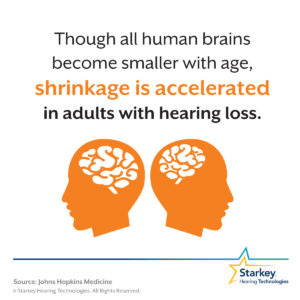
Hearing loss affects people in different ways. Left undiagnosed or untreated, it can damage communications and erode relationships. Over time, hearing loss may degenerate from a strictly physical condition to a psychological one, which is just one of the reasons it is so important to seek a solution promptly. For most people with hearing loss, there is help. Properly fitted hearing aids improve communication for at least 90 percent of people with hearing loss.

The cause of hearing loss may not be clear…

Hearing loss is not just the result of attending loud concerts or a factor of the aging process. Illness and infections can also play a part in damaging your hearing. A University of Wisconsin Medical School 2001 study[2] revealed that hearing loss occurred in nearly 80% of those who may have suffered from a heart attack. They further determined that individuals who exercised at least once a week experienced a 32 percent reduction in the risk of suffering from hearing loss compared to those who did not work out.

Causes of hearing loss

  • hereditary disorders – some types of hearing loss are hereditary, which means parents pass on affected genes to their children. In most cases, hereditary hearing loss is caused by malformations of the inner ear
  • genetic disorders – genetic mutations may happen: for example, at the moment of conception when the father’s sperm joins with the mother’s egg. Some of the many genetic disorders that can cause hearing loss include osteogenesis imperfecta, Trisomy 13 (Patau syndrome) and Treacher Collins syndrome
  • prenatal exposure to disease – a baby will be born deaf or with hearing problems if they are exposed to certain diseases in utero, including rubella (German measles), influenza and mumps. Other factors that are thought to cause congenital deafness include exposure to methyl mercury and medications such as quinine
  • noise – loud noises (such as gun shots, firecrackers, explosions and rock concerts), particularly prolonged exposure either in the workplace or recreationally, can damage the delicate mechanisms inside the ear. If you are standing next to someone, yet have to shout to be heard, you can be sure that the noise is loud enough to be damaging your ears. You can protect your hearing by reducing your exposure to loud noise or wearing suitable protection such as ear muffs or ear plugs
  • trauma – such as perforation of the eardrum, fractured skull or changes in air pressure (barotrauma)
  • disease – certain diseases can cause hearing loss, including meningitis, mumps, cytomegalovirus and chickenpox. Severe cases of jaundice can also cause hearing loss
  • Meniere’s disease and exposure to certain chemicals.

Other causes of temporary hearing loss include:

  • wax – the ear canal secretes cerumen, a waxy substance that helps to protect and lubricate the tissues. A build-up of wax can block the ear canal, leading to short-term conductive hearing loss

  • foreign object – similarly to ear wax, a foreign object stuck inside the ear canal (such as the tip of a cotton bud) can temporarily cause hearing loss

  • excess mucus – the common cold, a bout of flu, hay fever or other allergies can cause an excess of mucus that may block the Eustachian tube of the ear

  • ear infections – including otitis externa (infection of the outer ear) and otitis media (infection of the middle ear). Fluid and pus don’t allow the full conduction of sound.

Other health issues associated with either temporary or permanent hearing loss include the following:

Sluggish or poor blood flow to the ear

High blood pressure

Sickle Cell Disease

Diabetes

Screenings for diabetes and other conditions typically do not include hearing tests. If you have one of these conditions, it’s probably a good idea to ask for a referral to a hearing care professional who can conduct a hearing screening to see if your are suffering from any kind of hearing loss.

Share :

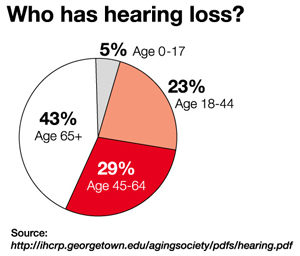
If you have hearing loss, you are not alone. About one in six people experience some degree of hearing impairment over the course of their lives.

The effects may not be obvious…

Hearing loss affects people in different ways. Left undiagnosed or untreated, it can damage communications and erode relationships. Over time, hearing loss may degenerate from a strictly physical condition to a psychological one, which is just one of the reasons it is so important to seek a solution promptly. For most people with hearing loss, there is help. Properly fitted hearing aids improve communication for at least 90 percent of people with hearing loss.

The cause of hearing loss may not be clear…

Hearing loss is not just the result of attending loud concerts or a factor of the aging process. Illness and infections can also play a part in damaging your hearing. A University of Wisconsin Medical School 2001 study[2] revealed that hearing loss occurred in nearly 80% of those who may have suffered from a heart attack. They further determined that individuals who exercised at least once a week experienced a 32 percent reduction in the risk of suffering from hearing loss compared to those who did not work out.

Screenings for diabetes and other conditions typically do not include hearing tests. If you have one of these conditions, it’s probably a good idea to ask for a referral to a hearing care professional who can conduct a hearing screening to see if you are suffering from any kind of hearing loss.

Many other factors can lead to hearing loss, including your family history, repeated exposure to loud noises, injuries, and smoking.

References: 1-World Health Organization. http://www.who.int/mediacentre/factsheets/fs300/en/

2-Torre P 3rd, Cruickshanks KJ, Klein BE, Klein R, Nondahl DM. (2005). The association between cardiovascular disease and cochlear function in older adults. http://jslhr.asha.org/cgi/content/abstract/48/2/473

3-National Institute on Deafness and Other Communication Disorders (NIDCD).
 

QUOTE FOR WEDNESDAY:

“Chronic kidney disease, also known as chronic renal disease or CKD, is a condition characterized by a gradual loss of kidney function over time. Chronic kidney disease includes conditions that damage your kidneys and decrease their ability to keep you healthy by filtering wastes from your blood. If kidney disease worsens, wastes can build to high levels in your blood and make you feel sick. You may develop complications like: high blood pressure, anemia (low blood count), weak bones, poor nutritional health, and nerve damage.  Kidney disease also increases your risk of having heart and blood vessel disease. These problems may happen slowly over a long time. Early detection and treatment can often keep chronic kidney disease from getting worse. When kidney disease progresses, it may eventually lead to kidney failure, which requires dialysis or a kidney transplant to maintain life.”

National Kidney Foundation (https://www.kidney.org)


QUOTE FOR TUESDAY:

“Acute kidney failure occurs when your kidneys suddenly become unable to filter waste products from your blood. When your kidneys lose their filtering ability, dangerous levels of wastes may accumulate, and your blood’s chemical makeup may get out of balance.

Acute kidney failure — also called acute renal failure or acute kidney injury — develops rapidly, usually in less than a few days. Acute kidney failure is most common in people who are already hospitalized, particularly in critically ill people who need intensive care.”

MAYO CLINIC

QUOTE FOR THE MONDAY:

“The kidneys are a pair of bean-shaped organs on either side of your spine, below your ribs and behind your belly. Each kidney is about 4 or 5 inches long, roughly the size of a large fist.

The kidneys’ job is to filter your blood. They remove wastes, control the body’s fluid balance, and keep the right levels of electrolytes. All of the blood in your body passes through them about 40 times a day.”.

WebM.D. (https://www.webmd.com/kidney-stones/picture-of-the-kidneys)

QUOTE FOR WEEKEND:

“Staging is a way of describing where the cancer is located, if or where it has spread, and whether it is affecting other parts of the body.  Doctors use diagnostic tests to find out the cancer’s stage, so staging may not be complete until all of the tests are finished. Knowing the stage helps the doctor recommend what kind of treatment is best and can help predict a patient’s prognosis, which is the chance of recovery. There are different stage descriptions for different types of cancer.”

Cancer.Net (https://www.cancer.net)

QUOTE FOR FRIDAY:

“In dealing with Saint Patrick’s Day hangover’s for some people Global news states the following:  Hangovers are essentially the body’s reaction to a poison. It’s a substance that stays in the body for a long time and is taken care of by the body by only small amounts by the hour,” Dr. John MacNeill, a pharmacologist and University of British Columbia professor, told Global News.”

Dealing with the St. Patrick’s Day Hangover!


Dr. Hensrud adds that, as we age, we get dehydrated more. Our liver doesn’t work as efficiently, and our bodies don’t fight inflammation as well so it takes longer to recover.

Speaking of recovering, are there really any proven ways to get rid of a hangover?

According to Healthline.com, it is recommended to drink a glass of water after every drink to stay hydrated. If it’s too late for that, drink plenty of water the next day.

What about having a drink in the morning? Healthline says it’s largely a myth, but there is some evidence to support having a drink can lessen hangover symptoms.

The best thing to do? Sleep, and once you sleep, get up and eat a hearty breakfast. It boosts your blood sugar levels and makes you feel better.

That’s verified.

1. Drink water between every alcoholic drink you consume. The water will keep you hydrated since alcohol tends to dehydrate us. It will also help to flush the alcohol out of your system.

2. Do not opt for the “hair of the dog” that bit you the next day! That’s the old belief that if you have a little bit of alcohol the next morning that it will act as a cure for your hangover.

After all, that IS what Sunday brunches are built on, right? Well, new evidence from a study suggests recently that this is not the way to cure a hangover and it actually can just prolong the onset of that “crappy feeling.”

3. Be mindful about what you drink! Darker liquor tends to give you the worst hangovers. Stick with vodka and stay away from any mixed drink that is full of sugar as that too can just make you feel worse tomorrow morning.

4. Eat a big meal! If you’re hitting up an Irish Pub for some Guinness today order some Shephard’s Pie with it. All those carbs will help prevent being hungover and read meat is full of amino acids which can also aid in preventing tomorrow’s possible doom!

5. Just limit how much you drink or don’t drink at all! Just because it’s one of the biggest drinking holidays of the year doesn’t mean you have to go crazy or even participate for that matter. Sometimes it’s the best to be the only sober one in a bar full of crazy drunks.

Of course, whatever you do this St. Patrick’s Day, make sure you drink responsibly. Never drink and drive.


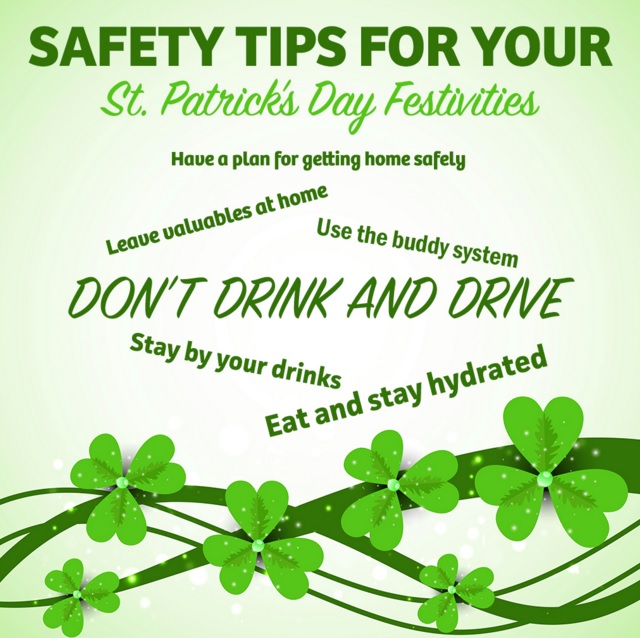
How to plan a safe St Patrick’s Day!

With 149 million people in the United States celebrating on Saint Patrick’s Day – an incredible figure for a holiday that is not legally recognized as a holiday.

St. Patrick’s Day is the most popular holiday for beer drinking with the average person having 4.2 drinks and 32% of adult admitting to binge drinking. On St. Patrick’s Day beer sales increase 174% and spirit sales increase 153%.

Unfortunately, a holiday that celebrates drinking, leads to drunk driving and alcohol-related accidents. These accidents are often fatal. In 2018, 73 people in the US were killed in drunk driving crashes over on St. Patrick’s Day.

If possible; Plan a Sober Ride

Drinking during Saint Patrick’s Day is not uncommon. But if you do choose to enjoy a cocktail or two, keep yourself and those around you safe by planning for a sober ride. Ask a sober friend or family member to take you home. Take an Uber,  planned ride or even an old fashioned cab if that is your preferred method. You can even take a bus or train depending on where you live and where the party is from. Even in your sober ride, act appropriately so your driver can pay attention to the road. Remember, your driver may be sober, but there’s likely another driver near that is not.

Don’t Drink and Drive:

This first Saint Patrick’s day safety tip is obvious for a reason. Drinking and driving is not only dangerous to yourself but also everyone else in the vicinity of your vehicle. It should come as no surprise that January 1st has the highest percentage of deaths related to alcohol, according to the Insurance Institute for Highway Safety data. Between 2007 and 2011, 42 percent of all traffic deaths during the holiday were directly caused by alcohol. Keep others from driving while intoxicated by suggesting they use other methods, like an Uber.

Party at someone’s house sleepover if possible or have a sober driver!

Eat Dinner:

First if going out at dinner have a full stomach since it is a great way to avoid alcohol poisoning.

Try to consume foods high in protein such as cheese, meat and nuts. These types of food will slow down the absorption of alcohol in the digestive system. This will give the alcohol more time to metabolize in the body resulting in a lower risk of alcohol poisoning. Our liver metabolizes about one alcoholic drink per hour. A good rule of thumb is a 12 oz. beer = 4-5 oz. of wine = 1.5 oz. of hard liquor. By sipping a drink rather than chugging it, your body will have more time to metabolize the alcohol which will result in less of a hangover. Consider ordering an appetizer if you’re out at a restaurant or snack on nuts while drinking at a bar.

Pet Safety:

Nothing frightens pet’s more than sudden loud noises. Extra attention must be given so your pets won’t run away in a panic. Scared, running pets can be hit by cars, cause accidents, and become lost…not to mention, frequently bite people if scarred or threatened.

Wait to Post on Social Media:

Yes, it’s tempting to document your holiday celebrations online with friends and family, but recommended is waiting until you’ve returned home to share. You never know who’s looking at your account and what their intentions may be.