It’s that time of the year to go on vacation during summer to area warm with beaches or even scuba dive during the vacation but here’s a warning on few creatures deadly to man if in the ocean water especially scuba diving.
Jelly Fish-The Sea Wasp=Box Jelly Fish
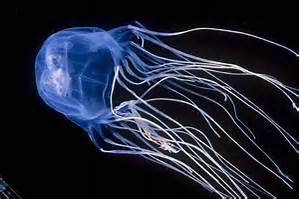
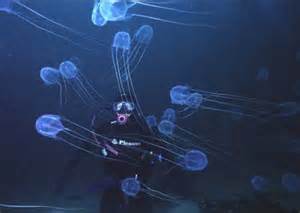
There are a number of species of box jellyfish, but they are all quite dangerous. The sea wasp box jellyfish is perhaps the most deadly variety. This translucent sea-dweller may not look all that menacing, but it is the most venomous animal on planet Earth. Box jellyfish are deadly to many different animals, not the least of all, us. If you get stung by one of these animals, you are very likely to die. Even if you do not, you will be in tremendous pain for some time afterward. Box jellyfish are cnidarian invertebrates distinguished by their cube-shaped medusae. Some species of box jellyfish produce extremely potent venom: Chironex fleckeri, Carukia barnesi and Malo kingi. Stings from these and a few other species in the class are extremely painful and can be fatal to humans.
In Australia, fatalities are most often perpetrated by the largest species of this class of jellyfish. The recently discovered and very similar Chironex yamaguchii may be equally dangerous, as it has been implicated in several deaths in Japan.
Box jellyfish are known as the “suckerpunch” of the sea not only because their sting is rarely detected until the venom is injected, but also because they are almost transparent. In northern Australia, the highest risk period for the box jellyfish is between October and May, but stings and specimens have been reported all months of the year. Similarly, the highest risk conditions are those with calm water and a light, onshore breeze; however, stings and specimens have been reported in all conditions.
In Hawaii, box jellyfish numbers peak approximately seven to ten days after a full moon, when they come near the shore to spawn. Sometimes the influx is so severe that lifeguards have closed infested beaches, such as Hanauma Bay, until the numbers subside.
TREATMENT IF POSSIBE: Once a tentacle of the box jellyfish adheres to skin, it pumps nematocysts with venom into the skin, causing the sting and agonizing pain. Flushing with vinegar is used to deactivate undischarged nematocysts to prevent the release of additional venom. A 2014 study reported that vinegar also increased the amount of venom released from already-discharged nematocysts; however, this study has been criticized on methodological grounds.
Removal of additional tentacles is usually done with a towel or gloved hand, to prevent secondary stinging. Tentacles can still sting if separated from the bell, or after the creature is dead. Removal of tentacles may cause unfired nematocysts to come into contact with the skin and fire, resulting in a greater degree of envenomation.
Although commonly recommended in folklore and even some papers on sting treatment, there is no scientific evidence that urine, ammonia, meat tenderizer, sodium bicarbonate, boric acid, lemon juice, fresh water, steroid cream, alcohol, cold packs, papaya, or hydrogen peroxide will disable further stinging, and these substances may even hasten the release of venom. Heat packs have been proven for moderate pain relief. Pressure immobilization bandages, methylated spirits, or vodka should never be used for jelly stings. In severe Chironex fleckeri stings cardiac arrest can occur quickly. Going to the ER never hurts where the hopefully in Hawaii, Japan and other areas known for this problem are updated on the best treatment. Especially where oceans are nearby for the beach scene or scuba diving.
Cone Snail
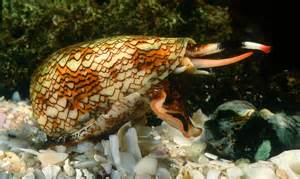
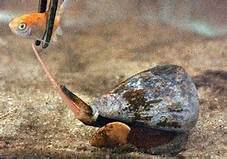
Another ocean dweller to be wary of is the cone snail. It may not look like much, and you may easily mistake it for any other snail on the beach, but it is extremely deadly. Just one drop of its venom can kill twenty human adults. There is no antivenin, which means that if you are stung, you will almost certainly be dead within minutes. Who would think such a small dwelling creature could be so powerful in putting an end to a human life.
Cone snails, cone shells or cones are common names for a large group of small to large-sized predatory sea snails, marine gastropod molluscs. Until recently, over 600 species of cone snails were all classified under one genus, Conus, in one family, the Conidae.
National Geographic (NG) states about this species having it’s own siphon; along with having a breathing tube and is a toxic killer. Snails are usually thought of as slimy, small, and are great with butter sauce after cooked. In the waters of Southeast Asia this creature is considered a underwater tank that has a hard spiral shell and flexible treads. NG also states that down in front this snail is a shell that has a cannon. It has eyesight on each side and hunts primarily by scent using it’s siphon. One of its common prey is the fish which when the mammal detects the cone shell it hides under the rock usually rather that swim away (not a good choice). It still had move to remove. The shell has a long harpoon (a weapon made of modified tooth) in its tube inside the shell it releases by a contraction with its muscle. It releases in this harpoon a venom which can be deadly to the human; it is cocked and loaded aiming it at the fish deeper under the rock not being able to get free at all making the catch simplified for the cone snail and it strikes and paralyzes the fish the siphon sucks the fish in with now having a full belly. Now hides under the rock and sediment with the siphon sticking up as a warning till next time.
They live in the Indian and Pacific oceans, the Caribbean and Red seas, and along the coast of Florida. They are not aggressive. The sting usually occurs when divers in deep reef waters handle the snails. Swimmers and snorkelers are unlikely to find cone snails in shallow intertidal waters. Their empty shells are prized items on sandy beaches. They are nocturnal (more active at night) and they tend to burrow themselves in the sand and coral during the day. Cone snail shells range in size from less than an inch to 9 inches long. Cone snails mainly hunt worms and other snails. A few varieties of cone snails eat fish, and these are the most harmful to humans.
Most stings occur on the hands and fingers due to handling. Mild stings are similar to a wasp or bee sting with localized burning and sharp stinging symptoms. They can be intense and also have numbness and tingling to the wounded area.
Some sting symptoms can progress to include cyanosis (blueness at the site due to decreased blood flow), and even numbness or tingling involving an entire limb.
Severe cases show total limb numbness that progresses to the area around the mouth (perioral) and then the entire body. Paralysis (inability to move a part or entire body) can occur leading to paralysis of the diaphragm which stops the ability to breath.
Coma and death can result in severe cases where the diaphragm is paralyzed.
Other symptoms that can occur include: fainting (syncope), itching, loss of coordination, heart failure, difficulty speaking. difficulty breathing, and double vision.
Symptoms can begin within minutes or take days to appear after the venom is injected.
So again Scuba Divers watch out on your vacation and what you handle!
Treatment:
If SCUBA diving, the diver stung should safely surface immediately accompanied by another diver.
There is no antivenom available for cone snail stings.
Use the pressure immobilization technique: Use an elastic bandage (similar to ACE bandage) to wrap the limb starting at the distal end (fingers or toes) and wrap toward the body. It should be tight but the fingers and toes should remain pink so that the circulation is not cut off. The extremity should also be immobilized with a splint or stick of some sort to prevent it from bending at the joints. The elastic bandage should be removed for 90 seconds every 10 minutes and then reapplied for the first 4 to 6 hours. (Hopefully medical care can be received within this time period.)
Other treatment options that may help include:
- Immerse the affected area in water as hot as is tolerable (water temperature not to exceed 140 F or 60 C).
- Inject a local anesthetic into the wound area.
- Some reports suggest that
- Edrophonium (Enlon, Tensilon) 10 mg IV may be used as therapy for paralysis. A 2-mg test-dose should first be administered IV, and if effective, followed by an additional 8-mg dose IV. Atropine (Atreza, Sal-Tropine) 0.6 mg should be immediately available for intravenous administration in case of an adverse reaction to edrophonium.
- A 2 to 4 mg dose naloxone (Narcan) given IV may help treat severe hypotension (low blood pressure).
- Local excision (cutting out the area stung) by a health care professional (controversial and not widely recommended)
- Incision and suction (controversial and not widely recommended)
Other things that may be done:
- Avoid excessive movement and keep the patient calm and warm.
- CPR may be necessary. Artificial respiration may save the person’s life.
- Do not cut into the wound, apply suction, or use a tourniquet.
- BUT going to the nearest ER is the best bet!
Black Mamba
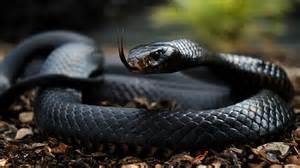
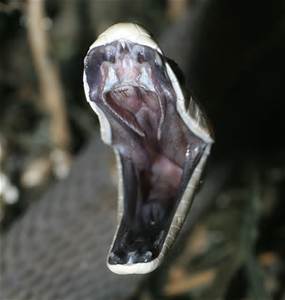
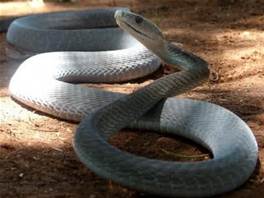
The Black Mamba is considered to be the longest venomous of all snakes found around Africa. It is also considered to be one of the deadliest. It features a very powerful venom and that has many people running scared from it. They are fast moving snakes and they are know to be aggressive and strike in a moments notice. Black mambas live in the savannas and rocky hills of southern and eastern Africa. They are Africa’s longest venomous snake, reaching up to 14 feet (4.5 meters) in length, although 8.2 feet (2.5 meters) is more the average. They are also among the fastest snakes in the world, slithering at speeds of up to 12.5 miles per hour (20 kilometers per hour).You may be puzzled why they have such a name though as they aren’t black in color. Instead they are gray, olive, or brownish. The color will depend on the natural habitat of the species. They have to be able to blend in if they want the best chance of finding prey. This camouflage also helps them to reduce the chances of being noticed by various predators. They get their name from the blue-black of the inside of their mouths, which they display when threatened.Even though they are very aggressive they do take the chance to escape when they can. Since this snake is so fast they will often do so. However, if they feel backed into a corner, they have eggs around them, or they are agitated they will strike fast. Black mambas are shy and will almost always seek to escape when confronted. When the snake feels its being cornered, these snakes will raise their heads, sometimes with a third of their body off the ground, spread their cobra-like neck-flap, open their black mouths, and hiss. If an attacker persists, the mamba will strike not once, but repeatedly, injecting large amounts of potent neuro- and cardiotoxin with each strike. It is really amazing to see but I do recommend on T.V. not in person. Many people believe them to be evil due to that particular characteristic. It is a myth that has been passed down in many cultures for hundreds of years. This particular snake is able to move at a speed of up to 12.5 miles per hour for long distances.However, it is quite thin with an overall size of about 3 ½ pounds. In spite of being so thin though they are very strong. This is also a very fast moving type of snake so don’t underestimate what you are dealing with.
Treatment:
Remember, the venom of the black mamba is highly toxic, commonly causing collapse in humans within 45 minutes or less from a single bite. Without effective antivenom therapy, death typically occurs in 7–15 hours. The venom is chiefly composed of neurotoxins, specifically dendrotoxin.
Treatment of a bite by a neurotoxic snake such as a cobra or mamba:
* Stay calm and breathe gently.
* Immediately apply a crepe bandage firmly around the wound, as if for a muscle sprain. This will reduce the amount of venom entering the bloodstream but should not cut off circulation.
* Do not apply a tourniquet.
* Never try and suck the venom out.
*Transport the person to hospital as soon as possible as these snakes have potent venom and anti-venom will be needed.
If you are bitten by a cytotoxic snake such as a black mamba:
* Drink plenty of fluid unless you have trouble swallowing.
* Apply a sterile dressing to the wound.
* Never try and suck the venom out with your mouth.
* Do not squeeze the bite.
* Do not apply a tight bandage or tourniquet.
*Transport the person to hospital as soon as possible. You need the ANTIVENOM!!