“A Baker’s cyst is a fluid-filled cyst that causes a bulge and a feeling of tightness behind your knee.”
MAYO Clinic
“A Baker’s cyst is a fluid-filled cyst that causes a bulge and a feeling of tightness behind your knee.”
MAYO Clinic
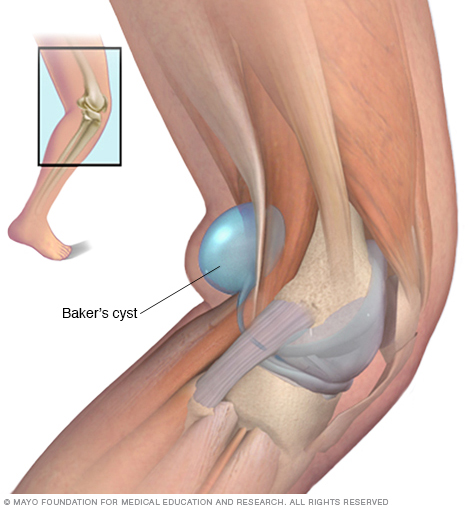
A Baker cyst is swelling caused by fluid from the knee joint protruding to the back of the knee. The back of the knee is also referred to as the popliteal area of the knee. A Baker cyst is sometimes referred to as a popliteal cyst. When an excess of knee joint fluid is compressed by the body weight between the bones of the knee joint, it can become trapped and separate from the joint to form the fluid-filled sac of a Baker cyst. The name of the cyst is in memory of the physician who originally described the condition, the British surgeon William Morrant Baker (1839-1896).
“About 1 in 8 U.S. women (about 12.4%) will develop invasive breast cancer over the course of her lifetime. In 2018, an estimated 266,120 new cases of invasive breast cancer are expected to be diagnosed in women in the U.S., along with 63,960 new cases of non-invasive (in situ) breast cancer.”
BREASTCANCER.ORG
“Doctors usually treat bacterial infections with antibiotics (A/Bs). They either kill bacteria or stop them multiplying. The treatment of viral infections can include: 1-managing symptoms, such as honey for coughs and warm fluids like chicken soup for oral hydration 2-paracetamol to relieve fever, stopping viral reproduction using antiviral medicines, such as medicines for HIV/AIDS and cold sores. 3-preventing infection in the first place, such as vaccines for flu and hepatitism; *Remember A/B’s don’t work on viral infections.”
HealthDirect.Gov
“There’s nothing better than enjoying the outdoors during the summertime. But the summer heat also brings the risk of dry, itchy, and irritated skin.”
Eileen Bailey An Author of Health Central (healthcentral.com) “6 skin problems in the summertime”.
Heat rash is a red or pink rash usually found on areas of the body that are covered with clothing. It happens during hot humid conditions and is most common in children. Heat rash develops when sweat ducts become blocked and swell up, looking like dots or tiny pimples on the skin. It often causes discomfort and itching.
Heat rash usually heals on its own in a matter of days and doesn’t require medical attention. In some cases the rash gets infected with symptoms like pain, swelling and pus. If this happens, be sure to contact your doctor.
We all like to spend time in the water during summer, and Dennis Maki, a professor of infectious diseases at the University of Wisconsin School of Medicine and Public Health, warns of the risk of bacterial infections and other water-borne illnesses as a result of taking part in recreational water activities.
Maki adds that apart from natural bodies of water like rivers and lakes, pools and hot tubs can also be sources of gastrointestinal problems; skin, ear and eye infections; and respiratory, neurological and viral problems. The safest places to swim are pools that are regularly checked for their chlorine levels.
There is a kind of virus that produces cold-like symptoms, which tends to rear its ugly head during the summer months. It is called enterovirus and can cause more complicated symptoms than the typical winter cold.
According to Merck Manual, symptoms of a summer cold caused by enterovirus include fever, headache, and sore throat, and sometimes mouth sores or a rash. Treatment is basically aimed at relieving symptoms.
An unfortunate result of summer activities that involve spending a lot of time in the hot sun can be a spitting headache. A survey by the National Headache Foundation indicates that headache sufferers consider summer to be the worst time of year for headaches.
As the temperature goes up, so does your risk for getting a headache. One theory is that the heat makes blood vessels in your head expand, causing them to press against nerve endings. Dehydration and strenuous exercise in hot weather can also lead to headaches.
An over-the-counter painkiller will usually alleviate headaches caused by heat exposure and exercise, and drinking enough water should take care of a dehydration headache.
Heat stroke or hyperthermia results from prolonged exposure to high temperatures. It can happen for example when children are left in hot cars during summer.
Emedicinehealth defines heat stroke as a condition where the body’s cooling mechanisms are overcome by heat, resulting in a core heat of over 40°C. Heat stroke is preceded by signs of heat exhaustion like headaches, dizziness and weakness, and results in unconsciousness, organ failure and eventually death.
Hyperthermia is primarily treated by outside cooling of the body with the help of water, cold air or ice packs. Internal cooling by flushing the stomach or rectum with cold may also be used. Persons with hyperthermia need to be hospitalised in order to be tested for complications like muscle breakdown, which can damage the kidneys.
So be prepared this summer in preventing you and your family getting these ailments due to the summer weather!
“For many, summertime means sun, surf and sand, but the season can also bring asthma attacks, ear infections and blistery rashes on the hands and feet.”
Livescience.com
Prostate cancer is the second most common cancer among men, first is skin cancer.
African-American men are at the greatest risk to develop prostate cancer.
The American Cancer Society recommends men with an average risk of prostate cancer should begin the discussion about screening at age 50, while men with higher risk of prostate cancer should begin earlier.
Sexual health is a major overall health marker for men — 1 in 4 men will experience some form of sexual health concern by age 65.
Erectile dysfunction and lower testosterone are linked to larger health risks, including heart disease, high blood pressure-HBP, diabetes and obesity. Remember African Americans are high for blood pressure. Perhaps higher rates of obesity and diabetes place African Americans at greater risk for high blood pressure and heart disease. Researchers have also found that there may be a gene that makes African-Americans much more salt sensitive. This trait increases the risk of developing HBP. In people who have this gene, as little as one extra gram (half a teaspoon) of salt could raise blood pressure as much as five millimeters of mercury (mm Hg). Don’t forget bad diet, overweight to obese and sedentary life style play vital factors for getting HBP so on average it’s not just a gene factor but heredity does key in especially if you have disease (DM, Obese, Cardiac disease with HBP in the nuclear family especially).
BPH is monitored but there is no active treatment. Diet and medicine can control symptoms. You will have a yearly exam. Your health care provider will look for worse or new symptoms before beginning active treatment.
Why go to your health care provider? He will do a yearly exam looking for worse or new symptoms before beginning active treatment. Who should do this? Good candidates which are men with mild signs and symptoms of BPH, There are no side effects in having your doctor check you out. Just remember avoidance to the M.D. may make the situation to be harder to reduce your symptoms later on for not going to the M.D. yearly.
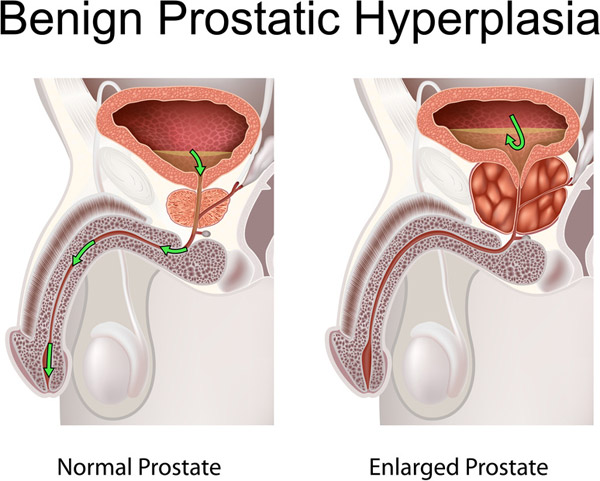
The cause of benign prostatic hyperplasia is not well understood; however, it occurs mainly in older men. Benign prostatic hyperplasia does not develop in men whose testicles were removed before puberty. For this reason, some researchers believe factors related to aging and the testicles may cause benign prostatic hyperplasia.
Throughout their lives, men produce testosterone, a male hormone, and small amounts of estrogen, a female hormone. As men age the amount of active testosterone in their blood decreases, which leaves a higher proportion of estrogen. Scientific studies have suggested that benign prostatic hyperplasia may occur because the higher proportion of estrogen within the prostate increases the activity of substances that promote prostate cell growth.
Another theory focuses on dihydrotestosterone (DHT), a male hormone that plays a role in prostate development and growth. Some research has indicated that even with a drop in blood testosterone levels, older men continue to produce and accumulate high levels of DHT in the prostate. This accumulation of DHT may encourage prostate cells to continue to grow. Scientists have noted that men who do not produce DHT do not develop benign prostatic hyperplasia.
Risk factors include aging and a family history of BPH. Other risk factors are obesity, lack of physical activity, and erectile dysfunction (ED).
Can BPH be prevented?
There is no sure way to prevent BPH. Because excess body fat may affect hormone levels and cell growth, diet may play a role. Losing weight and eating a healthy diet, with fruits and vegetables, may help prevent BPH. Staying active also helps weight and hormone levels.
With BPH, the prostate gets larger. When it is enlarged, it can irritate or block the bladder. A common symptom of BPH is the need to urinate often. This can be every one to two hours, especially at night.
Other symptoms include:
In severe cases, you might not be able to urinate at all. This is an emergency. It must be treated right away. It is foolish for someone to not get checked or treated since the condition like any other disease left untreated will only worsen and in time possibly kill you (Ex. CHF OR Diabetes OR even Obesity).
How Can BPH Affect Your Life?
In most men, BPH gets worse as you age. It can lead to bladder damage and infection. It can cause blood in the urine. It can even cause kidney damage. Men with BPH should get treated. Mild cases of BPH may need no treatment at all. In some cases, minimally invasive procedures that do not require anesthesia are good choices. And sometimes a combination of medical treatments works best.
Transurethral resection of the prostate (TURP) is a type of prostate surgery done to relieve moderate to severe urinary symptoms caused by an enlarged prostate, a condition known as benign prostatic hyperplasia (BPH).
During TURP, a combined visual and surgical instrument (resectoscope) is inserted through the tip of your penis and into the tube that carries urine from your bladder (urethra). The urethra is surrounded by the prostate. Using the resectoscope, your doctor trims away excess prostate tissue that’s blocking urine flow and increases the size of the channel that allows you to empty your bladder.
TURP is one of the most effective options for treating urinary symptoms caused by BPH.
Other forms of surgeries (minimally invasive) are:
There are several types of minimally invasive procedures to choose from, they include:
“Alzheimer’s is the most common form of dementia, a general term for memory loss and other cognitive abilities serious enough to interfere with daily life. Alzheimer’s disease accounts for 60 to 80 percent of dementia cases.”
alz.org
“When diabetes is not controlled, too much sugar remains in the blood. Over time, this can damage organs, including the brain. Scientists are finding more evidence that could link Type 2 diabetes with Alzheimer’s disease, the most common form of dementia and the seventh leading cause of death in the United States.”
alz.org