“Glaucoma is a disease that damages your eye’s optic nerve. It usually happens when fluid builds up in the front part of your eye. That extra fluid increases the pressure in your eye, damaging the optic nerve.”
American Academy of Ophthalmology
“Glaucoma is a disease that damages your eye’s optic nerve. It usually happens when fluid builds up in the front part of your eye. That extra fluid increases the pressure in your eye, damaging the optic nerve.”
American Academy of Ophthalmology
“By age 80, more than half of all Americans either have a cataract or have had cataract surgery.”
National Eye Institute
It is the life of the crystal, the architect of the flake, the fire of the frost, the soul of the sunbeam. This crisp winter air is full of it.
~John Burroughs, “Winter Sunshine”. (April 3, 1837 – March 29, 1921) was an American naturalist and nature essayist, active in the U.S. conservation movement.


In winter, which we have finally reached up here in the NE and already in other areas being bad weather which can strike unexpectedly-like it did for winter time in the North East, causing roads to finally be iced over and snowy. You don’t have to break up with the winter wishing for other seasons or at least not feel snow bound. Stay safe during bad weather but staying safe at home doesn’t mean you must give up being physically active. Here are some ideas to get your heart pumping at home if your interested:
Ward Off the Sniffles by doing the following:
Cover a cough or sneeze with a tissue instead of your hand. Remember to throw your tissue away and wash your hands with soap and water or an alcohol-based sanitizer.
• Get some shut-eye. Stay a step ahead of illness by getting plenty of sleep (about eight hours a night). You’ll see a difference for I surely do when I can get 8 hours sleep.
“Hunger and malnutrition have devastating consequences for children and have been linked to low birth weight and birth defects, obesity, mental and physical health problems, and poorer educational outcomes.”
Marian Wright Edelman (born June 6, 1939) is an American activist for the rights of children.
“HPV causes the production of 2 proteins known as E6 and E7 which turn off some tumor suppressor genes. This may allow the cervical lining cells to grow too much and to develop changes in additional genes, which in some cases will lead to cancer.”
The American Cancer Society
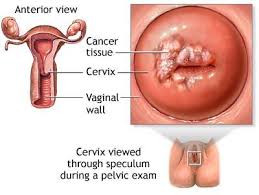
Risk Factors, Facts, and Symptoms is today’s issue with Cervical Cancer.
GENERAL
GENETICS
LIFESTYLE
OTHER CONDITIONS
Additional facts about HPV:
Anything that increases your risk of getting a disease is called a risk factor. Having a risk factor does not mean that you will get cancer. Not having risk factors doesn’t mean that you will not get cancer. If you think you may be at risk, you should discuss it with your doctor.
Regarding symptoms of cervical cancer:
In most cases, cervical cancer does not cause noticeable symptoms in the early stages of the disease. Routine Pap screening is important to check for abnormal cells in the cervix, so they can be monitored and treated as early as possible. Most women are advised to get a Pap test starting at age 21.
The Pap test is one of the most reliable and effective cancer screening methods available, and women should have yearly exams by an OB-GYN. However, the Pap test may not detect some cases of abnormal cells in the cervix. The HPV test screens women for the high-risk HPV strains that may lead to cervical cancer. It is approved for women over age 30.
Although screening methods are not 100 percent accurate, these tests are often an effective method for detecting cervical cancer in the early stages when it is still highly treatable. Talk with your doctor about which type of cervical cancer screening is right for you.
When present, common symptoms of cervical cancer may include:
All of these cervical cancer symptoms should be discussed with your doctor.
Signs of advanced stages of cervical cancer
Cervical cancer may spread (metastasize) within the pelvis, to the lymph nodes or elsewhere in the body. Signs of advanced cervical cancer include:
Bone fractures
“Cervical cancer was once one of the most common causes of cancer death for American women. But over the last 30 years, the cervical cancer death rate has gone down by more than 50%.”
American Cancer Society
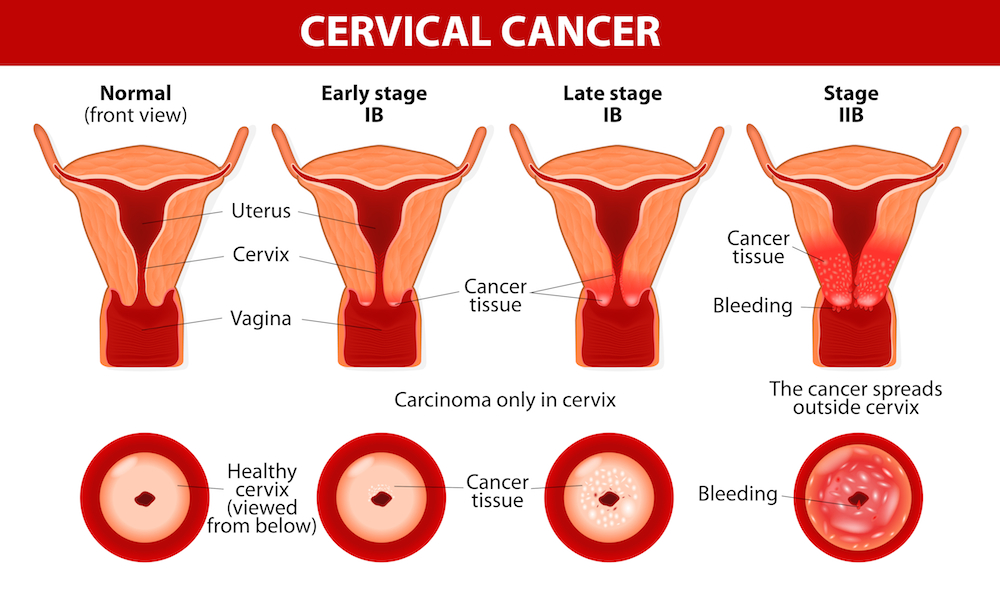
Cervical Cancer. Carcinoma of Cervix. Malignant neoplasm arising from cells in the cervix uteri. Vaginal bleeding.
What is Cervical Health Awareness Month?
The United States Congress designated January as Cervical Health Awareness Month. During January, NCCC and its many local chapters across the country highlight issues related to cervical cancer, HPV disease and the importance of early detection. More than 40 years ago cervical cancer was a major cancer death risk for women. With the development of pap tests and in-depth recognition of warning signs those numbers are dropping significantly. We still aren’t completely safe however, as many thousands of women are still affected by cervical cancer every year.
Cervical Cancer is today’s issue. Through National Cervical Cancer Coalition with Dr. Warner Huh stated the following information about today’ topic:
–Cervical cancer screening used to all be so simple==PREVENTION. Women were told just go for your annual Pap but now we have new tests to screen for cervical cancer, plus updated guidelines that—for most women—mean routine screening is done every few years rather than annually. Dr. Warner Huh of the University of Alabama, Birmingham sorts out the new landscape of Pap and HPV tests.
–Human papillomavirus, or HPV, is a common sexually transmitted infection. So common that most (~80%) sexually active people will be infected with HPV at some point.
Cervical cancer begins in the cervix, the narrow organ at the bottom of the uterus that connects to the vagina. The cervix dilates during childbirth to allow for passage of a baby.
Picking up on risk factors and warning signs could save an individual from a lifetime of suffering. These include whether or not you’ve contracted HPV, if you eat a whole diet, have used birth control, have HIV, smoke cigarettes, or if it’s just in your genetics. Here are some things to watch out for:
Leg Pain – Some women exhibiting early stages of cervical cancer experience swelling and pain in the leg. When the cervix swells it can lead to an obstructed blood flow, which eventually causes the leg to swell and gives a sore, painful sensation. This may be a sign of early cervical cancer.
Vaginal discharge colored with blood – It’s normal for a woman to experience small amounts of clear discharge without color or odor. However, bloody, dark, or smelly discharge is usually a sign of infection. But sometimes, it’s a sign of cervical or endometrial cancer.
Abnormal vaginal bleeding – More than 90% of women diagnosed with endometrial cancer experience irregular bleeding. If you have already undergone menopause, any bleeding — spotting included — should be evaluated. Haven’t gone through menopause yet? See your doctor if you experience bleeding between periods, heavy bleeding or bleeding during sex.
Discomforting Urination – Keeping track of urination can help reveal the presence of cervical cancer in several ways. The most immediately obvious and prevalent symptom is discomfort while urinating. You may experience burning, stinging, or a tight sensation. This is another symptom to see a doctor about either way.
Irregular Urination – The appearance of the urine and urinary habits can also be symptoms of cervical cancer. If you notice strange changes in the frequency of your urine, loss of bladder control (incontinence) or a discoloration – especially with blood – seek the input of a medical professional.
Irregular Menstrual Cycles – There should be some level of consistency when it comes to monthly periods. If time, frequency, or any other changes disrupt the regular routine, it can also be a sign that you’re at a much higher risk for cancer and will require regular screenings.
Uncomfortable Sex – Painful intercourse, otherwise known as dyspareunia, is another discomforting side effect of cervical cancer. There are several possible reasons for this symptom to develop, as is the case with many of the symptoms on this list. This symptom is most commonly linked to conditions that require medical attention, however, so it shouldn’t be ignored.
Pain in the pelvis or abdominal area – Abdominal pain or discomfort — including gas, indigestion, pressure, bloating, and cramps — can signal ovarian cancer. And, constant pelvic pain or pressure can be a sign of endometrial cancer.
Back Pain – Back pain is common, affecting around 80 percent of the population, and it can happen for a wide variety of reasons, but if accompanied with other symptoms from the list, go for a medical check-up.
“Arthritis is very common but is not well understood. Actually, “arthritis” is not a single disease; it is an informal way of referring to joint pain or joint disease.”