Archives

QUOTE FOR TUESDAY:

The thyroid is a butterfly-shaped gland in the front of the neck. It produces hormones that control the speed of your metabolism — the system that helps the body use energy. Thyroid disorders can slow down or rev up metabolism by disrupting the production of thyroid hormones.”

Med M.D.

QUOTE FOR MONDAY:

“For starters, there is solid evidence that — despite long-held beliefs and often erroneous media coverage — the suicide rate in the United States does not spike around the holidays. According to the U.S. Center for Health Statistics, the suicide rate is highest between April and August. The months of November, December, and January actually have the lowest daily suicide rates.

However, low suicides rates don’t necessarily mean that the holidays blues aren’t a real phenomenon. While there are no systematic reviews about the increase of mental health problems around the holidays, there are findings from surveys that suggest people feel more stress, anxiety and depression in the period between Thanksgiving and New Year’s Day.”

Psychology Today

Possibly feeling the Post Holiday Blues?

holiday2bblues holiday-blues3

After spending a wonderful holiday over the Christmas Eve, Christmas, New Years month of December some people feel blue and find that it’s difficult to function normally in their daily rhythm. As defined by the DSM IV, holiday blues, holiday depression, or post-Christmas blues, these commonly used terms depict the mental distress occurring after the winter holidays and festival season. This article is focused on experiencing the “blues” since this term suggests mild mental distress, a commonly occurring phenomenon when dealing with daily life stress and change.

Dr. David Miers is the Counseling and Program Development Manager for Mental Health Services at Bryan Medical Center in Lincoln, NE. In addition, he co-chairs the Nebraska State Suicide Prevention Coalition. He said, “During the holidays there’s an increased stress, demands that are placed on individuals.”

Whether that stress is financial or a full calendar of events, Dr. Miers said it can be hard to find a balance.
“It’s important to set limits for yourself. It’s important to look at your exercise, that you’re exercising, that you’re eating a healthy diet and that you’re sleeping, that you’re getting an adequate amount of sleep.”

Besides the stress, the holidays  can also be a lonely time or a time of grief. Larry Collins experienced one year recently loosing his mother.

“My mother’s passed away, but this was her favorite time of the year and every time this comes around I think of her.”

Dr. Miers said it’s important to set new traditions, while also remembering the old ones. He added, helping others during your own time of need, can also do yourself some good.

“Sometimes it’s somebody reaching out and volunteering, or spending some time at an event volunteering your time to help other people.”

The “Holiday Blues” aren’t uncommon and it’s important to recognize the signs and symptoms:
-Becoming more isolative
-Changing in eating and sleeping habits
-Gaining or losing weight
-Feeling more irritable

Dr. Miers said, “Depression is also one of the most treatable, and that seeking help is a sign of strength and there are treatments available.”

If you’re struggling this season seek for some for of counseling or help by a therapist or doctor.  You can simple get involved with a community depression group.  All you have to do is research on the internet.

POST HOLIDAY TIPS FOR THE BLUES AFTER THE PARTYING FROM THANKSGIVING TO 2017:

1.) EXPECT SOME LET DOWN AFTER THE HOLIDAYS:

The holiday season is both joyful and stressful at once. There is family to get along with, gifts to buy and return, people to visit, activities to throw yourself into, plenty of festive food to eat, sales to rush to, and parties to plan and attend. Topped off with the excitement of New Year’s Eve, your adrenaline has probably been pumping a lot of the time during the Christmas and New Year’s period. Returning to the usual routine and probably quieter workplace than normal can dampen your spirits just by the absence of exciting things to do and look forward to. Equally, if your Christmas and New Year’s Eve period wasn’t as enjoyable as you had hoped, you can be left feeling down about the lack of enjoyment you’d expected and this can sour your mood. Expecting to feel a little low is a way of telling yourself that this is a normal feeling and that it will soon pass once the routine re-establishes itself.
  • Look at your past experiences to enlighten you as to your normal post-holiday feelings. Do you always fall into a slump after the holiday season? If you have spent period after last two holidays in despair, then the chances of this post holiday period continuing in despair are high. Look carefully about what you did last time and what relaxed you. And realize that generally this is a phase that is easily fixed.

2.)  CHOOSE TO SEE THE BENEFITS OF POST HOLIDAY SEASON:

The good side to the end of the holidays is that you’ve had a chance to rest, to relax, and to enjoy yourself. The craziness prior to Christmas has ended both at the workplace and in the home, and the restful time after Christmas and New Year’s Eve has hopefully given you the opportunity to do things that are different from your usual routine. And any break in the routine is good for the spirit, providing you with the chance to rejuvenate.

  • Take it easy when you’re settling back down into your usual routine. Your more rested self is a good thing and gives you an opportunity to take a renewed perspective on your work, routine, study, or home life pace.
  • Perhaps the break has given you perspective on your life, job, relationships etc. If so, this is a good time to consider making changes to improve your situation, especially because not making the changes can prolong your blues.

3.) BE GENTLE ON YOURSELF WITH RESPECT TO YOUR NEW YEAR’S RESOLUTION:

If you set the bar too high and you already feel as if you’re slipping, don’t berate yourself. Instead, look at your resolutions realistically and assess whether they need some tweaking to ensure that they’re achievable. Discard the resolutions that required you to be too harsh on yourself and reform them into ones that can be met now that the heady atmosphere of New Year’s Eve is behind you. Think of it as a double checking of the details, and simply fiddle with the fine print!

  • Ensure that any goals you’ve set are reasonable and most importantly achievable. Taking weight loss as an example, targeting for a size zero is unrealistic, but looking for 1 pound loss in a span of week seems to be more achievable.

4.) CONTINUE TO SPEND TIME AROUND PEOPLE; DON’T SEE PEOPLE ONCE A YEAR!

Some of the post-holiday season blues might be related to having been around many people over the Christmas break and then suddenly finding yourself surrounded by people you don’t know that well, or even not by many people at all. Lift your spirits by continuing to stay connected with friends and family (far away now there is always the phone0); also getting out and about to do activities where other people interact with you.   Trust me your not the only one experience this if your going through the post blues.

5.) DO THINGS THAT GIVE YOU CAUSE TO LOOK FORWARD TO SOMETHING AFTER THE HOLIDAYS:

Do things that give you cause to look forward to something. Revive the excitement of anticipation by arranging fun activities, such as having dinner with friends, starting a new class for a hobby or interest, attending a sporting event regularly, going to the movies, etc. Choose activities that meet your budget and interests, and that you know will give you a thrill.

QUOTE FOR THE WEEKEND:

“You can’t see, smell or taste radon, but it could be present at a dangerous level in your home. Radon is the leading cause of lung cancer deaths among nonsmokers in America and claims the lives of about 21,000 Americans each year. In fact, the EPA and the U.S. Surgeon General urge all Americans to protect their health by testing their homes, schools and other buildings for radon.”

The EPA – The United Stated Environmental Protection Agency


QUOTE FOR FRIDAY:

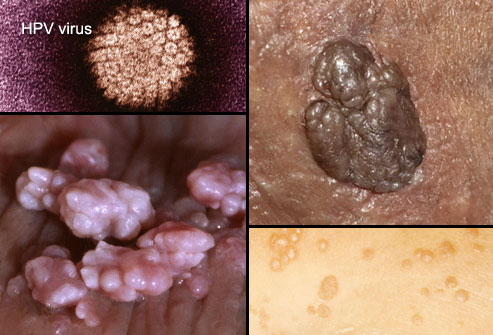
Since schools do not require the HPV vaccine, is it still necessary for boys and girls to receive the vaccine? Yes. The Centers for Disease Control and Prevention recommends that girls and boys between 11 and 12 years of age should get two shots of the HPV vaccine six to 12 months apart.”

Foundation for Women’s Cancer (www.foundationforwomenscancer.org)


QUOTE FOR THURSDAY:

“The United States Congress designated January as Cervical Health Awareness Month. More than 13,000 women in the United States are diagnosed with invasive cervical cancer each year, but the disease is preventable with vaccination and appropriate screening.”

National Cervical Cancer Coalition

QUOTE FOR TUESDAY:

“This is the most important rule of all for having a safe New Year’s Eve. Driving with a blood alcohol content of .08 is illegal across the country. But the amount of alcohol it takes to get to that number depends on a variety of factors such as how fast you drink, weight, and gender.  Plan ahead and pick someone dependable to be the sober designated driver. ”

Southern University Education (southuniversity.ed)

QUOTE FOR MONDAY:

“If you’re already eating plenty of fruits and veggies every day, you may be ready for the next step: include more color. All fruits and vegetables contain vitamins, minerals and other nutrients that may help prevent heart disease, cancer and other illnesses. Some of these nutrients are fiber, potassium, folate, and vitamin A and C. The best way to get all the various nutrients is to eat fruits and vegetables of many different colors. “
 
American Heart Association (www.heart.org)

Fruits and Vegetables – How they help with weight loss.

Fruits and vegetables are part of a well-balanced and healthy eating plan. There are many different ways to lose or maintain a healthy weight. Using more fruits and vegetables along with whole grains and lean meats, nuts, and beans is a safe and healthy one. Helping control your weight is not the only benefit of eating more fruits and vegetables. Diets rich in fruits and vegetables may reduce the risk of some types of cancer and other chronic diseases. Fruits and vegetables also provide essential vitamins and minerals, fiber, and other substances that are important for good health.

This doesn’t necessarily mean that you have to eat less food. You can create lower-calorie versions of some of your favorite dishes by substituting low-calorie fruits and vegetables in place of higher-calorie ingredients. The water and fiber in fruits and vegetables will add volume to your dishes, so you can eat the same amount of food with fewer calories. Most fruits and vegetables are naturally low in fat and calories and are filling.

Instead of a high-calorie snack from a vending machine, bring some cut-up vegetables or fruit from home. A 1-ounce bag of corn chips has as many calories as a small apple, 1 cup of whole strawberries, AND 1 cup of carrots with 1/4 cup of low-calorie dip. Substitute one or two of these options for the chips, and you will have a satisfying snack with fewer calories.

Remember: Substitution is the key.

It’s true that fruits and vegetables are lower in calories than many other foods, but they do contain some calories. If you start eating fruits and vegetables in addition to what you usually eat, you are adding calories and may gain weight. The key is substitution. Eat fruits and vegetables instead of some other higher-calorie food.

Eat fruits and vegetables the way nature provided—or with fat-free or low-fat cooking techniques.

Try steaming your vegetables, using low-calorie or low-fat dressings, and using herbs and spices to add flavor. Some cooking techniques, such as breading and frying, or using high-fat dressings or sauces will greatly increase the calories and fat in the dish. And eat your fruit raw to enjoy its natural sweetness.

Canned or frozen fruits and vegetables are also good options.
Frozen or canned fruits and vegetables can be just as nutritious as the fresh varieties. However, be careful to choose those without added sugar, syrup, cream sauces, or other ingredients that will add calories.

Choose whole fruit over fruit drinks and juices. Fruit juices have lost fiber from the fruit.
It is better to eat the whole fruit because it contains the added fiber that helps you feel full. One 6-ounce serving of orange juice has 85 calories, compared to just 65 calories in a medium orange.

Whole fruit gives you a bigger size snack than the same fruit dried—for the same number of calories.
A small box of raisins (1/4 cup) is about 100 calories. For the same number of calories, you can eat 1 cup of grapes.