“There are more than 70 types of sarcoma. Treatment for sarcoma varies depending on sarcoma type, location and other factors.”
MAYO CLINIC
“There are more than 70 types of sarcoma. Treatment for sarcoma varies depending on sarcoma type, location and other factors.”
MAYO CLINIC
“When the word sarcoma is part of the name of a disease, it means the tumor is malignant (cancer). A sarcoma is a type of cancer that starts in tissues like bone or muscle. Bone and soft tissue sarcomas are the main types of sarcoma. Soft tissue sarcomas can develop in soft tissues like fat, muscle, nerves, fibrous tissues, blood vessels, or deep skin tissues. They can be found in any part of the body. Most of them start in the arms or legs. They can also be found in the trunk, head and neck area, internal organs, and the area in back of the abdominal (belly) cavity (known as the retroperitoneum). Sarcomas are not common tumors.”.
American Cancer Society


“July is Juvenile Arthritis Awareness Month, and believe it or not, nearly 300,000 children have been diagnosed with some form of arthritis. Arthritis doesn’t affect just older people, but also affects children as little as six months old! Juvenile arthritis comes in a variety of forms with varying life spans and symptoms.”
Bone and Joint Center
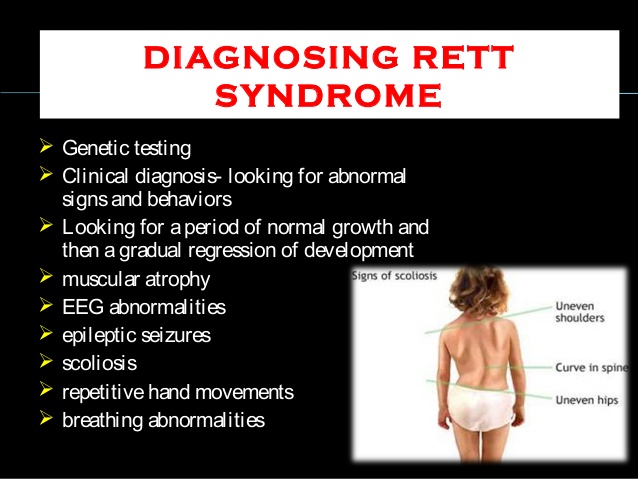
Classic Rett syndrome. In 1988, well before the discovery of the genetic basis of Rett syndrome, clinical diagnostic criteria were developed. The following are limitations to clinical diagnosis of Rett syndrome using these criteria:
The diagnosis should be considered when there is postnatal deceleration of head growth observed. However, this is not mandatory.
Required for typical or classic Rett syndrome
Supportive criteria are not required, although often present in typical Rett syndrome.
Required for atypical or variant Rett syndrome
Main criteria
Exclusion criteria for typical Rett syndrome
Supportive criteria for atypical Rett syndrome (currently or at any time)*
*Younger individuals may need to be reevaluated, as the development of many of these features is age dependent.
Gene. MECP2 is the only gene in which mutation is known to cause MECP2-related disorders.

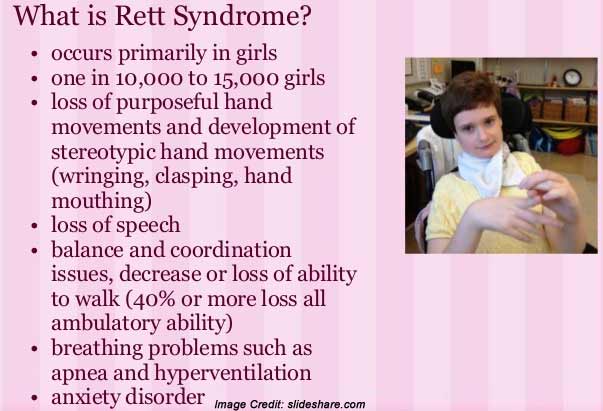
Rett syndrome is a rare non-inherited genetic postnatal neurological disorder that occurs almost exclusively in girls and leads to severe impairments, affecting nearly every aspect of the child’s life: their ability to speak, walk, eat, and even breathe easily. The hallmark of Rett syndrome is near constant repetitive hand movements while awake. Cognitive assessment in children with Rett syndrome is complicated, but we know that they understand far more than they can communicate to us, evidenced by their bright and attentive eyes, and their ability to express a wide spectrum of moods and emotions.
The MECP2 gene provides instructions for making a protein called MeCP2. This protein helps regulate gene activity (expression) by modifying chromatin, the complex of DNA and protein that packages DNA into chromosomes. The function of DNA is the blueprint of biological guidelines that a living organism must follow to exist and remain functional. Medium of long-term, stable storage and transmission of genetic information.The MeCP2 protein is present in cells throughout the body, although it is particularly abundant in brain cells.
In the brain, the MeCP2 protein is important for the function of several types of cells, including nerve cells (neurons). The protein likely plays a role in maintaining connections (synapses) between neurons, where cell-to-cell communication occurs.
Rett Syndrome is genetically based and is a very rare condition, but there is no known cure. This is a life-long condition. You can’t repair mutated genes or someone’s DNA/RNA.
“Helen’s ability to empathize with the individual citizen in need as well as her ability to work with world leaders to shape global policy on vision loss made her a supremely effective ambassador for disabled persons worldwide. Her active participation in this area began as early as 1915, when the Permanent Blind War Relief Fund, later called the American Braille Press, was founded. She was a member of its first board of directors.”
American Foundation for the Blind – AFB