
The concept of being alone isn’t linked to the feeling of loneliness. In fact, you can make living without love beneficial and positive for you by reading through this article. Soon, you’ll not only be satisfied, but also ecstatic about the way you are and the way your life. One of the major keys in making this happen is endurance and discipline in allowing yourself to get active and not isolate yourself; for if you do and for awhile it’s hard to get out of it. Here are some steps in helping you reach the goal of not feeling alone:
- Build other relationships. Having a partner shouldn’t be on the relationship pedestal. Without a significant other to get in the way, you now can put in the time and effort to value and develop the numerous other relationships in your life. Include your family and friends nearby, but also those far away. Send cards and write emails to keep in touch with all of your contacts. Don’t forget to include your community. Greet your neighbors and other familiar strangers on the street. As your network grows, you’ll find that what’s most important is the boundless love that you possess and can share with those around you.
- Keep busy. Getting involved in various activities is a threefold benefit to your life. You’ll be able to fill your schedule, build self-confidence and make tons of new friends. There are countless avenues you can explore from sports to volunteering to religion. Think of the activities you used to be involved in and would like to start up again, but also push yourself to try something new.
- Be optimistic. Focus on all that you do have instead of concentrating on what you don’t have. If you’re still in the dating game, think positive that the person you’ll deeply connect with is just around the corner. If you want to learn to be happy being alone, act the part and the feelings will come afterwards. Life is all about attitude, so turn the feeling of absence into one of thankfulness. There is already so much to be thankful for.
- Love yourself. This point is the most important of them all. You may be lacking love from another person, but you definitely should not be lacking love for yourself. You’re the one person that completely and truly understands your needs, so fulfill your own expectations and show appreciation for yourself. Indulge in what makes you insanely happy and joyful. Put yourself in a good mood by treating yourself to your favorite delights. Don’t forget to take care of yourself.
We talk a lot about singles, but we don’t talk about this: what it’s like to live without a partner while longing for one, over years, then decades.
Just 51 percent of the adult population is married, down from 72 percent in 1960. So we talk about swinging, “Sex and the City” singles and extended adolescences. We talk about the delay of marriage or the rise of cohabitation and single motherhood. Depending on our perspective, we cheer the broadening definitions of family or bemoan the breakdown of the nuclear unit.
But the cousin or neighbor or co-worker who always seems to be on his or her own? We don’t give them much thought.
It’s easier not to. Perhaps as much as religion, our society hinges on belief in romantic love. How many songs and novels revolve around the long search and eventual discovery of a beloved? The phrase “happily ever after” implies a singular outcome: two lives made ever better by virtue of their union.
Never mind that close to half of marriages end in divorce that many of those who stay married do so unhappily, and that, rationally, we all know life can be a struggle regardless of relationship status. Ninety percent of us will marry — often repeatedly — on the belief that marriage can add something fundamentally good to our lives.
Certainly, there’s a huge biological imperative to pair up — procreation and protection of the young used to demand it. But reproductive technologies have expanded our baby-making options, and security systems do a good job of deflecting predators. And we still want the ineffable. We want love.
Love is true, but yet, it is fickle. Long lasting love has to evolve and grow over the years, and at times it takes a few unique measures too. Find out how to keep love alivetake in a relationship.
Knowing how to keep love alive in a relationship can seem easy, but it’s actually more difficult that most lovers imagine.
You have to remember you’re not always going to be the same teenager who fell in love with your teenage lover. You will evolve and so will your partner.
Most couples assume they don’t need to have intimate conversations or exchange thoughts about each other’s views on life because they already know everything about their partner.
But what many don’t understand is that we grow and evolve as individuals constantly, and our likes, dislikes and opinions too change all the time.
In the introduction on how to keep love alive, we’ve seen that there are just two basic requirements for a relationship to be successful.
Affection and sexual desire.
As long as we can keep these two emotions on a high, love too can be kept alive and exciting.
Find out how to keep love alive and make the relationship more exciting and fun, even as the years roll by with these simple and at times, unconventional tips.
How to keep love alive
Most lovers start taking their partner for granted over the years, and this eventually leads to boredom in a relationship. Curiosity in a relationship is the driving force in keeping love alive in a long term relationship.
When you assume you know everything about a partner, love starts to stagnate and differences start to crop up, even if the words aren’t voiced out. After all, both of you grow as individuals with each passing day. [Read: How to know if you are in love]
Here are a few tips on how to keep love alive in a relationship and how to bring the excitement back again, especially when it comes to affection and sexual attraction.
Avoid taking each other for granted
One of the disadvantages of long term relationships is the fact that lovers start to take each other for granted. They assume they know their partner’s likes and dislikes and end up making a lot of assumptions, which can be critically wrong at times.
On the other hand, even favors and special gestures are taken for granted as the years go by. If a husband prepares a breakfast-in-bed for his wife every Sunday morning for a few months, it’s a special gesture at the beginning. But as the months go by and the husband decides to sleep in one Sunday morning, the wife ends up getting upset that she wasn’t served her breakfast. Likewise, there may be several other kinds of special gestures that lovers share with each other which can eventually be taken for granted.
By taking these gestures for granted, nothing really becomes a special gesture anymore. Instead it becomes an obligation. Always remember to acknowledge a gesture, however small it may be if you want to understand the secret behind knowing how to keep love alive in a relationship.
By taking each other for granted, be it an evening foot rub or a big birthday bash, you’re taking away the affection behind a gesture, and turning it into an obligation. If you want to keep the love alive in your relationship, acknowledge the gestures and never ever take your partner for granted.
Surprise each other
Remember the first year of your relationship? Both of you went out of your way to buy each other birthday gifts, and every now and then you popped in a surprise just to see your lover smile in surprise. Do you still do that?
In almost all cases, couples stop paying attention to happy surprises after a few years. We want to keep the love alive in a relationship, but almost all of us stop doing anything to keep the relationship exciting and unique. It doesn’t matter if it is concert tickets, a surprise vacation or even a posse of flowers. Go out of your way to make your partner feel special like you used to, and you’ll see that the relationship will only get more exciting and affectionate in no time. [Read: Dating facts]
Celebrate special occasions
Pay attention to relationship landmarks and special occasions in the relationship. Many Valentine’s Days, anniversaries and birthdays may come and go, but that doesn’t mean you should ignore them because you have so many special moments all year round.
Try to make every year exciting and special in its own way. And wherever possible, try to go out of your way to make your partner feel special. You may lose a few hours or a couple of days planning something special, but the fact that you still try to please your partner and make them feel special is a sure sign that you’re taking an initiative to keep the love alive in the relationship.
As long as you give enough importance to affection and sexual desire in a relationship, it’s a great assurance that the flame of love will burn bright in your relationship for years to come.
Sexual desire is by far, one of the most important requirements of a happy romantic relationship. If you want to know how to keep love alive, then your best bet is to focus on a more than satisfying sex life. Can you remember the first time you got intimate with your partner? It may be a while ago, but you can’t really forget the racing heartbeats, the passionate cold sweat and the weak knees, can you?
Now just because it’s been a few years since you’ve been together, there’s really no reason why sex can’t remain exciting and heart pounding. Most people want to know how to keep love alive, but yet they don’t really pay attention to sexual attraction between the partners. Humans are built for procreation, we’re one of the few species on earth that indulge in sex for pleasure. All of us want and need sex, irrespective of whether we get to have it with a partner or someone else. So if you really want to keep your love life on a high, you really have to understand the importance of sex in a relationship, and how vital a role it plays in holding two individuals together in a romantic relationship.
You may have been satisfied doing the missionary position or making love in a quiet bedroom for years until both of you start to get bored with each other bodies. But you can change all that in a few weeks. Start doing something new and exciting, be it indulging in a few fantasies or trying new things in bed or finding new places to make love with each other. It may feel awkward at first, but you’ll be able to have a more satisfying and fulfilling romantic life if you can satisfy your inbuilt sexual urges.
Figuring out how to fix a relationship, if that is the reason for lack of love with romance like when you first fell in love is a lot like stacking a deck of cards. There are so many different cards involved and it’s really difficult to know where exactly the balance went awry.
Just like a stack of cards, in almost all cases, it’s never a single reason that leads to a failure in love.
It’s a series of disappointments and resentments that lead to an unhappy relationship and eventually on both sides doing it. So it takes 2 to hurt each other and 2 to work things out but let the disappointments and resentments go on and it could get to a point of no turning back.
But nevertheless, it really the relationship doesn’t have to end this way. Remember most vows include at the alter the day of marriage you will be there in good times and bad. Even the unhappiest of relationships can be fixed with a bit of understanding and love. Do you 2 have that in you or was it never there day one or are you two individual strong people who really love each other that are just human making mistakes at times. Including that you 2 strong people allow your love to overrule the mistake the other one makes with not holding it over the person later in life with the one who made the mistake resolve the problem with never letting it happen again. Love can be a strong bond or a weak one.


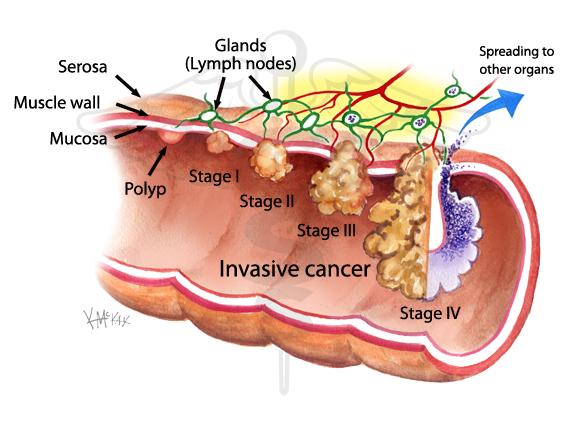
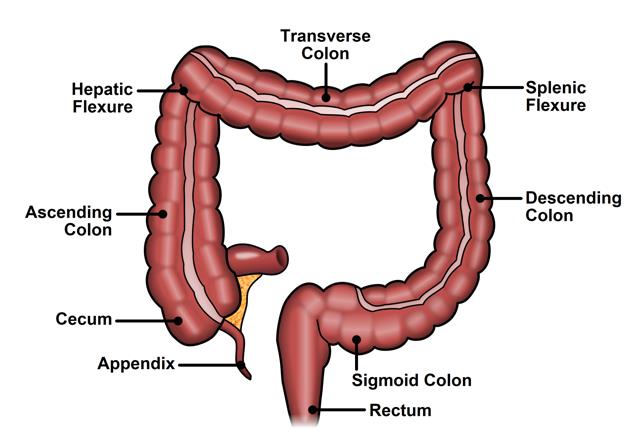 the colon to rectum