
Archives

QUOTE FOR FRIDAY:

“Hand hygiene saves millions of lives every year when performed at the right moments during health care delivery. It is also a smart investment that offers exceptional return for each dollar invested. Clean care is a sign of respect to those who seek care, and it protects health and other workers who provide that care.

Now is a critical time when countries across the world need to accelerate implementation of lessons from the COVID-19 pandemic and increase investments to close gaps in infection prevention and control (IPC), including hand hygiene. Indeed, many countries are demonstrating strong engagement and advancements in scaling-up those actions, but overall, the progress is slow, and gains are at risk.

Together, we can galvanize action on preventing infections and antimicrobial resistance in health care. Strong and engaged communities of health workers, policy makers and civil society organizations (CSOs) can accelerate and sustain action at the point of care to keep people safe and healthy.

For World Hand Hygiene Day 2023, we put CSOs in focus. Driven by their passion, values and strong social justice agendas, and often in close proximity to the communities they serve, CSOs can spearhead and accelerate change at local, national and international levels. ”

World Health Organization – WHO (https://www.who.int/campaigns/world-hand-hygiene-day/2023)

QUOTE FOR THURSDAY:

“80 % of communicable diseases are believed to be transmitted by human hands. According to the CDC and the latest research) is the most effective way to prevent the spread of Coronavirus and other communicable diseases is through washing your hands with soap and water frequently and correctly, following CDC guidelines. The U.S. as of Dec 2020 was currently experiencing the following that can be mitigated by regular hand washing, which was novel influenza virus pandemic, a national measles outbreak and a novel coronavirus pandemic.  Why all this awareness on handwashing people? Because we are bad at remembering as a population and even worse at how we wash our hands. A quick survey of five pre-covid handwashing studies showed that on average, only about 40% of men and 64% of women wash their hands after using a public restroom.” Even though there is some evidence of some small improvements in these figures after the covid pandemic, that still leaves about 60% of men and 34% of women walking around with contaminated hands, not to mention cell phones, wallets, credit cards, and everything else we touch.”.  If your not part of that percentile GREAT but if you are you may want to following hand washing week purpose with the including the understanding why.  Look at disease or illnesses that can come from contacting or droplet that can be decreased in being transmitted to others in one step handwashing if the person who is ill is not on isolation quarantined that take other actions with handwashing to prevent transmission to others.”

Avalon Memory of Care since 1995   (https://avalonmemorycare.com/national-hand-washing-awareness-month/)

QUOTE FOR THE WEEKEND:

”Research shows that you can prevent 1 in 3 illnesses that cause diarrhea and 1 in 5 respiratory infections by keeping your hands clean. That’s because your hands are a convenient transportation system for germs. Thinking of germs getting on and off a bus can help you understand how they travel from one spot to another. Germs can hop on the bus (your hands) and quickly get where they want to go (cells inside your body). All you have to do is touch a contaminated surface and then touch your eyes, nose or mouth. From there, the germs transfer to the mucus membranes that lead into your body, where they attempt to set up camp and multiply.”

Cleveland Clinic (https://my.clevelandclinic.org/health/articles/17474-hand-washing)

QUOTE FOR WEDNESDAY:

Key facts

  • HIV remains a major global public health issue, having claimed 40.4 million [32.9–51.3 million] lives so far with ongoing transmission in all countries globally; with some countries reporting increasing trends in new infections when previously on the decline.
  • There were an estimated 39.0 million [33.1–45.7 million] people living with HIV at the end of 2022, two thirds of whom (25.6 million) are in the WHO African Region.
  • In 2022, 630 000 [480 000–880 000] people died from HIV-related causes and 1.3 million [1.0–1.7 million] people acquired HIV.”.

World Health Organization WHO (https://www.who.int/data/gho/data/themes/hiv-aids)

QUOTE FOR TUESDAY:

“Acquired immunodeficiency syndrome (AIDS) is a chronic, potentially life-threatening condition caused by the human immunodeficiency virus (HIV). By damaging your immune system, HIV interferes with your body’s ability to fight infection and disease.

HIV is a sexually transmitted infection (STI). It can also be spread by contact with infected blood and from illicit injection drug use or sharing needles. It can also be spread from mother to child during pregnancy, childbirth or breastfeeding. Without medication, it may take years before HIV weakens your immune system to the point that you have AIDS.

There’s still no cure for HIV/AIDS.”

MAYO CLINIC (https://www.mayoclinic.org/diseases-conditions/hiv-aids/symptoms-causes/syc-20373524)

QUOTE FOR MONDAY:

“In 2015, an estimated 1.3% of US adults (3 million) reported being diagnosed with IBD (either Crohn’s disease or ulcerative colitis). Prevalence differed by several sociodemographic characteristics, including age, race/ethnicity, education, and poverty.  The prevalence of IBD increased from 2001 to 2018 among Medicare beneficiaries of all race and ethnicity groups, with the highest increase rate among non-Hispanic Black adults.”

Center for Disease Control and Prevention – CDC

(https://www.cdc.gov/ibd/data-and-statistics/prevalence.html) – The page was last reviewed 4/2022

Diagnostic Testing for ulcerative colitis versus chron’s disease!

IBD refers to both Crohn’s disease and ulcerative colitis, however they can be distinguished from one another by their symptoms, GI involvement, biopsy, and antibody testing.

Your doctor will likely diagnose ulcerative colitis after ruling out other possible causes for your signs and symptoms. To help confirm the diagnosis the MD may have one or more of the following tests and procedures.

Diagnostic Tests for Ulcerative Colitis:

To help confirm a diagnosis of ulcerative colitis, you may have one or more of the following tests and procedures:

Lab tests

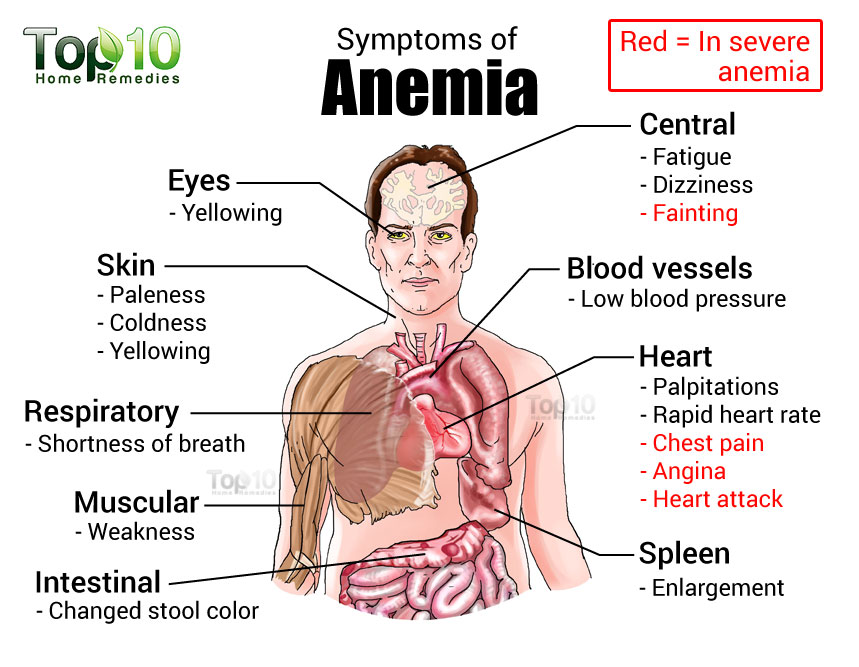
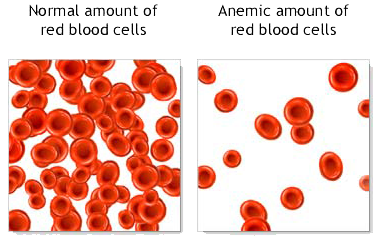
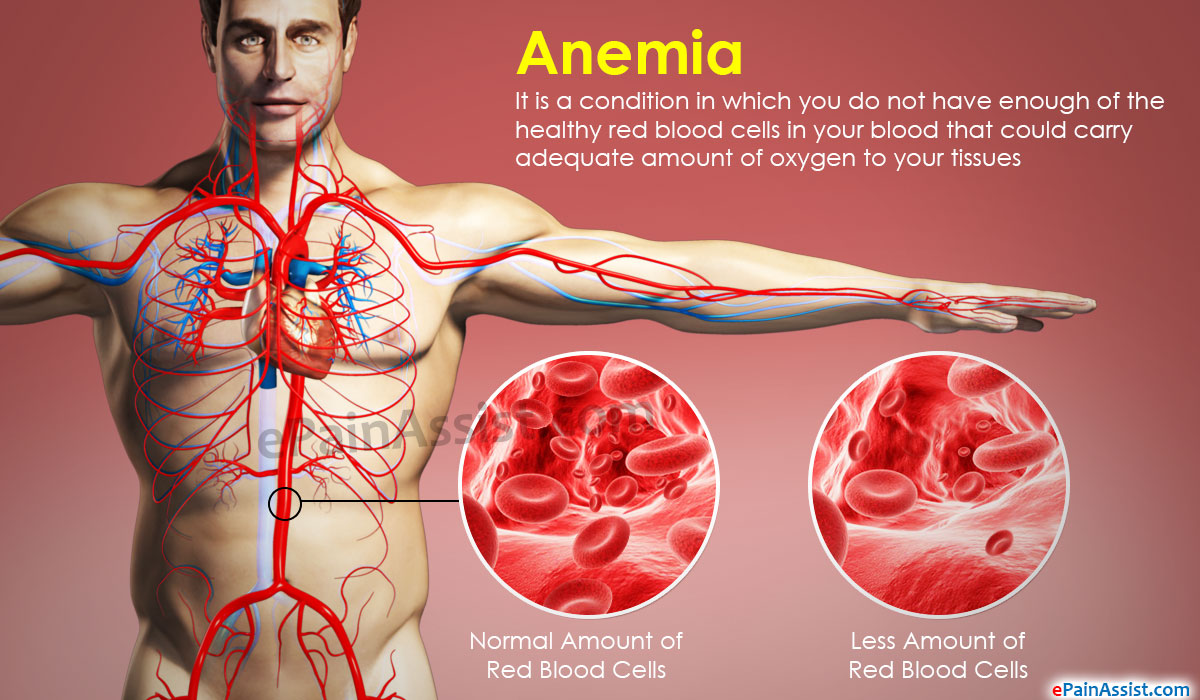
  • Blood tests. Your provider may suggest blood tests to check for anemia — a condition in which there aren’t enough red blood cells to carry adequate oxygen to your tissues — or to check for signs of infection or inflammation.
  • Stool studies. White blood cells or certain proteins in your stool can indicate ulcerative colitis. A stool sample also can help rule out other disorders, such as infections caused by bacteria, viruses and parasites.

Endoscopic procedures

  • Colonoscopy. This exam allows your provider to view your entire colon using a thin, flexible, lighted tube with a camera on the end. During the procedure, tissue samples are taken for laboratory analysis. This is known as a tissue biopsy. A tissue sample is necessary to make the diagnosis.
  • Flexible sigmoidoscopy. Your provider uses a slender, flexible, lighted tube to examine the rectum and sigmoid colon — the lower end of your colon. If your colon is severely inflamed, this test may be preferred instead of a full colonoscopy.

Imaging procedures

  • X-ray. If you have severe symptoms, your provider may use a standard X-ray of your abdominal area to rule out serious complications, such as a megacolon or a perforated colon.
  • CT scan. A CT scan of your abdomen or pelvis may be performed if a complication from ulcerative colitis is suspected. A CT scan may also reveal how much of the colon is inflamed.
  • Computerized tomography (CT) enterography and magnetic resonance (MR) enterography. These types of noninvasive tests may be recommended to exclude any inflammation in the small intestine. These tests are more sensitive for finding inflammation in the bowel than are conventional imaging tests. MR enterography is a radiation-free alternative.

Diagnostic tests for Chron’s Disease:

Blood tests

  • Lab tests

    • Blood tests. Your provider may suggest blood tests to check for anemia — a condition in which there aren’t enough red blood cells to carry adequate oxygen to your tissues — or to check for signs of infection or inflammation.
    • Tests for anemia or infection. Your doctor may suggest blood tests to check for anemia — a condition in which there aren’t enough red blood cells to carry adequate oxygen to your tissues — or to check for signs of infection. Expert guidelines do not currently recommend antibody or genetic testing for Crohn’s disease.
    • Fecal occult blood test. You may need to provide a stool sample so that your doctor can test for hidden (occult) blood in your stool. Red blood cells would be determined.
    • Also further Stool studies. White blood cells or certain proteins in your stool can indicate ulcerative colitis. A stool sample also can help rule out other disorders, such as infections caused by bacteria, viruses and parasites.

Diagnostic Procedures

  • Colonoscopy. This test allows your doctor to view your entire colon and the very end of your ileum (terminal ileum) using a thin, flexible, lighted tube with an attached camera. During the procedure, your doctor can also take small samples of tissue (biopsy) for laboratory analysis, which may help confirm a diagnosis. Clusters of inflammatory cells called granulomas, if present, help confirm the diagnosis of Crohn’s.
  • Computerized tomography (CT). You may have a CT scan — a special X-ray technique that provides more detail than a standard X-ray does. This test looks at the entire bowel as well as at tissues outside the bowel. CT enterography is a special CT scan that provides better images of the small bowel. This test has replaced barium X-rays in many medical centers.
  • Magnetic resonance imaging (MRI). An MRI scanner uses a magnetic field and radio waves to create detailed images of organs and tissues. MRI is particularly useful for evaluating a fistula around the anal area (pelvic MRI) or the small intestine (MR enterography).
  • Capsule endoscopy. For this test, you swallow a capsule that has a camera in it. The camera takes pictures of your small intestine, which are transmitted to a recorder you wear on your belt. The images are then downloaded to a computer, displayed on a monitor and checked for signs of Crohn’s disease. The camera exits your body painlessly in your stool. You may still need endoscopy with biopsy to confirm the diagnosis of Crohn’s disease.
  • Balloon-assisted enteroscopy. For this test, a scope is used in conjunction with a device called an overtube. This enables the doctor to look further into the small bowel where standard endoscopes don’t reach. This technique is useful when capsule endoscopy shows abnormalities, but the diagnosis is still in question.


QUOTE FOR THE WEEKEND:

“Health care providers often classify ulcerative colitis according to its location being the types of ulcerative colitis the patient has. Symptoms of each type often overlap. Types of ulcerative colitis include:

  • Ulcerative proctitis. Inflammation is confined to the area closest to the anus, also called the rectum. Rectal bleeding may be the only sign of the disease.
  • Proctosigmoiditis. Inflammation involves the rectum and sigmoid colon — the lower end of the colon. Symptoms include bloody diarrhea, abdominal cramps and pain, and an inability to move the bowels despite the urge to do so. This is called tenesmus.
  • Left-sided colitis. Inflammation extends from the rectum up through the sigmoid and descending portions of the colon. Symptoms include bloody diarrhea, abdominal cramping and pain on the left side, and urgency to defecate.
  • Pancolitis. This type often affects the entire colon and causes bouts of bloody diarrhea that may be severe, abdominal cramps and pain, fatigue, and significant weight loss.”

MAYO CLINIC (https://www.mayoclinic.org/diseases-conditions/ulcerative-colitis/symptoms-causes/syc-20353326)

QUOTE FOR FRIDAY:

” One of the main differences between ulcerative colitis and Crohn’s disease are: Ulcerative colitis is limited to the colon while Crohn’s disease can occur anywhere between the mouth and the anus. In Crohn’s disease, there are healthy parts of the intestine mixed in between inflamed areas.  Ulcerative colitis and Crohn’s disease are the two main forms of inflammatory bowel diseases. They are both conditions characterized by chronic inflammation of the digestive tract. Although they share many similarities, there are key differences between the two diseases.”

UCLS Health (https://www.uclahealth.org/medical-services/gastro/ibd/what-ibd/ulcerative-colitis-vs-crohns-disease)


QUOTE FOR THURSDAY:

“Polio, or poliomyelitis, is an infectious viral disease that can harm the nervous system. Post-polio syndrome (PPS) usually occurs 15-40 years after the infection and recovery. PPS is believed to be the result of a deterioration of nerve cells called motor neurons over many years that leads to loss of muscle strength and dysfunction from Polio virus.

Polio and post-polio syndrome are caused by poliovirus. Unlike polio, PPS is not contagious but more a extended result from it for some who get PPS. Only a polio survivor can develop PPS yet not everyone who survives polio will develop PPS.

The polio vaccine is the answer and has essentially eradicated a lot of polio from the U.S. However, polio still exists in some countries and cases of PPS still arise.”

National Institute of Neurological Disorders and Stroke – NIH

(https://www.ninds.nih.gov/health-information/disorders/post-polio-syndrome)