Archives

SUDDEN CARDIAC ARREST AWARENESS MONTH!


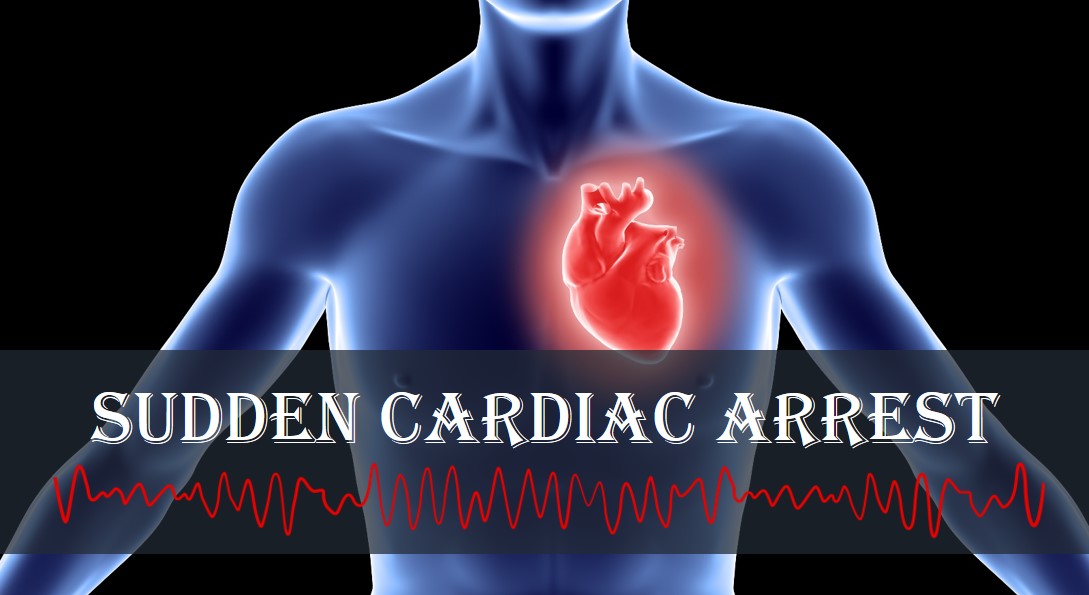
Cardiac arrest is the abrupt loss of heart function in a person who may or may not have diagnosed heart disease. The time and mode of death are unexpected. It occurs instantly or shortly after symptoms appear.

Each year, more than 420,000 emergency medical services-assessed out-of-hospital cardiac arrests occur in the United States.

No. The term “heart attack” is often mistakenly used to describe cardiac arrest. While a heart attack may cause cardiac arrest and sudden death, the terms don’t mean the same thing. Heart attacks are caused by a blockage that stops blood flow to the heart. A heart attack (or myocardial infarction) refers to death of heart muscle tissue due to the loss of blood supply, not necessarily resulting in the death of the heart attack victim.

Cardiac arrest is caused when the heart’s electrical system malfunctions. In cardiac arrest death results when the heart suddenly stops working properly. This may be caused by abnormal, or irregular, heart rhythms (called arrhythmias). A common arrhythmia in cardiac arrest is ventricular fibrillation (VFib). This is when the heart’s lower chambers suddenly start beating chaotically and don’t pump blood anywhere. Death occurs within minutes after the heart stops. Cardiac arrest may be reversed if CPR (cardiopulmonary resuscitation) is performed and a defibrillator is used to shock the heart and restore a normal heart rhythm within a few minutes.

Heart Attack vs Cardiac Arrest:

People often use these terms interchangeably, but they are not synonyms. A heart attack is when blood flow to the heart is blocked, and sudden cardiac arrest is when the heart malfunctions and suddenly stops beating unexpectedly. A heart attack is a “circulation” problem and sudden cardiac arrest is an “electrical” problem.

What is a heart attack? A heart attack occurs when a blocked artery prevents oxygen-rich blood from reaching a section of the heart. If the blocked artery is not reopened quickly, the part of the heart normally nourished by that artery begins to die. The longer a person goes without treatment, the greater the damage. Symptoms of a heart attack may be immediate and intense. More often, though, symptoms start slowly and persist for hours, days or weeks before a heart attack. Unlike with sudden cardiac arrest, the heart usually does not stop beating during a heart attack. The heart attack symptoms in women can be different than men.  A heart attack actually caused scarring to the heart since it causes damaging to the heart muscle tissue.

What is cardiac arrest? Sudden cardiac arrest occurs suddenly and often without warning. It is triggered by an electrical malfunction in the heart that causes an irregular heartbeat (arrhythmia). With its pumping action disrupted, the heart cannot pump blood to the brain, lungs and other organs. Seconds later, a person loses consciousness and has no pulse. Death occurs within minutes if the victim does not receive treatment.

Arrhythmia’s can be:

Premature Ventricular Contractions (PVCs) are below in a normal sinus rhythm (best rhythm to be in) below and if PVCs get more frequent making the rhythm more irregular it can go into a further dysrhythmias , like Ventricular Tachycardia even Ventricular Fibrillation, which could lead into a heart attack or cardiac arrest especially if Ventricular Tachycardia left untreated and especially Ventricular Fibrillation (see rhythms below).

Below PVC’s are in normal sinus rhythm (the best rhythm you could be in)
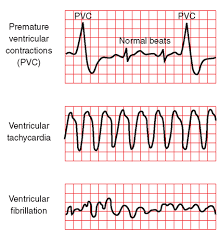
Fast action can save lives. Find out what to do if someone experiences a heart attack or cardiac arrest.  Fast action can save lives.

What to do: Heart Attack Even if you’re not sure it’s a heart attack, don’t wait more than five minutes to call 9-1-1 or your emergency response number. Every minute matters! It’s best to call EMS to get to the emergency room right away. Emergency medical services staff can begin treatment when they arrive — up to an hour sooner than if someone gets to the hospital by car. EMS staff are also trained to revive someone whose heart has stopped. Patients with chest pain who arrive by ambulance usually receive faster treatment at the hospital, too.

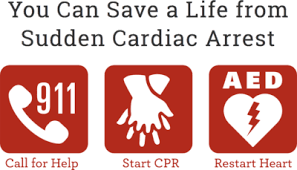
What to do: Sudden Cardiac Arrest Cardiac arrest is reversible in most victims if it’s treated within a few minutes. First, call 9-1-1 for emergency medical services. Then get an automated external defibrillator if one is available and use it as soon as it arrives. Begin CPR immediately and continue until professional emergency medical services arrive. If two people are available to help, one should begin CPR immediately while the other calls 9-1-1 and finds an AED.  Learn CPR  you may just save someone one day being at the right place at the right time.

Sudden cardiac arrest is a leading cause of death unfortunately – nearly 400,000 out-of-hospital cardiac arrests occur annually in the United States. By performing Hands-Only CPR to the beat of the classic disco song “Stayin’ Alive,” you can double or even triple a victim’s chance of survival. Learn the two easy steps to save a life at heart.org/handsonlycpr.

Recognize sudden cardiac arrest (SCA). If a person is unresponsive and not breathing normally, assume it is SCA.

1 Call 911 and follow dispatcher instructions.

2 Start CPR. Push hard and fast on the center of the chest at a rate of 100-120 beats per minute (e.g., to the tune of “Baby Shark” or “Staying Alive”).

3 Use the nearest AED as quickly as possible to restart the heart.


QUOTE FOR MONDAY:

“Heart and blood vessel disease, also called heart disease, includes numerous problems, many of which are related to atherosclerosis.

Atherosclerosis is a condition that develops when a substance called plaque builds up in the walls of the arteries. This buildup narrows the arteries, making it harder for blood to flow through. If a blood clot forms, it can block the blood flow. This can cause a heart attack or stroke.”

American Heart Association (https://www.heart.org/en/health-topics/consumer-healthcare/what-is-cardiovascular-disease)

The Heart and Cardiac Disease!


THE HEART:

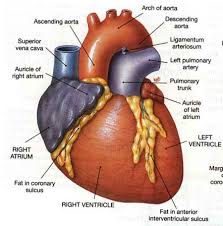
The heart is a muscular organ in most animals, which pumps blood through the blood vessels of the circulatory system. Blood provides the body with oxygen and nutrients, as well as assists in the removal of metabolic wastes. In humans, the heart is located between the lungs, in the middle compartment of the chest.

WHAT IS CARDIOVASCULAR DISEASE:

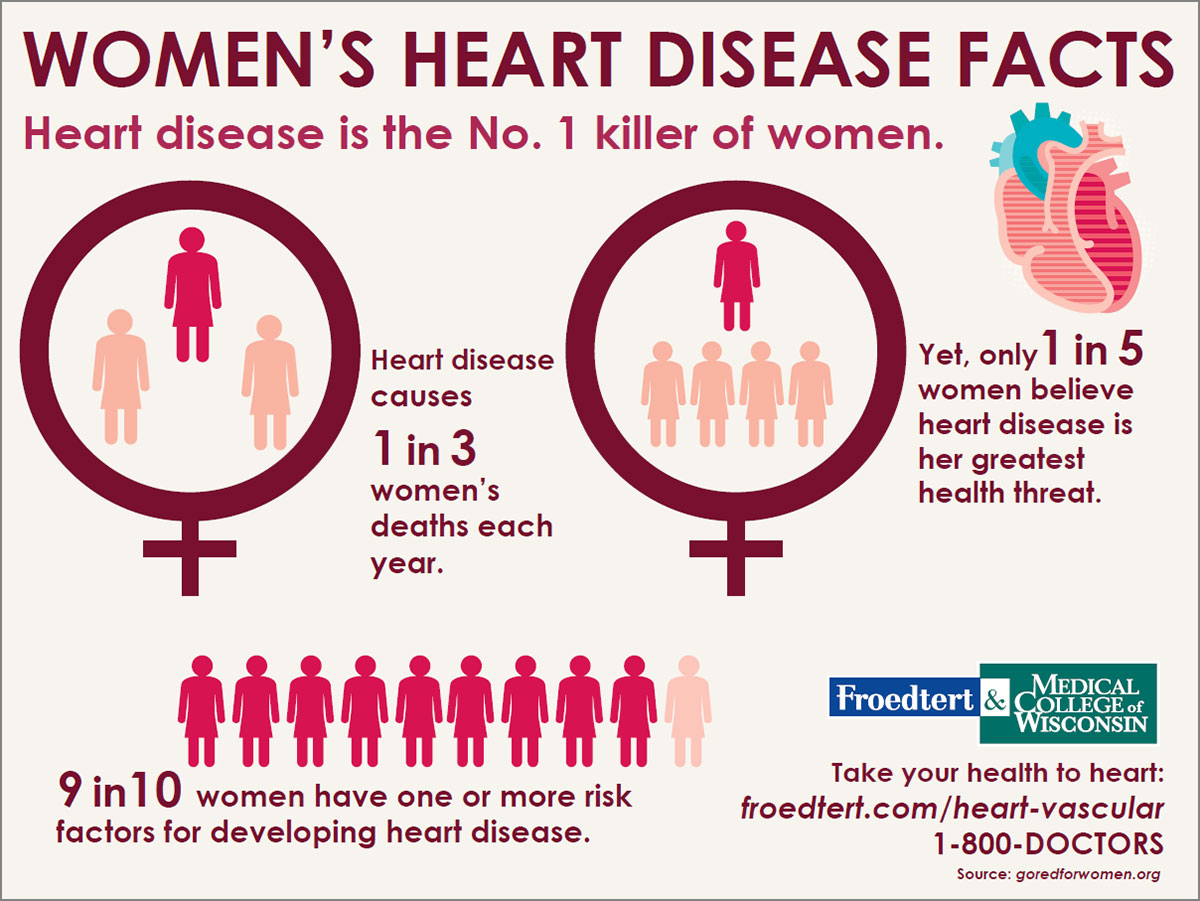
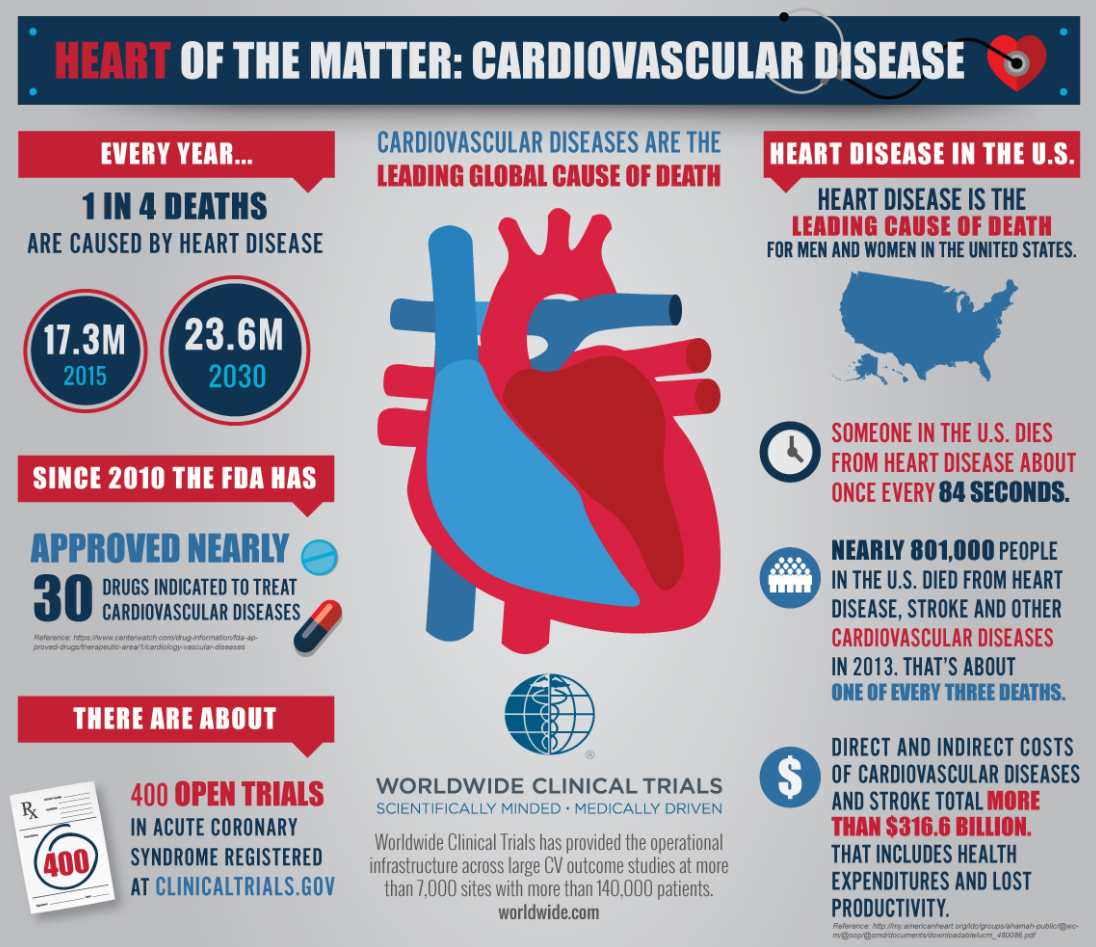
Cardiovascular disease (CVD)—including heart disease, stroke, and high blood pressure—is the number 1 killer of women and men in the United States. It is a leading cause of disability, preventing Americans from working and enjoying family activities.1 CVD costs the United States over $300 billion each year, including the cost of health care services, medications, and lost productivity.

Heart disease describes a range of conditions that affect your heart. Heart diseases include:

  • Blood vessel disease, such as coronary artery disease
  • Heart rhythm problems (arrhythmias)
  • Heart defects you’re born with (congenital heart defects)
  • Heart valve disease
  • Disease of the heart muscle
  • Heart infection

Understanding the Burden of CVD:

CVD does not affect all groups of people in the same way. Although the number of preventable deaths has declined in people aged 65 to 74 years, it has remained unchanged in people under age 65. Men are more than twice as likely as women to die from preventable CVD.

Having a close relative who has heart disease puts you at higher risk for CVD. Health disparities based on geography also exist. During 2007–2009, death rates due to heart disease were the highest in the South and lowest in the West.
Race and ethnicity also affect your risk. Nearly 44% of African American men and 48% of African American women have some form of CVD. And African Americans are more likely than any other racial or ethnic group to have high blood pressure and to develop the condition earlier in life. About 2 in 5 African American adults have high blood pressure, yet fewer than half of them have the condition under control.

Many CVD deaths could have been prevented through healthier habits, healthier living spaces, and better management of conditions like high blood pressure and diabetes.

You can control a number of risk factors for CVD, including:

-Diet
-Physical activity
-Tobacco use
-Obesity
-High blood pressure
-High blood cholesterol
-Diabetes

As you begin your journey to better heart health that can last a lifetime, keep these things in mind:

1-Try not to become overwhelmed. Every step brings you closer to a healthier heart, and every healthy choice makes a difference!
2-Partner up. The journey is more fun—and often more successful—when you have company. Ask friends and family to join you.
3-Don’t get discouraged. You may not be able to take all of the steps at one time. Get a good night’s sleep—also important for a healthy heart—and do what you can tomorrow.
4-Reward yourself. Find fun things to do to decrease your stress. Round up some colleagues for a lunchtime walk, join a singing group, or have a healthy dinner with your family or friends.

Revised 2/16/2021


QUOTE FOR THE WEEKEND:

“For us at Yoga Journal, every month is yoga month. There isn’t a day that goes by when we’re not thinking about it, learning about it, writing about it, posting about it, or practicing it. And we’re guessing it’s the same for many of you. But during this year’s National Yoga Awareness Month, we wanted to take a step back to consider and celebrate some of the reasons why we all come to yoga.

Practice with us: Throughout September, we’ll be hosting live yoga classes and workshops with our favorite teachers on IG Live.

The many benefits of your yoga practice

Science has confirmed, time and again, the many health benefits of the physical practice of yoga. While there is value in this, much of yoga’s effectiveness lies in the less quantifiable way that the practice makes you feel: Strong when you press up into Plank or lift into Handstand, liberated when a twist offers release and relief, exhilarated the first time you lean forward into Crow.

Beyond the physical practice, you can turn to pranayama at any moment in your day to calm your jangled nerves. When things are unsettled in life, you can sit for just five minutes in meditation to help you find balance. And each day as you interact with others, there are ways to practice generosity, kindness, honesty, and all of the other essential qualities of being human that are at the root of yoga philosophy.

Whether you’re sweating it out in a hot yoga class, holding on to let go in Yin, or resting flat out in Savasana, your practice becomes an extension and an expression of who you are. Each visit to your mat is effectively practicing how you show up to life. Yoga’s greatest benefit may be in how it helps you be the person you want to be.”

Yoga Journal (https://www.yogajournal.com/practice/national-yoga-awareness-month-2022/)

QUOTE FOR THURSDAY:

“A significant challenge for diagnosing women with heart disease is the lack of recognition of symptoms that might be related to heart disease, or that don’t fit into classic definitions. Women can develop symptoms that are subtler and harder to detect as a heart attack, especially if the physician is only looking for the “usual” heart attack symptoms.

“Women are much more likely to have atypical heart attack symptoms,” says Dr. Lili Barouch, director of the Johns Hopkins Columbia Heart Failure Clinic. “So while the classical symptoms, such as chest pains, apply to both men and women, women are much more likely to get less common symptoms such as indigestion, shortness of breath, and back pain, sometimes even in the absence of obvious chest discomfort.”

John Hopkins Medicine (https://www.hopkinsmedicine.org/health/conditions-and-diseases/heart-disease-differences-in-men-and-women)

QUOTE FOR WEDNESDAY:

“The Foundation for Women’s Cancer (FWC) understands the importance of bringing awareness to all gynecologic cancers — cervical, ovarian, uterine/ endometrial, vaginal and vulvar cancer. The month of September has been established as Gynecologic Cancer Awareness Month (GCAM), with a goal of reaching more and more people each year.

These resources give you the tools to share knowledge about gynecologic cancer symptoms, risk factors, prevention and early detection — because every five minutes, someone will be diagnosed with one of these cancers.”

Foundation for Women’s Cancer (https://foundationforwomenscancer.org/gcam/)

QUOTE FOR TUESDAY:

“Leukemia is the most common cancer in children and teens, accounting for almost 1 out of 3 cancers. Most childhood leukemias are acute lymphocytic leukemia (ALL). Most of the remaining cases are acute myeloid leukemia (AML). Chronic leukemias are rare in children.”

American Cancer Society (https://www.cancer.org/cancer/types/leukemia-in-children.html)

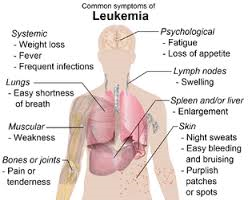
Leukemia

leukemia1leukemia2

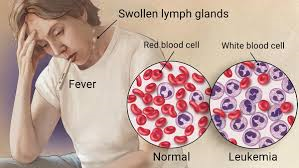
Leukemia is the most common cancer in children and teens, accounting for almost 1 out of 3 cancers. Most childhood leukemias are acute lymphocytic leukemia (ALL). Most of the remaining cases are acute myeloid leukemia (AML). Chronic leukemias are rare in children.

A risk factor is anything that affects a person’s chance of getting a disease such as cancer. Different cancers have different risk factors.

Lifestyle-related risk factors such as tobacco use, diet, body weight, and physical activity play a major role in many adult cancers. But these factors usually take many years to influence cancer risk, and they are not thought to play much of a role in childhood cancers, including leukemias.

There are a few known RISK FACTORS for childhood leukemia.

Inherited syndromes

-Some inherited disorders increase a child’s risk of developing leukemia:

  • Down syndrome (trisomy 21): Children with Down syndrome have an extra (third) copy of chromosome 21. They are many times more likely to develop either acute lymphocytic leukemia (ALL) or acute myeloid leukemia (AML) than are other children, with an overall risk of about 2% to 3%. Down syndrome has also been linked with transient leukemia (also known as transient myeloproliferative disorder) – a leukemia-like condition within the first month of life, which often resolves on its own without treatment.
  • Li-Fraumeni syndrome: This is a rare condition caused by a change in the TP53 tumor suppressor gene. People with this change have a higher risk of developing several kinds of cancer, including leukemia, bone or soft tissue sarcomas, breast cancer, adrenal gland cancer, and brain tumors.Other genetic disorders (such as neurofibromatosis and Fanconi anemia) also carry an increased risk of leukemia, as well as some other types of cancers.Having a parent who develops leukemia as an adult does not seem to raise a child’s risk of leukemia.The possible risks from fetal or childhood exposure to lower levels of radiation, such as from x-ray tests or CT scans, are not known for sure. Some studies have found a slight increase in risk, while others have found no increased risk. Any risk increase is likely to be small, but to be safe, most doctors recommend that pregnant women and children not get these tests unless they are absolutely needed.1-Acute lymphocytic leukemia (ALL) is a type of cancer of the blood and bone marrow — the spongy tissue inside bones where blood cells are made.Acute lymphocytic leukemia is the most common type of cancer in children, and treatments result in a good chance for a cure. Acute lymphocytic leukemia can also occur in adults, though the chance of a cure is greatly reduced.
  • The word “acute” in acute lymphocytic leukemia comes from the fact that the disease progresses rapidly and creates immature blood cells, rather than mature ones. The “lymphocytic” in acute lymphocytic leukemia refers to the white blood cells called lymphocytes, which ALL affects. Acute lymphocytic leukemia is also known as acute lymphoblastic leukemia.
  • What is Leukemia?  First their are types of leukemia, which are cancers of the bone marrow and blood and this is the most common childhood cancers unfortunately.  They account for about 30% of all cancers in children.  The most common types that are found in children they are 1.) acute lymphocytic leukemia (ALL) 2.) acute myelogenous leukemia (AML).
  • Exposure to high levels of radiation is a risk factor for childhood leukemia. Japanese atomic bomb survivors had a greatly increased risk of developing AML, usually within 6 to 8 years after exposure. If a fetus is exposed to radiation within the first months of development, there may also be an increased risk of childhood leukemia, but the extent of the risk is not clear.
  • Siblings (brothers or sisters) with leukemia have a slightly increased chance (2 to 4 times normal) of developing leukemia, but the overall risk is still low. The risk is much higher among identical twins. If one twin develops childhood leukemia, the other twin has about a 1 in 5 chance of getting leukemia as well. This risk is much higher if the leukemia develops in the first year of life.

2-Acute myelogenous leukemia (AML) is a cancer of the blood and bone marrow — the spongy tissue inside bones where blood cells are made.

The word “acute” in acute myelogenous leukemia denotes the disease’s rapid progression. It’s called myelogenous (my-uh-LOHJ-uh-nus) leukemia because it affects a group of white blood cells called the myeloid cells, which normally develop into the various types of mature blood cells, such as red blood cells, white blood cells and platelets.

Acute myelogenous leukemia is also known as acute myeloid leukemia, acute myeloblastic leukemia, acute granulocytic leukemia and acute nonlymphocytic leukemia.

QUOTE FOR MONDAY:

“Leukemia is a broad term for cancers of the blood cells. The type of leukemia depends on the type of blood cell that becomes cancer and whether it grows quickly or slowly. Leukemia occurs most often in adults older than 55, but it is also the most common cancer in children younger than 15.  There is Acute Lymphoblastic Leukemia, Acute Myeloid Leukemia, Chronic Lymphocytic Leukemia , Chronic Myelogenous Leukemia, Hairy Cell Leukemia, Childhood Acute Lymphoblastic Leukemia, and Childhood Acute Myeloid Leukemia.”

National Cancer Institute (https://www.cancer.gov/types/leukemia#: ~:text=Leukemia%20is%20a%20broad%20term,in%20children%20younger%20than%2015.)

QUOTE FOR THE WEEKEND:

“Chronic pain is pain that lasts for over three months. You may feel the pain all the time or it may come and go. It can happen anywhere in your body and has countless causes.

Chronic pain is a very common condition and one of the most common reasons why people seek medical care. In 2021, about 20.9% of U.S. adults (51.6 million people) experienced chronic pain, according to a study from the U.S. Centers for Disease Control and Prevention (CDC).

Pain is your body’s way of telling you that something’s wrong, like an alarm. But when that alarm continues to go off for months or years, it can drown out many aspects of life that bring you joy. And it can take quite a toll on your physical, mental and emotional health. Because of this, it’s essential to seek help for chronic pain. Together, you and your healthcare provider can develop a plan to help dampen chronic pain.”.

Cleveland Clinic (https://my.clevelandclinic.org/health/diseases/4798-chronic-pain)