Archives

QUOTE FOR WEDNESDAY:

“Diagnosing lupus is difficult because signs and symptoms vary considerably from person to person. Signs and symptoms of lupus may change over time and overlap with those of many other disorders.

No one test can diagnose lupus.

Treatment for lupus depends on your signs and symptoms. Determining whether you should be treated and what medications to use requires a careful discussion of the benefits and risks with your doctor.

As your signs and symptoms flare and subside, you and your doctor may find that you’ll need to change medications or dosages.

What you can do is before your appointment, you may want to write a list of answers to the following questions:

  • When did your symptoms begin? Do they come and go?
  • Does anything seem to trigger your symptoms?
  • Have your parents or siblings had lupus or other autoimmune disorders?”

MAYO CLINIC (https://www.mayoclinic.org/diseases-conditions/lupus/diagnosis-treatment/drc-20365790)

QUOTE FOR TUESDAY:

“Lupus is an unpredictable and misunderstood autoimmune disease. It is difficult to diagnose, hard to live with, and a challenge to treat. Lupus has a range of symptoms, and strikes without warning.

Lupus is a complicated disease that affects different people in different ways. For some, lupus can be mild — for others, it can be life threatening.

Right now, there’s no cure for lupus. The good news is that with the support of your doctors and loved ones, you can learn to manage it.

Lupus is a chronic (long-term) disease that can cause pain and inflammation in any part of the body.

Around 1.5 million people in the United States are living with lupus.

Lupus can cause a lot of different symptoms that come and go over time.

Living with lupus can be hard, but there’s a lot you can do to manage your symptoms and make your daily life easier.”

Lupus Foundation of America (https://www.lupus.org/understanding-lupus)

QUOTE FOR THE WEEKEND:

There have been many advances in CF treatment.

Antibiotics and Anti-inflammatories are used in treat for some with cystic fibrosis.

Antibiotics are frequently needed to treat bacteria that grow in the mucus. These can be given in one of three ways:

  • Orally or by mouth – this is the easiest and cheapest route.
  • By inhalation – this is more expensive but very effective.
  • Intravenously (IV) – this is usually reserved for those who are sicker.

Anti-inflammatory medications have also been found to be helpful in CF. Two medications are currently in use, azithromycin (an antibiotic that’s used as an anti-inflammatory agent in CF), and ibuprofen.

Managing cystic fibrosis is a must!

Regular check-ups with your doctor are needed as patients with CF will require constant monitoring and health management to control symptoms and prevent complications.

Your doctor may request that you receive some other tests depending on your condition. Common tests include blood tests, bone mineral density tests, glucose monitoring, pancreas functionality test, and respiratory cultures. Ultrasounds, chest CTs or X-rays, colonoscopy and a lung biopsy may be needed in some situations.

In addition to doctor visits, lifestyle changes can help manage symptoms. Practicing good hygiene and receiving all recommended vaccines can prevent patients with CF from getting an infection which in turn could lead to more severe complications. To maintain a healthy weight many patients with CF follow healthy, high-calorie, high-sodium diets. Physical activity is also encouraged to help improve and maintain lung function.

Most importantly all patients with CF need to continue treatments, including medicines, supplements, and daily airway clearance techniques as directed by their physicians. Your physician should also be alerted immediately to any complications so that they can provide supplemental medication to help the immune system fight off infection as quickly as possible.”

American Heart Association (https://www.lung.org/lung-health-diseases/lung-disease-lookup/cystic-fibrosis/treating-and-managing)


QUOTE FOR FRIDAY:

“On average, people with CF live into their mid to late 30s. But new treatments are increasing life expectancy.

CF affects several organ systems, including: Respiratory system, Digestive system and the Reproductive system.

Some people carry the CF gene without being affected by the disease. They often don’t know that they are carriers.Cystic fibrosis is inherited. A person with CF had both parents pass the changed gene to them. The birth of a child with CF is often a total surprise to a family. Most of the time there is no family history of CF. Caucasian people are more likely to have CF than people of African, Asian, or Hispanic ancestry.

There is currently no cure for CF. Scientists are investigating gene therapy. Some patients with advanced disease may be considered for surgeries like lung and pancreas transplant.

Goals of treatment are to ease symptoms, prevent and treat complications, and slow the progress of the disease.Treatment generally focuses on the following 2 areas.  Managing lung and digestive problems”.

MAYO CLINIC (https://www.mayoclinic.org/diseases-conditions/cystic-fibrosis/symptoms-causes/syc-20353700)


QUOTE FOR THURSDAY:

“Cystic fibrosis (CF) is a genetic disease that causes sticky, thick mucus to build up in your organs, blocking and damaging them. Many people think of CF as a lung disease because it affects your lungs and airways, which can make it hard to breathe and cause frequent infections. But it’s called cystic fibrosis because it also causes cysts and scarring (fibrosis) in your pancreas. This damage, plus the thick mucus, can block ducts that release digestive enzymes, making it hard to get nutrients from your digestive tract. CF can also affect your liver, sinuses, intestines and sex organs.

The mucus that lines your organs and body cavities, such as your lungs and nose, is thin and watery. In people with CF, a change in a gene (genetic mutation) leads to low levels of certain proteins, or proteins that don’t work properly. Because of these faulty proteins, minerals that move water into your mucus (which thins it out) get trapped inside cells, leaving the mucus thick and sticky.

People with cystic fibrosis are born with it. It’s a lifelong illness that gets more severe over time. Most people with CF don’t live as long as people without it.”

The Cleveland Clinic (https://my.clevelandclinic.org/health/diseases/9358-cystic-fibrosis)

QUOTE FOR WEDNESDAY:

Cause: Hepatitis D virus and hepatitis E virus. Hepatitis D virus infection always occurs with hepatitis B infection, either with a chronic hepatitis B infection (superinfection) or as two simultaneous new infections (coinfection).

Illness and treatment: Hepatitis D and E typically have abrupt onset of fever, nausea, and abdominal pain followed by jaundice. Hepatitis D may progress to chronic hepatitis.

Sources: Humans are the reservoir for hepatitis D, which is usually transmitted by contact with blood or body fluids, particularly sharing drug paraphernalia. Humans and animals (swine) are the reservoir for hepatitis E which is transmitted most commonly through fecally contaminated food, water, and environment.

Additional risks: Pregnant women have higher risk for hepatitis E complications. Japan has reported more virulent hepatitis E strains.

Prevention: To avoid simultaneous hepatitis B infection, immunize all children and any adults with risks for exposure. Use safe sexual practices, avoid sharing drug paraphernalia, and screen blood and tissue products to prevent hepatitis D transmission. Use precautions while traveling to ensure safe food and water to avoid hepatitis E infection.

Recent Washington trends: Reports are rare. Cases of hepatitis D are typically associated with injection drug use. Cases of hepatitis E are typically travel associated.”

Washington State Dept of Health (https://doh.wa.gov/public-health-provider-resources/notifiable-conditions/hepatitis-d-and-e)

QUOTE FOR TUESDAY:

“Hepatitis means inflammation of the liver. When the liver is inflamed or damaged, its function can be affected. Heavy alcohol use, toxins, some medications, and certain medical conditions can all cause hepatitis. However, hepatitis is often caused by a virus. In the United States, the most common hepatitis viruses are hepatitis A virus, hepatitis B virus, and hepatitis C virus.

Hepatitis C is a liver infection caused by the hepatitis C virus. Hepatitis C can range from a mild illness lasting a few weeks to a serious, long-term illness. Hepatitis C is often described as “acute,” meaning a new infection, or “chronic,” meaning long-term infection.

Hepatitis C can range from a mild illness lasting a few weeks to a serious, long-term illness. Hepatitis C is often described as “acute,” meaning a new infection, or “chronic,” meaning long-term infection.

  • Acute hepatitis C occurs within the first 6 months after someone is exposed to the hepatitis C virus. Hepatitis C can be a short-term illness, but for most people, acute infection leads to chronic infection.
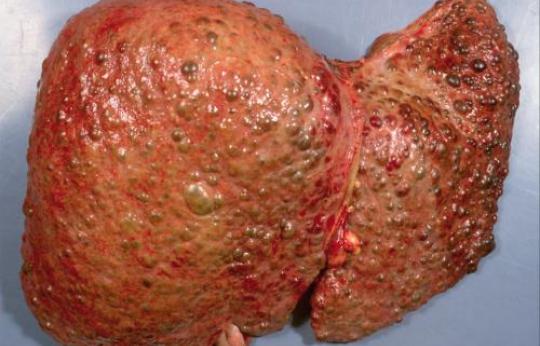
  • Chronic hepatitis C can be a lifelong infection if left untreated. Chronic hepatitis C can cause serious health problems, including liver damage, cirrhosis (scarring of the liver), liver cancer, and even death.

There are vaccines to prevent hepatitis A and hepatitis B; however, there is no vaccine for hepatitis C.  Cirrhosis due to chronic hepatitis C is the leading indication for liver transplantation in Europe, United States and Japan.

Centers for Disease Control and Prevention – CDC (https://www.cdc.gov/hepatitis/hcv/cfaq.htm)

QUOTE FOR MONDAY:

“With five different types of viral hepatitis, it can be difficult to understand the differences between them. Some forms of hepatitis get more attention than others, but it is still important to know how they are transmitted, what they do, and the steps that you can take to protect yourself and your liver!

While hepatitis A and B both impact the liver, the two viruses differ greatly from one another. Hepatitis B is a blood-borne pathogen; its primary mode of transmission is through direct blood-to-blood contact with an infected person. In contrast, hepatitis A can be spread by fecal-oral transmission or by consuming food or water that has been contaminated. It is important to note that a person cannot contract hepatitis B through casual interactions such as holding hands, sharing a meal with, or eating foods prepared by someone who is infected. There is no need to keep plates and utensils separate. However, hepatitis A can be spread through food that is prepared by an infected person. Hepatitis A is primarily caused by poor sanitation and personal hygiene. Poor sanitation and hygiene can be the result of a lack of essential infrastructure like waste management or clean water systems. It can also result from a lack of education.”

Hepatitis B Foundation (https://www.hepb.org/blog/whats-difference-hepatitis-vs-hepatitis-b/)

QUOTE FOR THE WEEKEND:

“Borderline personality disorder (BPD) is a mental health condition marked by extreme mood fluctuations, instability in interpersonal relationships and impulsivity.

People with BPD have an intense fear of abandonment and have trouble regulating their emotions, especially anger. They also tend to show impulsive and dangerous behaviors, such as reckless driving and threatening self-harm. All of these behaviors make it difficult for them to maintain relationships.

Borderline personality disorder is one of a group of conditions called “Cluster B” personality disorders, which involve dramatic and erratic behaviors. Personality disorders are chronic (long-term) dysfunctional behavior patterns that are inflexible, prevalent and lead to social issues and distress.

Many people who live with borderline personality disorder don’t know they have it and may not realize there’s a healthier way to behave and relate to others.”

Cleveland Clinic (https://my.clevelandclinic.org/health/diseases/9762-borderline-personality-disorder-bpd)