The days immediately surrounding Independence Day create what animal welfare experts call a perfect storm for missing and injured pets. Animal control officials across the country report a 30% to 60% increase in lost pets between July 4 and July 6 each year, and July 5 is consistently one of the busiest days of the year for animal shelters nationwide.
The reason is rooted in biology.
Dogs and cats hear frequencies far beyond the range of human hearing, making the sudden, unpredictable booms of fireworks far more intense and disorienting for them than for us. Without any frame of reference for what that sound means, many animals instinctively flee, triggering a fight-or-flight response that can cause even the most well-behaved, calm pet to bolt through fencing, break free from a leash or escape through an open door.
Preparation before the holiday weekend is the single most effective thing you can do to protect your pet.
How to Keep Your Pets Safe This Fourth of July:
Preparation before the fireworks and festivities is the best way to protect your pets from stress, injury, and getting lost.
1. Update Identification
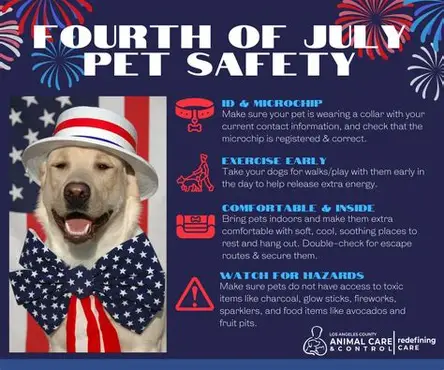
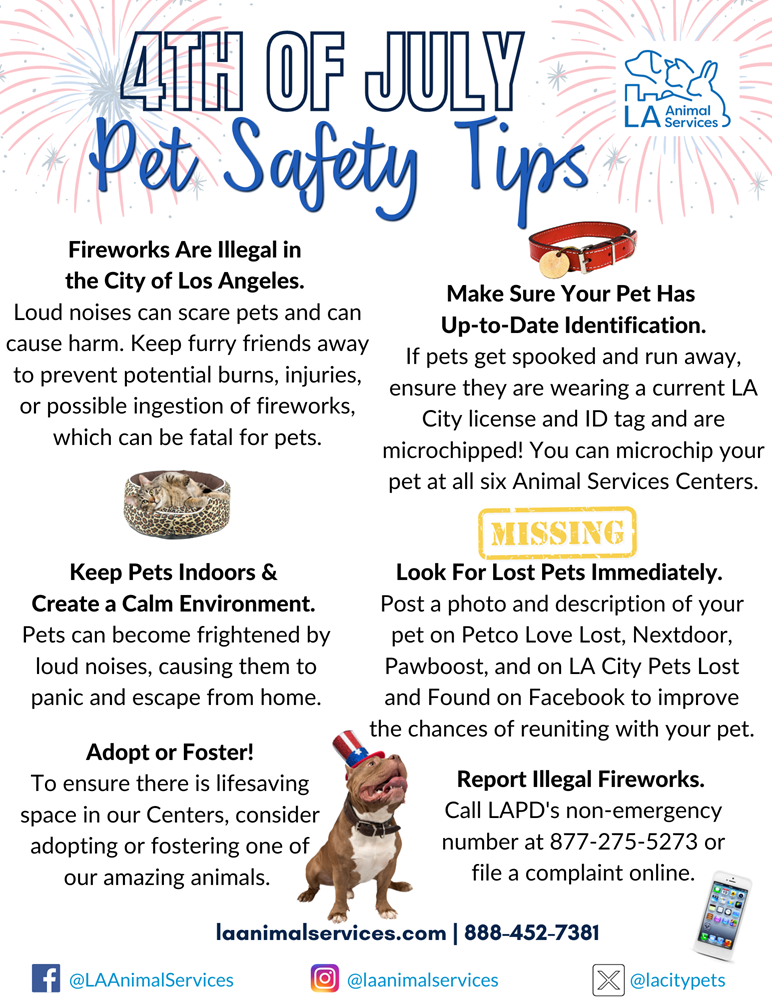
- Collar & ID tag: Ensure your pet’s collar has a properly fitted ID tag with your current phone number and address.
- Microchip: Log in to your pet’s microchip registry and confirm contact info is up to date.
- Photo: Keep a recent photo of your pet in case you need to post a lost pet notice.
2. Create a Safe, Quiet Space
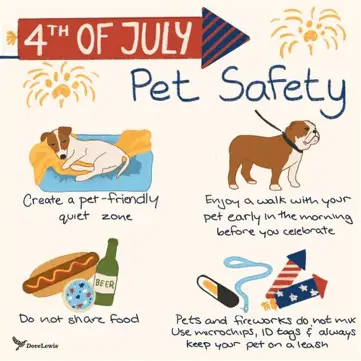
- Bring pets indoors before fireworks start, especially dogs that usually stay outside.
- Give your pet a long walk or play session earlier in the day to reduce baseline anxiety
- Talk to your veterinarian in advance if your pet has a history of severe noise phobia; there are safe, effective options that can help
- Set up a quiet room away from windows, with soft bedding, familiar toys, and calming music or white noise.
- Keep curtains and blinds closed to reduce flashing light exposure.
3. Manage Fireworks Anxiety
- Walk your dog before dark to reduce baseline stress.
- Talk to your vet about calming aids (pheromone diffusers, compression wraps, sedatives if appropriate) for pets with severe noise phobia.
- Stay close to your pet during loud moments; your presence is reassuring.
4. Prevent Losses
- Lock all doors, dog doors, and backyard gates.
- If you must be away, play music or white noise to mask sounds.
- Crate-trained pets should be in their crate; never remove their collar all night.
5. Keep an Eye on Food & Hazards
- Keep your pet away from the grill to avoid burns, grease, and toxic foods like bones, chocolate, onions, grapes, alcohol, and fatty meats.
- Ask guests not to feed your pet; supervise if they’re in the kitchen.
- Provide safe chew toys or frozen treats as distraction.
6. Heat Safety
- Avoid peak heat hours; walk or play in early morning or late evening.
- Provide shade, fresh water, and monitor for signs of overheating (excessive panting, drooling, lethargy).
7. Water & Pool Safety
- If swimming, supervise closely and use a pet life jacket.
- Rinse your pet with fresh water after swimming to remove pool chemicals.
8. During the fireworks
- Bring all pets indoors, including dogs that typically spend time outside
- Set up a quiet, comfortable space in an interior room away from windows
- Play calming music or white noise at a steady volume to help muffle the sounds outside
- Again, Stay close to your pet if possible; your presence is genuinely reassuring