How is osteogenesis imperfecta diagnosed in a child?
Your baby’s healthcare provider will ask questions about your baby’s medical history, your family and pregnancy history, and your baby’s current symptoms. He or she will examine your baby, looking for signs and symptoms of OI. The milder forms of OI may be difficult to diagnose in a baby.
Your baby’s healthcare provider may refer you to specialists with experience in diagnosing and treating OI. For example, your baby may be referred to a specialist in genetic conditions (geneticist) or in bone disorders (orthopedist).
Your baby’s healthcare provider or the specialists may recommend the following diagnostic tests:
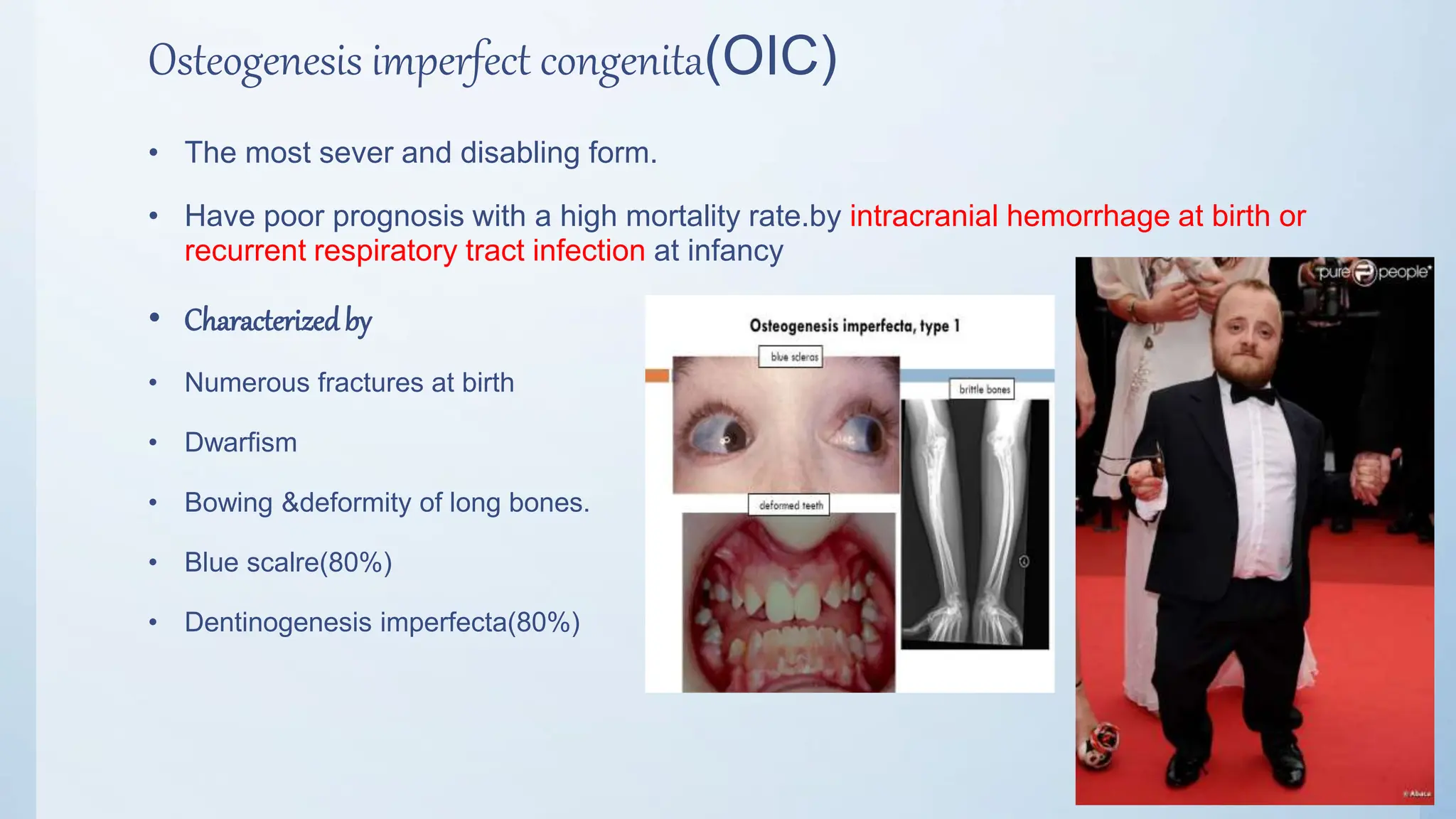
- X-rays. These may show many changes such as weak or deformed bones and fractures.
- Lab tests. Blood, saliva, and skin may be checked. The tests may include gene testing.
- Dual Energy X-ray Absorptiometry scan (DXA or DEXA scan). A scan of the bones to check for softening.
- Bone biopsy. A sample of the hipbone is checked. This test requires sleep medicine (general anesthesia).
How is osteogenesis imperfecta treated in a child?
Your child’s healthcare provider will figure out the best treatment based on:
- How old your child is
- Your child’s overall health and medical history
- How sick your child is
- How well your child handles certain medicines, treatments, or therapies
- If your child’s condition is expected to get worse
- Your opinion and preference
The main goal of treatment is to prevent deformities and fractures. And, once your child gets older, to allow him or her to function as independently as possible. Treatments for preventing or correcting symptoms may include:
- Bisphosphonate medicines. These are medicines that help to strengthen bones and prevent fractures. They may be used in most types of OI. They may be given by mouth or by IV (intravenous line) into a vein.
- Care of fractures. The lightest possible materials are used to cast fractured bones. To prevent further problems, it is recommended that a child begin moving or using the affected area as soon as possible.
- Orthopedic treatment. May include bracing and splinting. Surgery may also be needed.
- Rodding. Metal rods are inserted to help hold in place (stabilize) and prevent deformities of long bones.
- Dental procedures. Treatments, including capping teeth, braces, and surgery may be needed.
- Physical and occupational therapy. Both are very important in babies and children with OI.
- Assistive devices. Wheelchairs and other custom-made equipment may be needed as babies get older.
What are the possible complications of osteogenesis imperfecta in a child?
Complications may affect most body systems in a baby or child with OI. The risk of developing complications depends on the type and severity of your baby’s OI. Complications may include the following:
- Respiratory infections, such as pneumonia
- Heart problems such as poor heart valve function
- Kidney stones
- Joint problems
- Hearing loss
- Eye conditions and vision loss
How can I help my child live with osteogenesis imperfecta?
OI is a lifelong condition. Managing it may include the following:
- Avoiding fractures. If your baby has medium to severe OI, he or she needs to be picked up, diapered, and dressed very carefully. His or her position should be changed throughout the day. As your baby gets older, it will be important to help him or her avoid injuries. A physical or occupational therapist, as well as other healthcare providers, can help.
- Avoiding infection. Your baby may be more likely to get colds and other respiratory infections. And he or she may get sicker with an infection. Make sure your baby has all of his vaccines (immunizations). During cold and flu season, stay away from crowds. Make sure that you wash your hands well. As your child gets older, teach him or her to do the same.
- Dealing with pain. Fractures and deformities can be very painful. Talk with your baby’s healthcare provider about pain medicine or other ways to lessen pain.
- Dealing with challenges. As your child gets older, he or she may have emotional and physical challenges.
- Regular medical and dental checkups. Your baby will need regular checkups and tests. These include eye and dental exams.
- Weight management. When your child gets older he or she may gain weight because of the decreased physical activity.